
Your cart
There are no more items in your cart
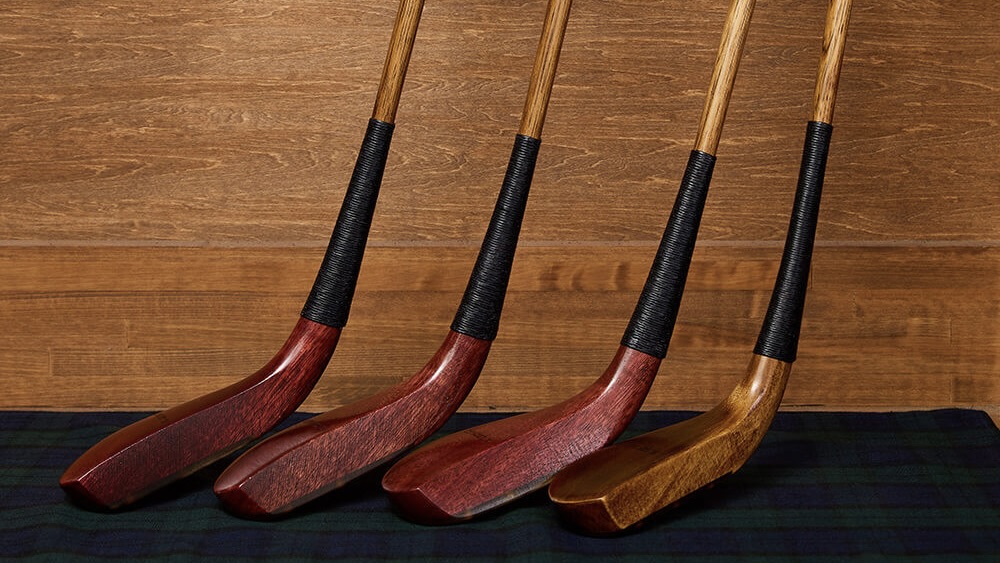
Before metal drivers, numbered irons and modern putters, golf was played with elegant wooden clubs known today as long-nose clubs. Their narrow, extended heads are among the most distinctive designs in the history of the game, reflecting a period when every club was individually shaped by hand.
Long-nose clubs belonged primarily to the feather-ball and early gutta-percha eras. They were not simply early versions of modern clubs; they were designed around the balls, courses and playing techniques of their time. Today, their traditional craftsmanship is being preserved through the work of makers such as K. Leonard and Westward Ho!, whose clubs allow golfers to experience a much earlier form of the game.
Why Were They Called Long-Nose Clubs?
The name comes from the club’s unusually long head. Viewed from above, the wooden head stretches considerably farther from the heel to the toe than a modern wood or putter. Its shallow face, curved profile and slender body create the appearance of an extended “nose.” This shape was closely connected to the golf balls of the period. Early feather-filled balls were relatively soft and expensive, so they were best struck by smooth-faced wooden clubs. The long head provided a broad area of wood behind the face while allowing the club to move cleanly across links turf.
Rather than relying on the weight and technology of a modern clubhead, players generated their shots through rhythm, timing and careful contact. A long-nose club rewards a smooth swing, making the experience feel noticeably different from modern golf.
Clubs Shaped Entirely by Hand
Long-nose clubs were created before golf equipment became standardised or mass-produced. Each head had to be cut from a suitable piece of hardwood and gradually shaped with saws, rasps, files and scrapers.
The process required patience and an understanding of the wood’s grain. A clubmaker had to create the correct shape while leaving enough material to provide strength behind the striking face. Because every piece of wood behaved differently, small variations between clubs were unavoidable and became part of their individual character. The head was then connected to a hickory shaft through a long tapered splice traditionally known as a scare joint. The matching surfaces of the head and shaft were carefully fitted together, glued and tightly bound with whipping. This created a strong connection without the modern socket or hosel found on later clubs.
Many long-nose clubs also featured a horn insert along the leading edge or striking face. Horn helped protect the wooden head from wear and damage, while lead could be added to the back to improve weight, balance and feel. A leather or sheepskin grip completed the club.
A Set for Every Part of the Course
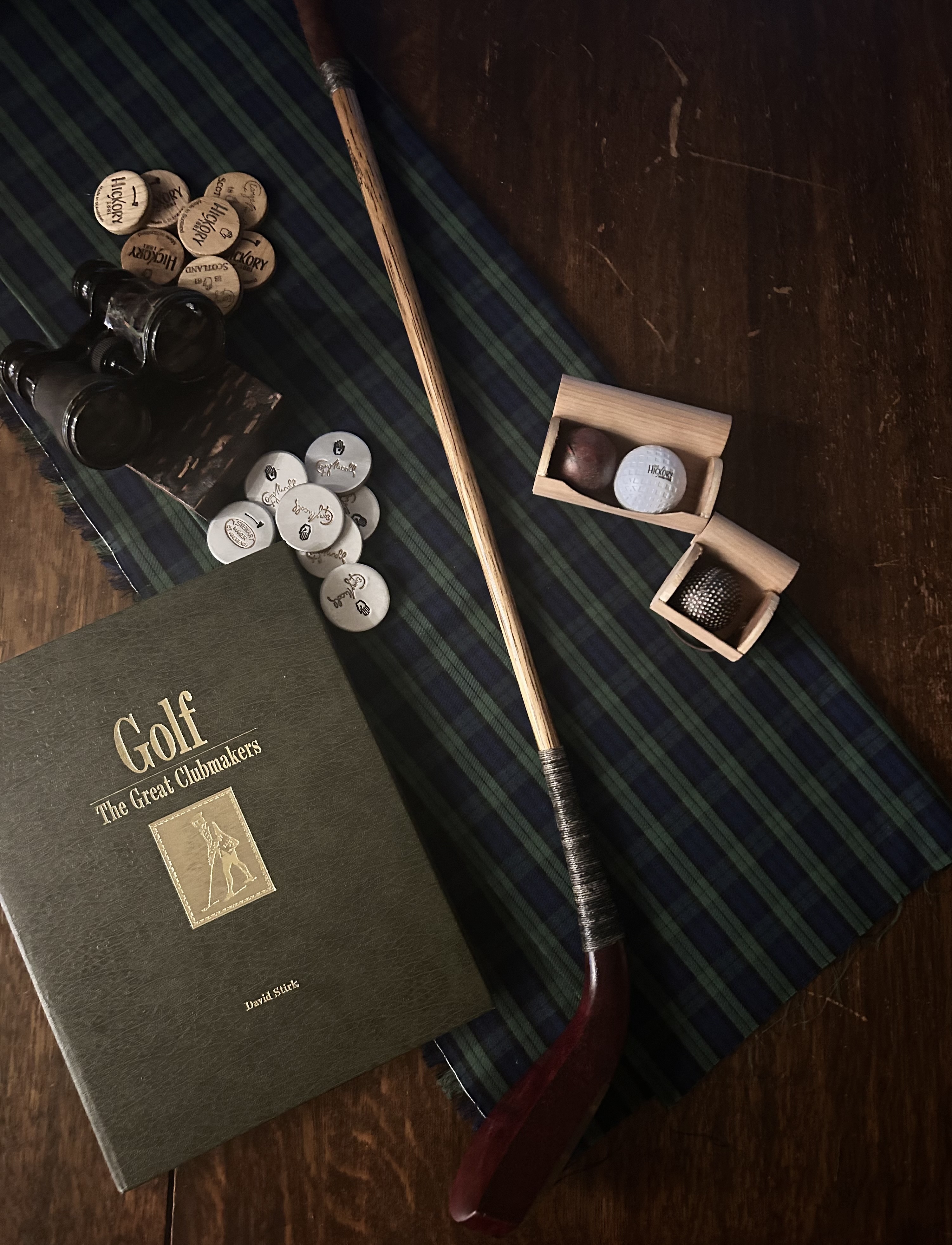
Golfers did not use just one form of long-nose club. Different shapes and lofts were produced for different situations around the course.
The Play Club
The play club served a similar purpose to a modern driver. It normally had a long, shallow head and relatively little loft, making it suitable for tee shots and longer strokes. Because the club and ball offered less forgiveness than modern equipment, distance depended on centred contact and a controlled swing. Trying to overpower the shot could easily produce a poor result—or damage the wooden head.
The Grass Club or Spoon
A grass club, sometimes called a spoon, was designed for longer shots played from the ground. Its face carried more loft than the play club, helping the golfer lift the ball from grass and uneven links terrain. The curvature of the sole allowed it to pass more easily over the ground, while its wooden head maintained the soft feel associated with early golf.
The Baffing Spoon
The baffing spoon had still more loft and was used for shorter approaches or difficult lies. In purpose, it shared some similarities with a modern lofted fairway wood or approach club. Its name reflected the technique of striking down and through the ball to create a higher shot. Long before golfers carried a precisely numbered set, these individually shaped clubs provided the necessary variety.
The Long-Nose Putter
The long-nose putter was designed for controlled strokes on and around the green. Its elongated wooden head produced a soft, distinctive feeling at impact. Compared with a modern putter, it encourages the golfer to use a gentle tempo and allow the weight of the club to guide the stroke. The visual appearance may seem unusual at first, but the long head provides a strong sense of direction when placed behind the ball.
How the Golf Ball Changed the Club
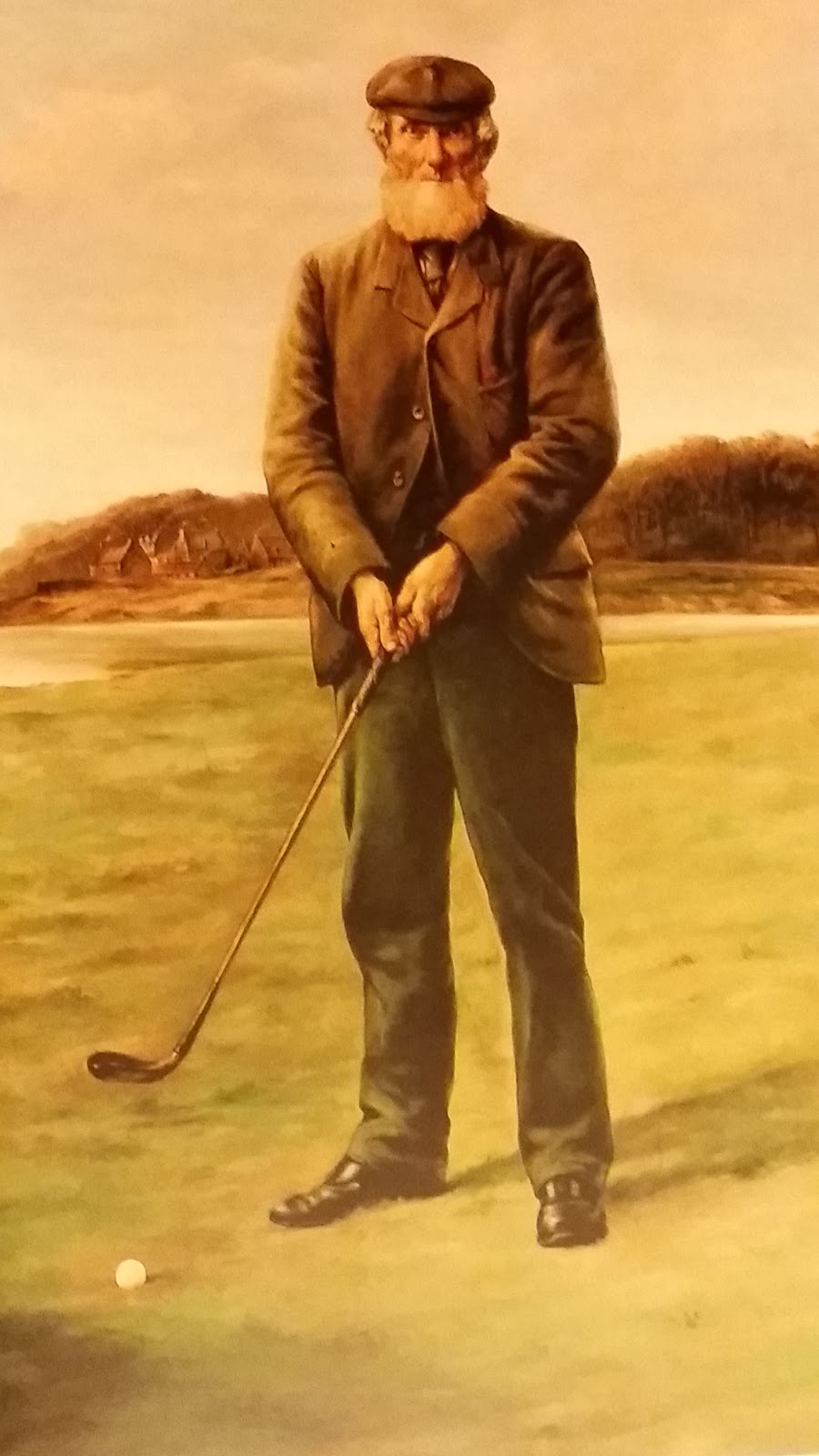
The decline of the long-nose design was closely connected to the arrival of the gutta-percha ball during the nineteenth century. Unlike the softer feather ball, the gutta-percha ball was solid, hard and durable. Although it made golf more affordable and accessible, it placed greater stress on wooden clubheads. Repeatedly striking the harder ball could cause the narrow heads of long-nose clubs to split or break.
Clubmakers responded by producing shorter, broader and deeper heads with more wood directly behind the point of impact. By the late nineteenth century, these stronger shapes were replacing the traditional long nose. The joint USGA and R&A Distance Insights Report explains that the transition towards wider and more durable wooden heads was a direct response to the harder gutta-percha ball.
Iron clubs also became increasingly practical during this period. As the ball became more durable, golfers could use iron-headed clubs more frequently without immediately destroying it. The equipment carried by golfers gradually shifted away from predominantly wooden clubs, and the long-nose era came to an end.
K. Leonard: Preserving Traditional Clubmaking
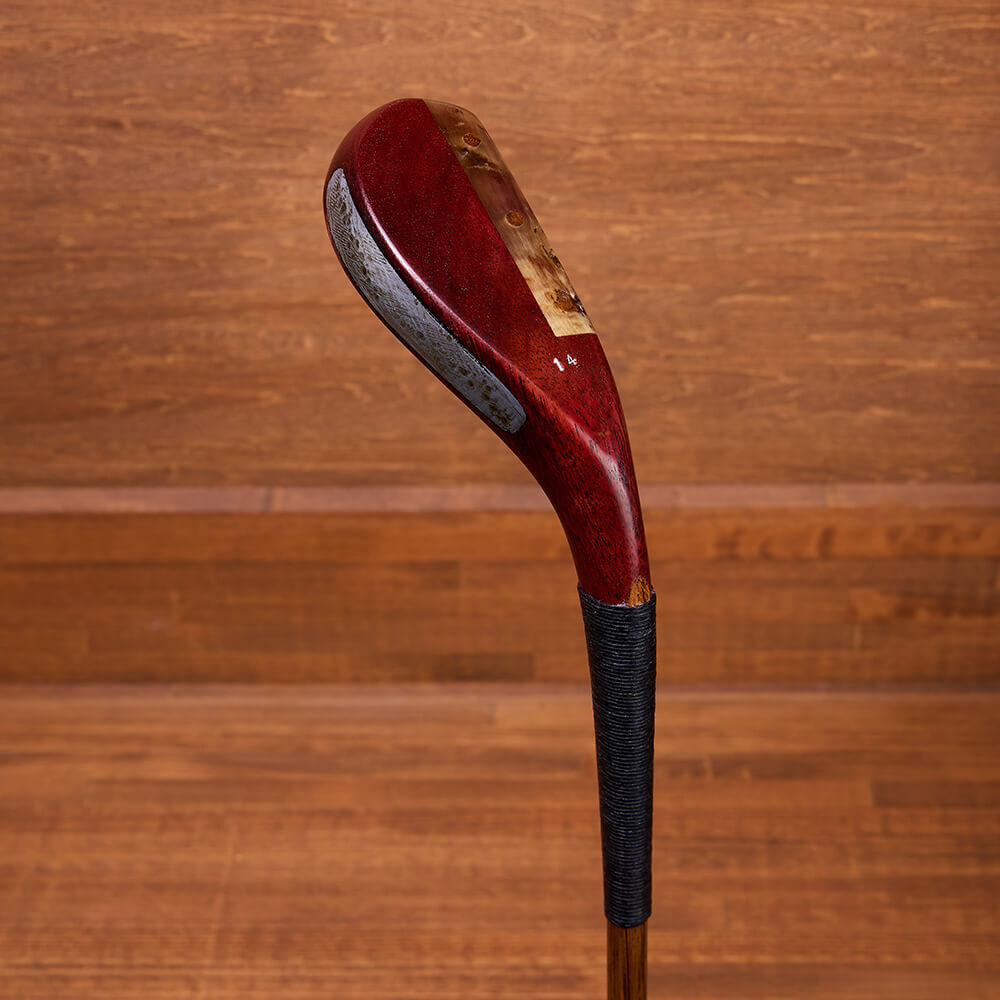
K. Leonard continues the tradition through handcrafted, playable long-nose clubs made with historically inspired materials and methods. The heads are individually shaped from selected hardwoods and fitted to hickory shafts using the traditional scare-joint construction. Horn inserts, whipping and leather or sheepskin grips contribute to both the appearance and playing character of the clubs. Much of the work is completed using hand tools, ensuring that each club retains the individuality associated with nineteenth-century craftsmanship. Small variations in the colour, grain and shape are not imperfections; they reflect the fact that each club is made as an individual object.
The Hickory Golf Shop offers both the K. Leonard Long-Nose Putter and a complete four-club play set. The set includes a play club, grass club, baffing spoon and putter, providing the range needed to experience an early style of golf across the course. These clubs are made to be played rather than simply displayed. Using them reveals how much early golf depended on tempo, imagination and the ability to create different shots with a small number of clubs.
The Westward Ho! Long-Nose Putter
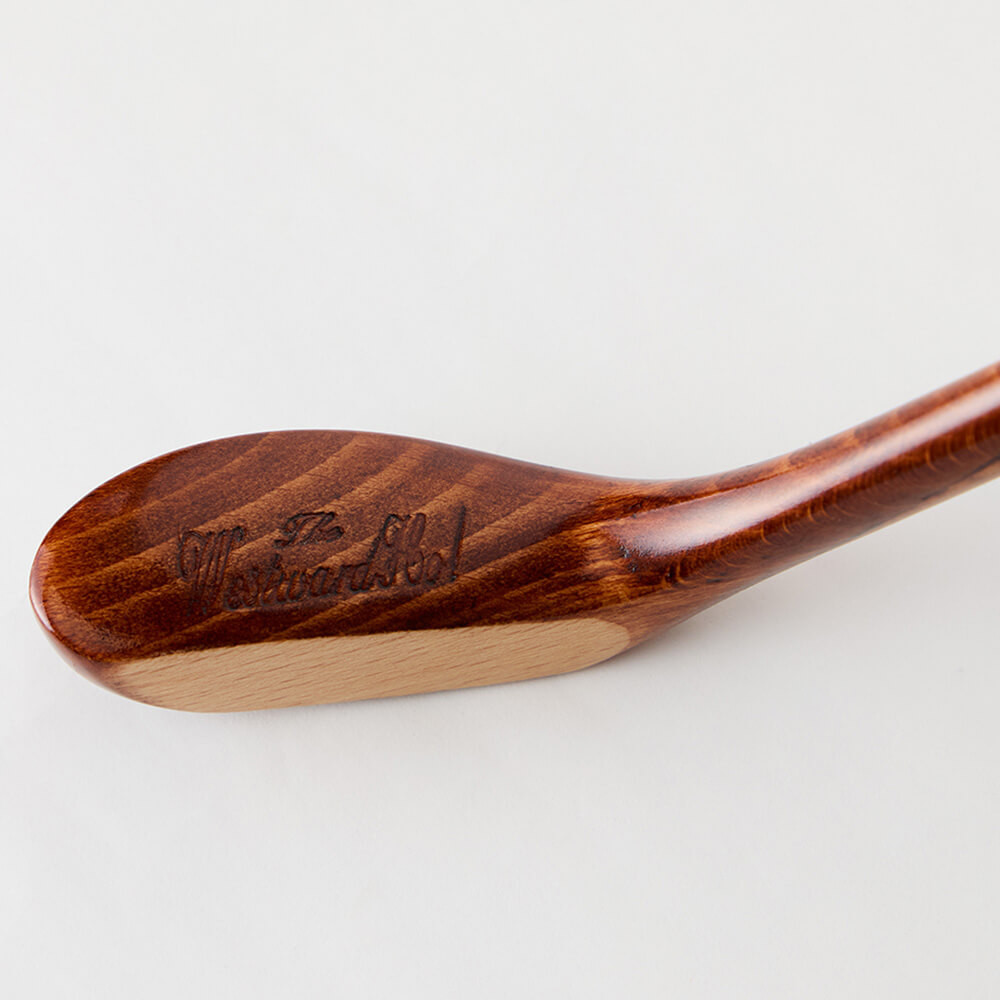
The Westward Ho! Long-Nose Putter celebrates the golfing heritage of the North Devon coast, where links golf has been played since the nineteenth century.
Its long wooden head, hickory shaft and traditional profile recall the clubs that would have been familiar during golf’s early development in England. The putter connects the distinctive long-nose design with a landscape shaped by firm turf, coastal winds and natural links conditions. Like the K. Leonard clubs, the Westward Ho! putter is a playable link to the past. Its soft impact and unfamiliar proportions encourage a slower, more deliberate putting stroke. The shop also offers a miniature Westward Ho! long-nose putter name tag, bringing the same historical shape into a smaller handcrafted accessory.
Playing Long-Nose Clubs Today
Long-nose golf is not about achieving the greatest possible distance. It offers a different relationship between the player, the club and the ball.
The wooden head provides immediate feedback at impact. A well-centred strike feels soft and satisfying, while an off-centre shot makes the player aware of the mistake. With fewer specialised clubs, golfers must also adapt their swing, trajectory and club selection to the situation. For the closest historical experience, long-nose clubs can be paired with reproduction feather-style or gutta-percha balls. They can also be played with suitable softer modern balls, although the feeling and performance will naturally differ. Most importantly, players should avoid forcing the swing. A smooth tempo protects the wooden head and generally produces better contact. After play—particularly in damp conditions—the club should be wiped clean and allowed to dry naturally, away from direct heat.
A Surviving Piece of Golf History
The long-nose club represents a period when golf equipment was shaped by eye, hand and experience. Its design tells the story of early golf balls, natural links courses and a game played with fewer clubs but greater creativity. Although it eventually disappeared from ordinary golf bags, the design has not been forgotten. Through the work of K. Leonard and Westward Ho!, golfers can once again hold, swing and play clubs inspired by this formative period. A long-nose club is more than a reproduction of an unusual old shape. It is a direct connection to the rhythm and craftsmanship of early golf—and an invitation to experience the game as it was played before modern equipment changed it forever.
------------------------------------------------------------------------------------------------------------