
Your cart
There are no more items in your cart
.jpg)
Long before large tour bags, automatic stands and multiple club dividers, the golf bag was a simple piece of equipment designed for one purpose: carrying a small set of clubs across the course. Its narrow shape and practical construction made it the perfect companion for the hickory era—and the inspiration behind the pencil bags we use today.
Before the Golf Bag
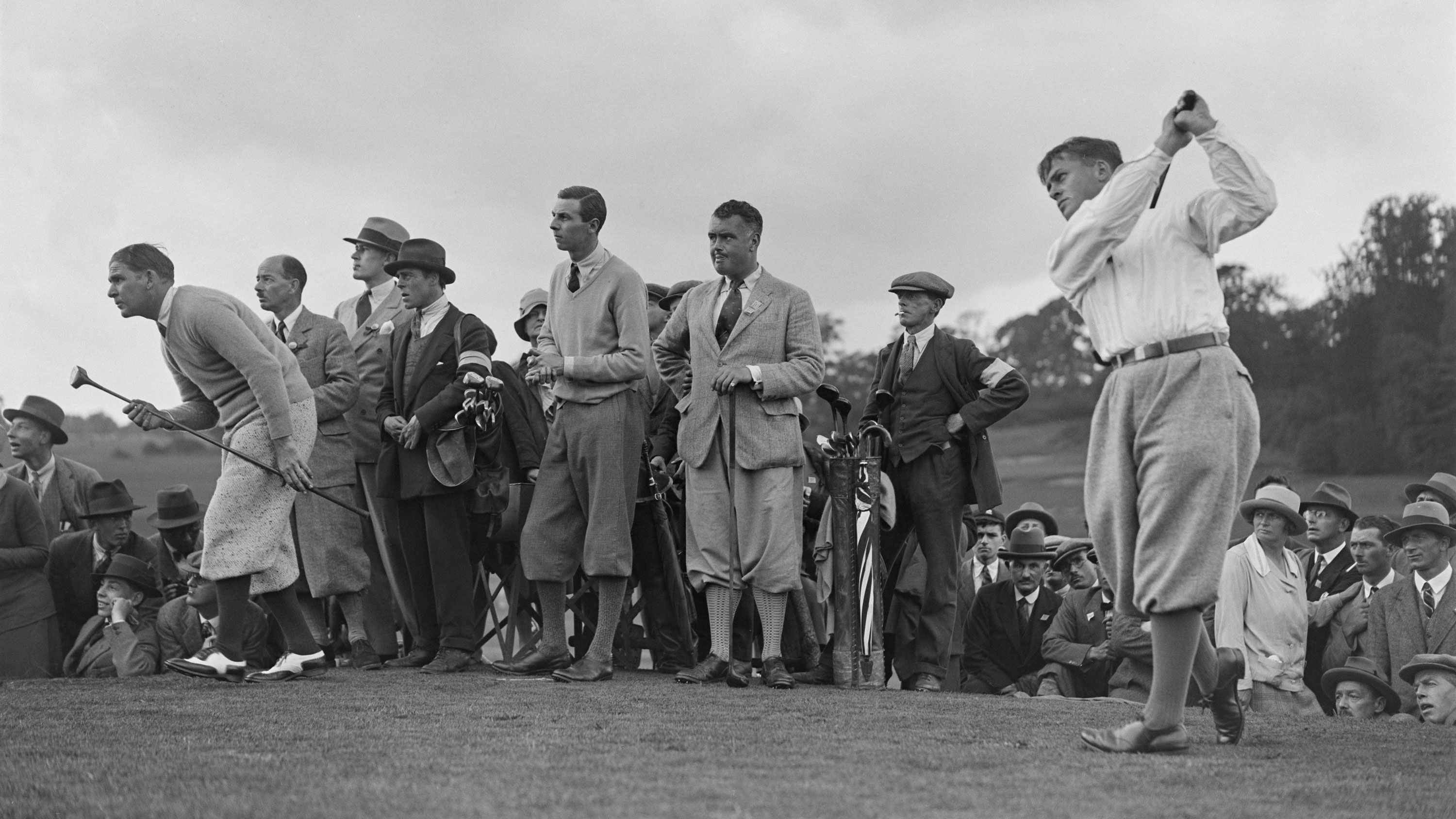
During golf’s earliest centuries, players did not use bags at all. Clubs were carried under the arm, tied together with cord or handed to a caddie. This was practical when a golfer owned only a few clubs, but it became increasingly inconvenient as the game developed and players began carrying more specialised equipment.
According to the Nederlands Golfmuseum, tradition places the arrival of the first recognisable golf bag at around 1870. It was reportedly made from canvas sailcloth and fitted with a leather carrying strap. By the end of the nineteenth century, similar bags had become a familiar sight on Scottish courses.
These early examples were remarkably simple. They were generally made from canvas or leather, with reinforced ends to protect the clubs and a single shoulder strap for carrying. Their tall, narrow form would later become known as the pencil bag.
The Bag of the Hickory Era
As golf entered the late nineteenth and early twentieth centuries, golfers began assembling more varied sets. A player might carry a wooden driver or brassie alongside irons such as a cleek, mashie and niblick, followed by a favourite wooden or metal-headed putter.
Even so, a traditional hickory set remained much smaller than many modern collections. Golfers selected a limited number of versatile clubs and learned to produce different shots with each one. A slender carrying bag was therefore all that was required. Original pencil-style bags commonly had a small opening and a straight, cylindrical body. Canvas kept the weight manageable, while leather was used for straps, handles and areas that needed additional strength. Metal fittings or reinforced bases helped protect the bottom of the bag from damp ground and repeated use. The design suited the character of golf at the time. The game was played on foot, and the bag needed to be light enough to carry over eighteen holes without becoming a distraction. It held the essentials while keeping the golfer closely connected to the walking traditions of the sport.
Why Is It Called a Pencil Bag?
The name comes from the bag’s long, narrow appearance. Compared with the wide cart and tour bags of modern golf, it resembles a simple cylindrical pencil case. Historical accounts describe early bags measuring approximately three feet in height, with an opening of around four to five inches. Although the dimensions gradually increased, the underlying idea remained unchanged: a compact bag for a carefully selected set of clubs.
Modern pencil bags continue to be popular because they are lighter and less complicated than full-sized alternatives. For hickory golf in particular, their restrained shape feels visually and practically appropriate.
Our Hickory 1881 Pencil Bags
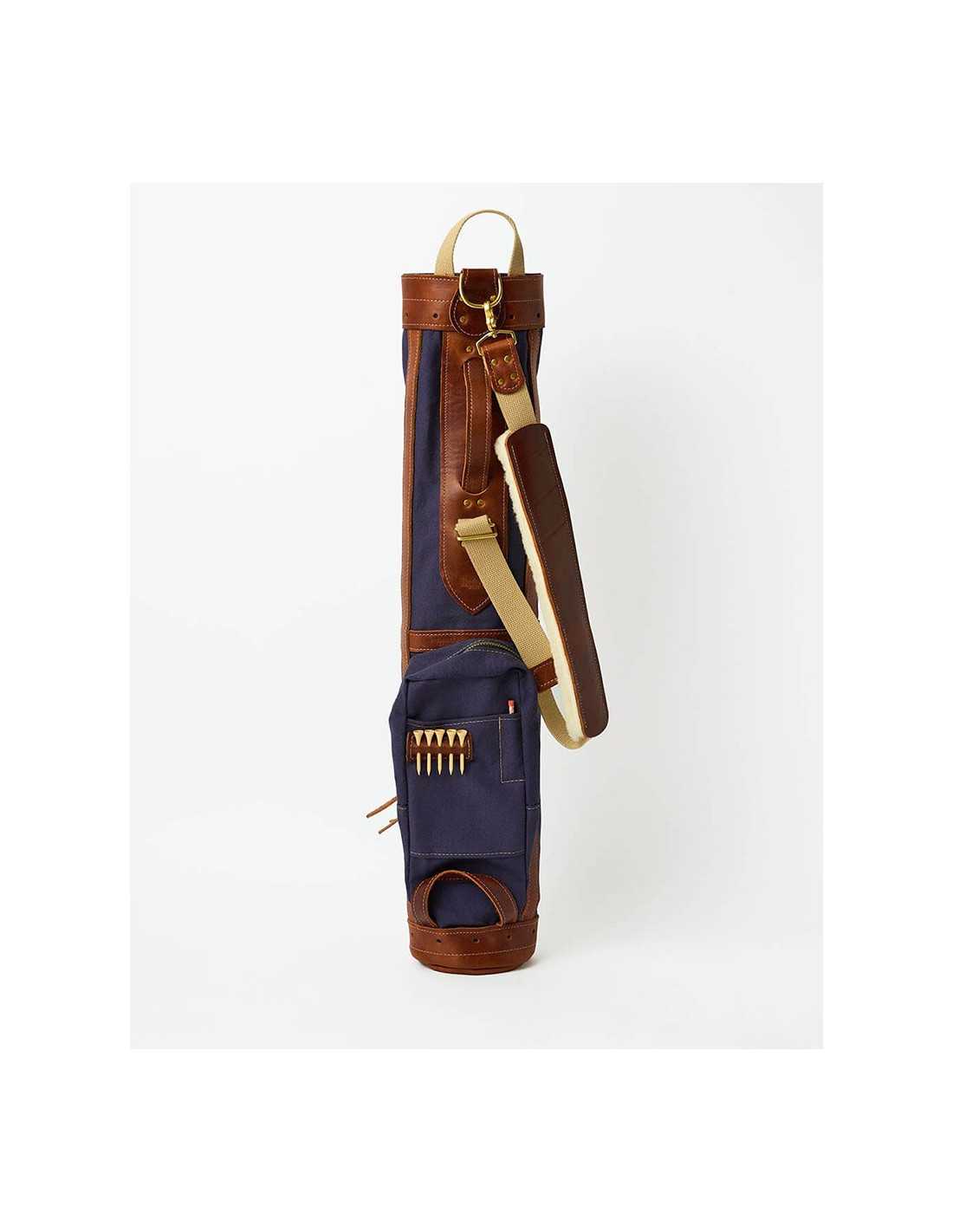
Hickory 1881 Golf Bag Navy Blue
Our Hickory 1881 pencil bags are inspired by the carrying bags used during the 1920s. They retain the slim appearance of an early golf bag while adding carefully considered features for present-day play.
Handcrafted in the United States, the bags combine durable canvas with leather details and solid-brass hardware. Oak supporting rods help the bag retain its traditional shape, while the soft shoulder strap makes it comfortable to carry around the course. With a six-inch diameter, each bag can hold up to ten clubs—more than enough space for a typical hickory set without making the bag feel unnecessarily large. A front pocket carries golf balls and other essentials, with dedicated places for tees, a scorecard and a pencil. An umbrella holder, towel loop and lower handle provide additional practicality while preserving the bag’s clean, historic character. The standard canvas pencil bags are available in colours including sky blue, olive, burgundy, pink and navy blue. The different colours allow golfers to introduce some personality while maintaining a shape closely associated with the hickory era.
Our Waxed Pencil Bags
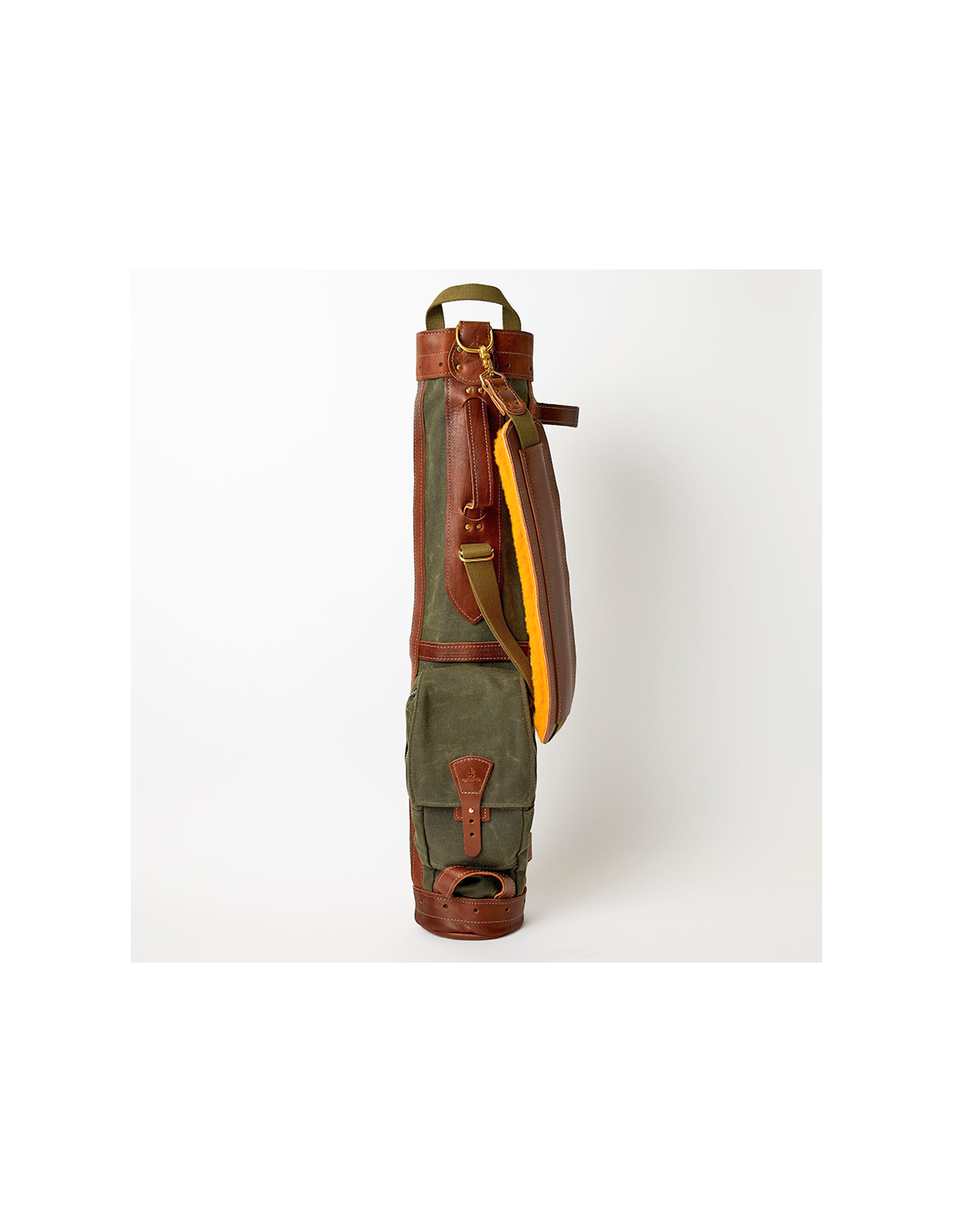
Hickory 1881 Golf Bag Olive (Waxed with Head Cover)
Our waxed pencil bags offer a more rugged interpretation of the same historic design. They are also handcrafted in the United States using waxed canvas, leather and solid-brass fittings.
Waxing the canvas gives the material greater resistance to light rain and damp conditions. It also produces a richer, more textured surface that develops character through use. Marks and variations gradually become part of the bag’s appearance, creating the kind of natural patina traditionally associated with well-used outdoor equipment. The waxed bags feature the same six-inch opening and capacity for up to ten clubs. Oak supports maintain their shape, while a soft shoulder strap, towel loop, umbrella holder and lower carrying handle make them practical for regular play. The front pocket includes storage for golf balls, tees, a scorecard and a pencil. A matching head cover adds another useful feature. It helps protect the clubs while travelling or when the weather changes, while continuing the traditional appearance of the bag. The waxed collection is available in navy blue, olive green and red.
Canvas or Waxed Canvas?
Both styles are based on the same pencil-bag tradition, but they offer slightly different experiences.
The standard canvas bag has a lighter, cleaner appearance and is ideal for golfers who want a simple and colourful companion for their hickory set. Its uncomplicated construction captures the practical spirit of early carrying bags. The waxed version has a more substantial, weather-ready feel. Its darker finish, leather detailing and natural patina give it the appearance of a piece of equipment that improves with age. The included head cover also makes it particularly useful for golfers who frequently travel with their clubs.
The choice ultimately comes down to personal preference. Both provide enough room for a carefully chosen hickory set without losing the slim proportions that define a traditional pencil bag.
A Return to Simpler Golf
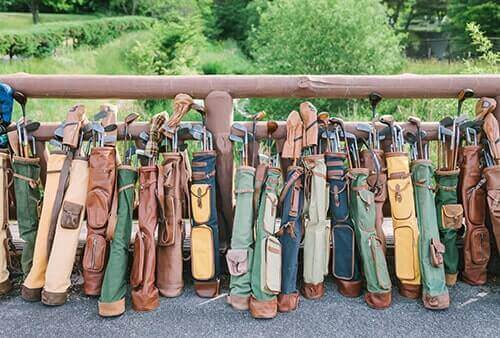
Modern golf bags are designed to carry fourteen clubs, waterproof clothing, drinks, electronic devices and numerous accessories. They are extremely practical, but they can also make a round feel increasingly complicated.
A hickory pencil bag encourages a different approach. It asks the golfer to choose fewer clubs, walk the course and create more shots with the equipment available. The bag becomes part of the experience rather than simply a container for it. That is why the pencil bag remains so closely connected to hickory golf. Its simplicity reflects the character of the game: thoughtful club selection, creative shot-making and an appreciation for craftsmanship. From the early canvas carriers of the nineteenth century to today’s canvas and waxed Hickory 1881 designs, the essential idea has survived for more than a century. A good hickory golf bag does not need to be oversized or complicated. It simply needs to carry the clubs comfortably, age with dignity and accompany the golfer on the walk.
---------------------------------------------------------------------------------------------------------------------