Your cart
There are no more items in your cart
In the world of hickory golf, few modern clubmakers have made an impact comparable to Tad Moore. For more than six decades, Moore has designed clubs that combine traditional shapes, careful craftsmanship and genuine performance. His work does more than reproduce equipment from the past—it allows a new generation of golfers to experience the character of the hickory game.
From tour-winning modern putters to historically inspired hickory woods, irons and putters, Tad Moore’s career connects two different periods of golf. His understanding of modern club design gives his hickory creations dependable playability, while his respect for historic equipment keeps them closely connected to the game’s heritage.
A Lifetime in Golf
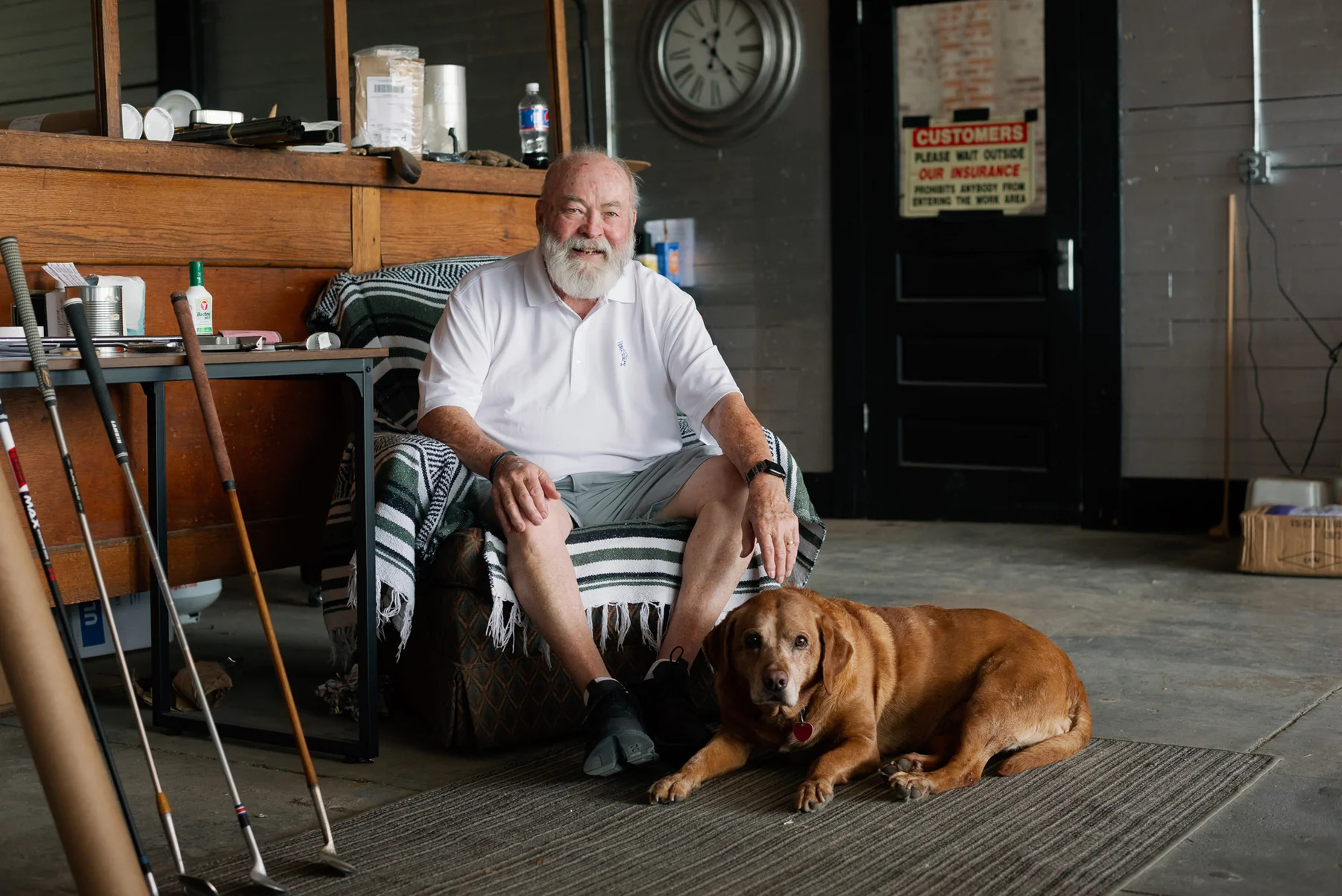
Tad Moore was born into a golfing family in Toledo, Ohio. His mother and older brother encouraged him to learn the game, and he became a successful amateur golfer as well as a knowledgeable student of golf equipment.
Moore began designing custom golf clubs in 1963. His experience as a player strongly influenced his approach: a club should not only look beautiful, but also sit correctly behind the ball, feel balanced in the hands and perform reliably on the course. In 1989, Moore became a full-time club designer through an agreement with Dunlop, Maxfli and Slazenger. During this period, he helped develop some of the most respected clubs of the 1990s. His fully milled Maxfli putters were particularly significant, helping establish a manufacturing process that would later become widely used throughout the golf industry. At one point, more than 70 professional players were reportedly using Moore-designed milled and cast putters on tour. His best-known competitive achievement came at the 1991 Masters Tournament, when Ian Woosnam won at Augusta National using a Tad Moore putter.
This success established Moore as an important figure in modern putter design—but his fascination with golf’s past would eventually lead his career in another direction.
Discovering Hickory Golf
While researching how early golf clubs were made, Moore began studying original clubs from the late nineteenth and early twentieth centuries. He examined their head shapes, materials, shafts, sole designs and manufacturing techniques. What began as historical research developed into a lasting interest. Moore found that antique clubs offered a completely different playing experience. Their hickory shafts required rhythm rather than force, and their compact heads rewarded creativity and precise contact.
However, finding complete sets of original clubs in playable and properly matched condition could be difficult. Antique shafts could be damaged or weakened, while the lofts, lies and overall weights of clubs collected from different makers were often inconsistent. Rather than simply collecting old equipment, Moore decided to use his clubmaking knowledge to produce new hickory-shafted clubs inspired by successful historic designs. In 2005, he introduced a line of newly manufactured hickory clubs in the United States. These were among the first new hickory-shafted clubs produced there since the early 1930s and became an important part of the modern hickory golf revival.
Reproduction, Not Imitation
A Tad Moore hickory club is designed to capture the character of an original club without reproducing every limitation created by age or inconsistent early manufacturing.
Moore studies historically successful models and identifies the qualities that made them effective. These may include the curve of a sole, the depth of a wooden face, the amount of offset in an iron or the way a putter rests behind the ball. He then applies his experience as both a player and designer to create a club that remains recognisably historic but is also properly balanced and suitable for regular play. This distinction is important. A decorative replica may resemble an antique club but provide little confidence on the course. Moore’s clubs are intended to be played. Their traditional appearance is supported by carefully considered lofts, lies, head weights and shaft characteristics.
His work demonstrates that historical accuracy and playability do not need to oppose one another. When approached thoughtfully, each can strengthen the other.
The Pall Mall Woods
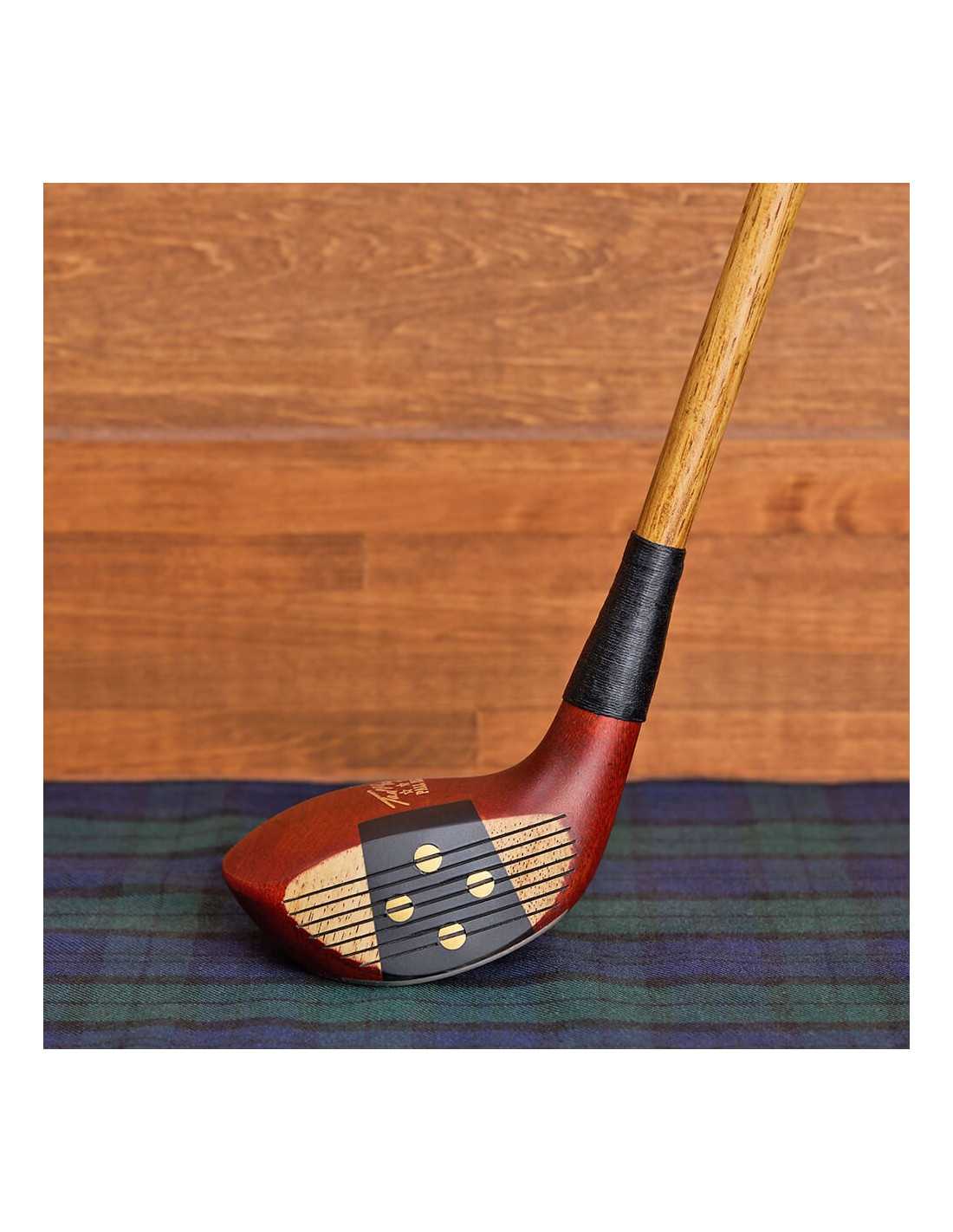
Among Tad Moore’s best-known hickory designs are the Pall Mall woods. Inspired by wooden clubs of the 1930s, the collection includes a brassie, spoon, cleek and baffy. Each club serves a different purpose. The brassie provides a lower-lofted option for tee shots and longer fairway shots, while the spoon offers additional loft and versatility. The cleek and baffy help players approach the green from different distances and lies.
The clubs feature rounded soles that allow them to move naturally through the turf, while brass sole plates provide protection and add a traditional visual detail. Their shapes reflect an era before oversized metal woods, when golfers relied on timing, centred contact and the ability to shape a shot. The Pall Mall Brassie, Spoon, Cleek and Baffy available through The Hickory Golf Shop can be ordered with different shaft flexes. This allows players to experience a historically inspired design while choosing a specification suited to their own swing.
Irons Inspired by Gibson’s Star OA Clubs
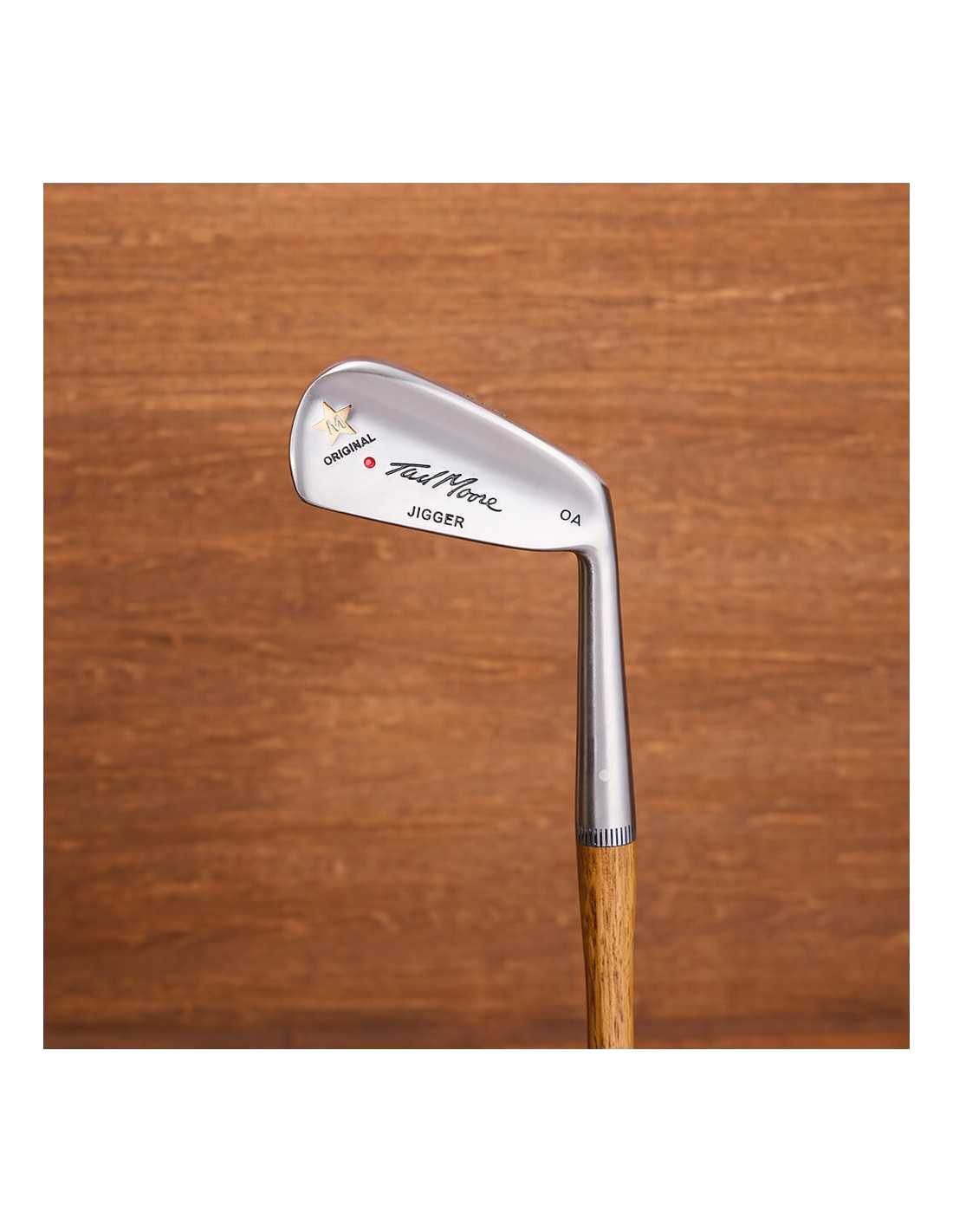
Moore’s hickory irons draw inspiration from the Star OA clubs produced by William Gibson of Kinghorn, one of Scotland’s best-known historic clubmakers.
The range includes traditional club names such as the mid iron, mashie, spade mashie, mashie niblick and niblick. Rather than having one iron for every small change in distance, a hickory golfer typically carries a more compact selection and uses each club for several types of shot. A mashie might be used for a full approach, a controlled punch or a running shot. A niblick could be opened for additional loft or played with a square face from heavier ground. This versatility is central to the appeal of hickory golf.
Additional clubs such as Moore’s driving iron and jigger allow golfers to expand their set while maintaining a consistent historic style. Each is fitted with a Tad Moore hickory shaft and a traditional leather-style grip. The result is equipment that encourages imagination. Rather than choosing a club entirely through a distance number, the player must consider trajectory, ground conditions and the shape of the required shot.
Reviving Historic Putters
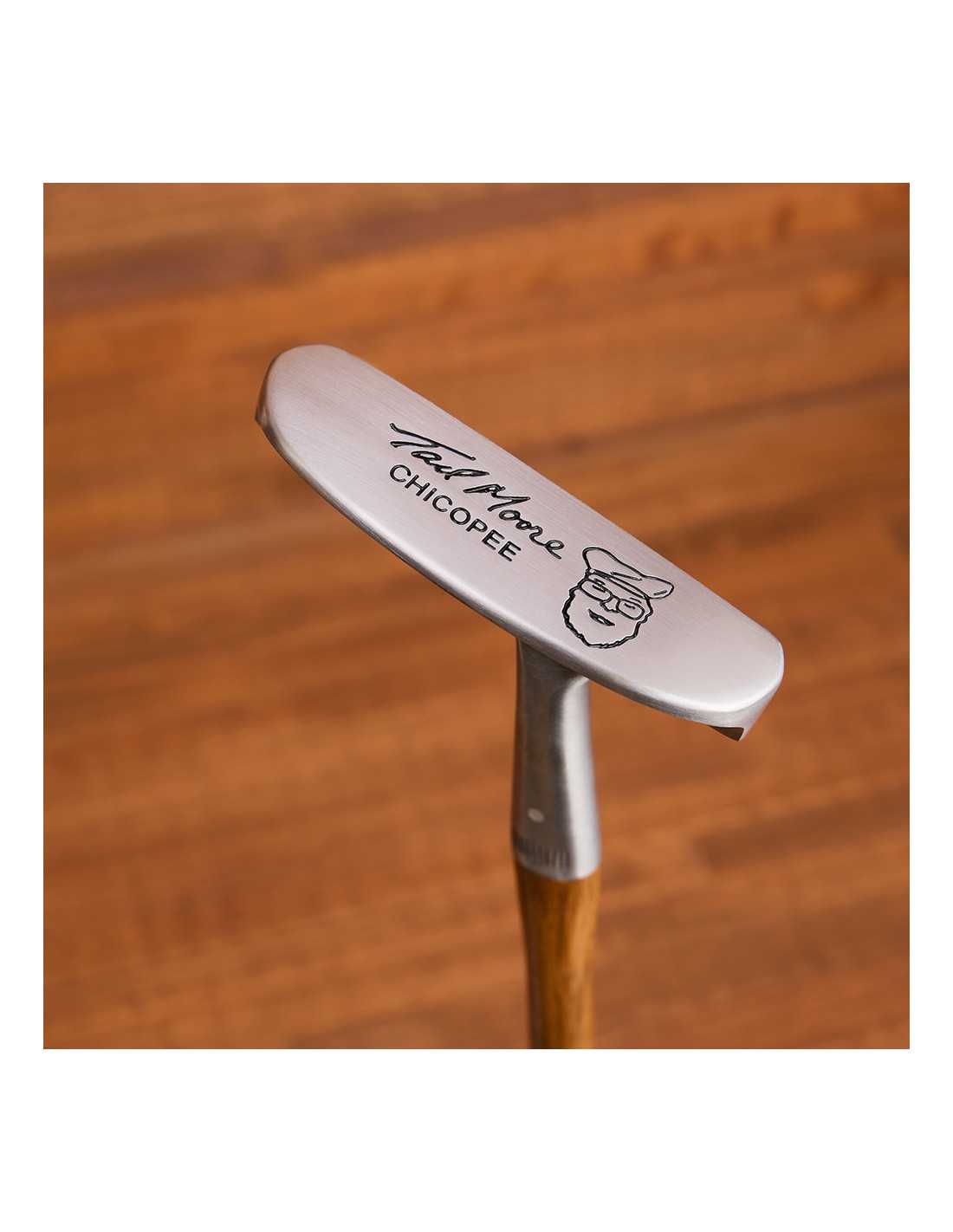
Putters have remained central to Tad Moore’s career, and his hickory collection includes interpretations of several fascinating historic designs.
The Chicopee is based on a classic A.G. Spalding & Bros. putter. Its compact shape and straightforward alignment represent a period when putters were made with relatively simple heads and relied heavily on the player’s touch. The model is offered in different metals, including stainless steel and brass, each producing its own appearance, weight and feel. The Spalding HB-style putter revives an influential blade design, while models such as the MM Aluminium and V-Bach explore unusual historic uses of aluminium. These designs reveal that early clubmakers were more experimental than they are sometimes given credit for.
Moore’s Cara Mia putter takes a more personal approach, combining the elegance associated with his modern putter designs with the feel of a hickory shaft. Together, these putters show the breadth of early golf design. Hickory equipment was never represented by one single shape. Makers experimented with blades, mallets, different metals and varying amounts of offset in search of improved balance and control.
A Complete Tad Moore Hickory Set
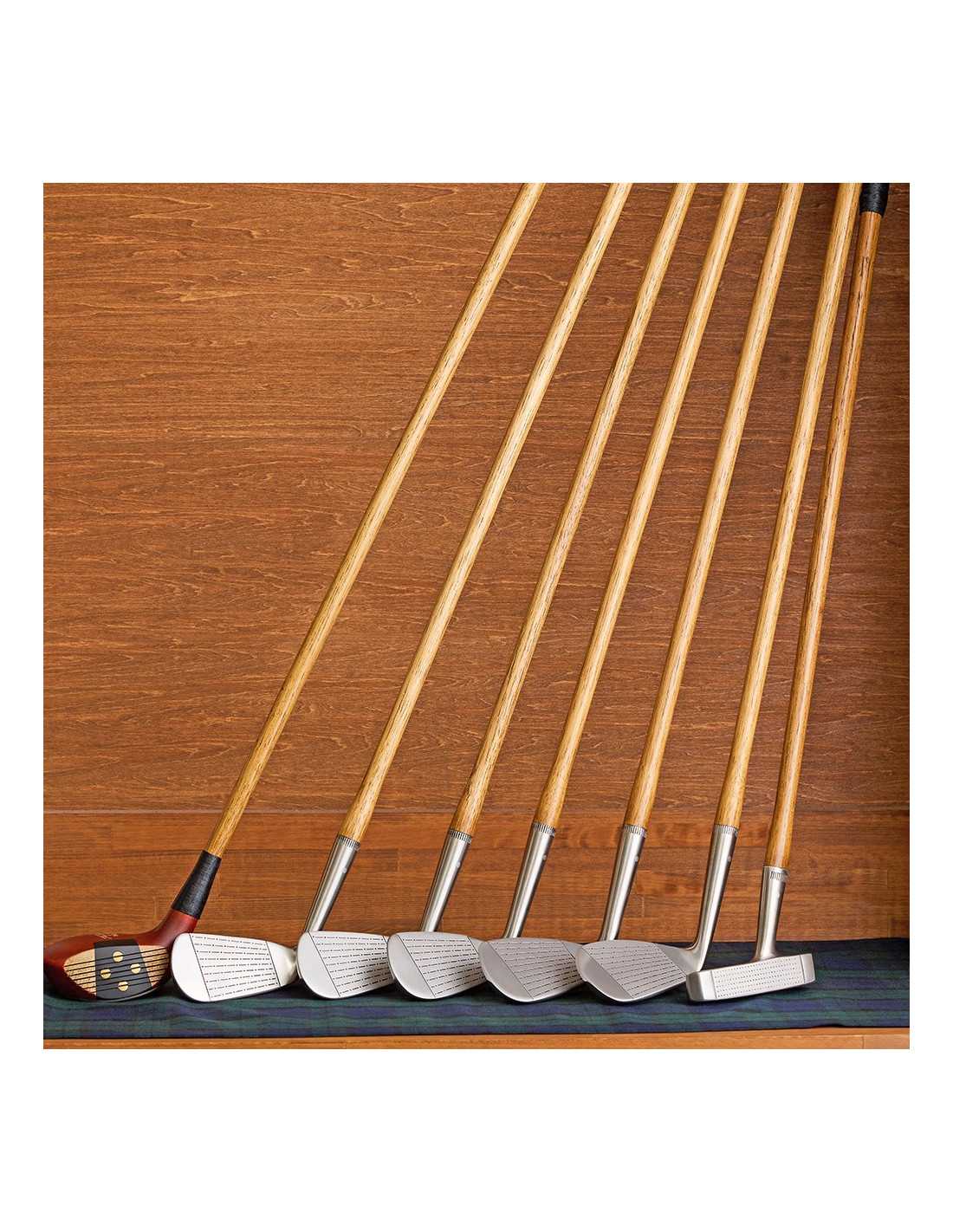
The Tad Moore seven-club set available from The Hickory Golf Shop brings several of his most recognisable designs together.
The set contains:
- Pall Mall Brassie
- Deep Face Mashie
- Mashie
- Spade Mashie
- Mashie Niblick
- Niblick
- Chicopee Putter
This compact arrangement covers the principal situations encountered during a round while remaining light enough to carry in a traditional pencil bag. It also reflects the way hickory golf was historically played—with fewer clubs and greater creativity. Rather than replacing a fourteen-club modern set with fourteen hickory equivalents, the player learns how to produce several shots from each club. That reduced selection is not simply a limitation; it is one of the qualities that makes hickory golf so engaging.
Helping Build the Modern Hickory Community
Tad Moore’s contribution extends beyond the clubs themselves. He was an early American advocate for playing with hickory equipment and became a founding member of the Society of Hickory Golfers.
The organisation has helped connect players, preserve knowledge about historic equipment and support hickory tournaments across the United States and internationally. Moore has also competed in hickory events, hosted tournaments and shared his knowledge with players and collectors. His perspective is therefore unusual. He understands hickory clubs as historical objects, as a designer, as a craftsman and as someone who plays the game. This combination allows him to recognise details that may be missed when a club is considered only as a reproduction.
Preserving History Through Play
Golf history is often preserved in books, photographs and museum displays. Tad Moore’s work offers another form of preservation: making historically inspired equipment that golfers can continue to use. When a player swings a Pall Mall brassie, controls a low shot with a mashie or putts with a Chicopee, the history becomes physical. The player experiences the different rhythm of a hickory shaft, the concentration required by a smaller head and the satisfaction of creating a shot without modern technology.
That experience explains why Moore’s clubs are appreciated by beginners, experienced hickory golfers and competitive players. They provide an approachable route into the game while retaining the qualities that make traditional equipment distinctive.
A Modern Master of an Historic Craft
Tad Moore’s career has moved from amateur competition to tour-proven modern putters and, eventually, to the revival of hickory clubmaking. Throughout that journey, the same principles have remained visible: timeless shapes, careful balance and equipment designed to be played.
He has not attempted to freeze hickory golf in the past. Instead, he has helped it continue as a living form of the game.
By combining knowledge of historic clubs with more than six decades of design experience, Tad Moore has created equipment that respects golf’s heritage without becoming merely decorative. His woods, irons and putters allow today’s players to discover how the game once felt—and why its older traditions still have so much to offer. That is what makes Tad Moore not simply a maker of reproduction clubs, but a modern master of hickory clubmaking.
------------------------------------------------------------------------------------------------------------------------
References
- Tad Moore Golf — About Tad Moore
- Tad Moore Golf — Hickory Golf Profile: An Interview with Tad Moore
- Society of Hickory Golfers — History and objectives
- The Hickory Golf Shop — Tad Moore Seven-Club Hickory Set
- The Hickory Golf Shop — Tad Moore Hickory Clubs
- The Hickory Golf Shop — Tad Moore Hickory Putters