
Your cart
There are no more items in your cart
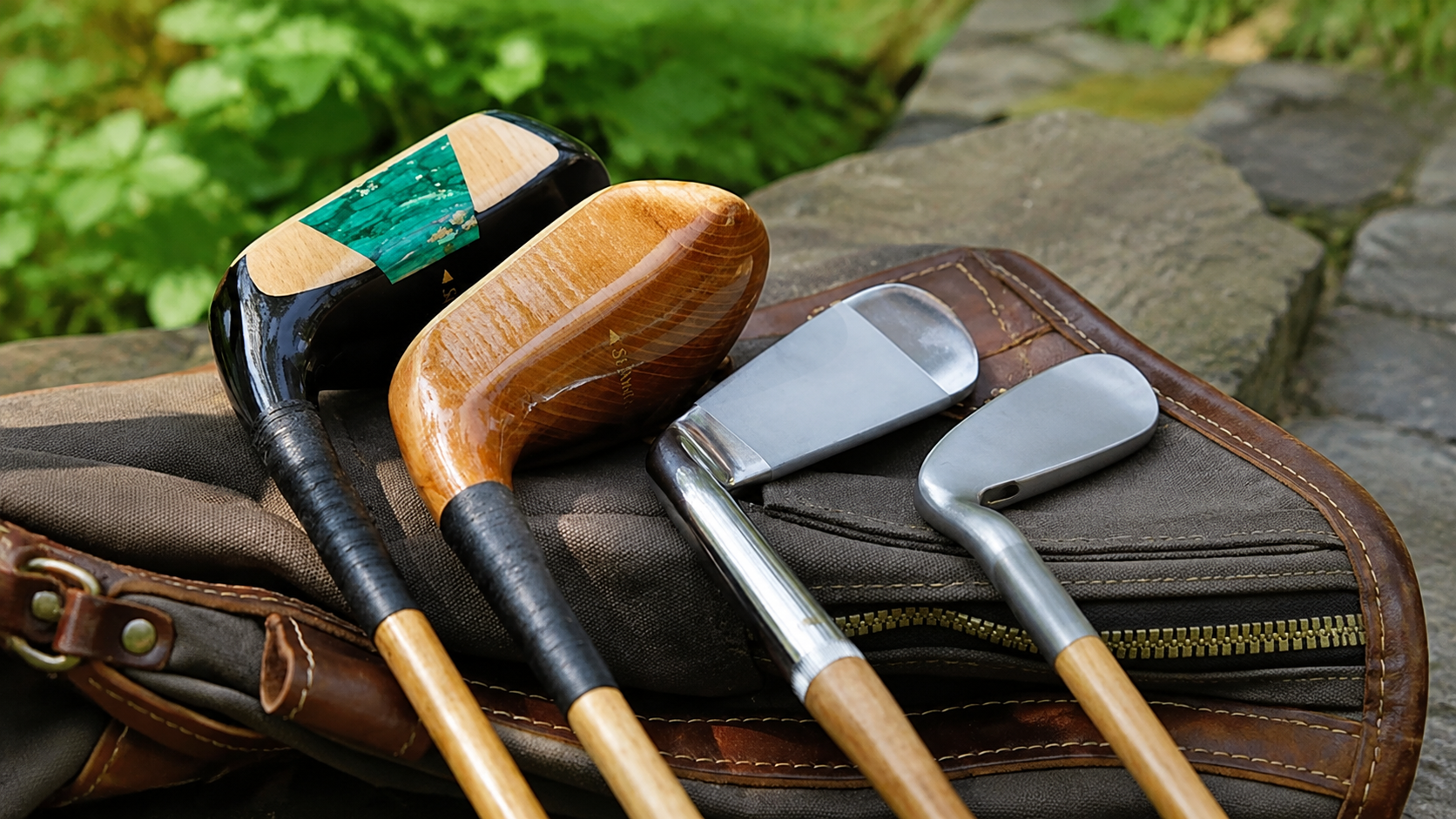
The putter may appear to be the simplest club in a golf bag, but its history reveals an extraordinary variety of ideas. Long before today’s oversized mallets, face inserts and alignment systems, clubmakers experimented with wood, iron, brass, aluminium, offset shafts and carefully shaped blades in search of better balance and control.
The putters available from The Hickory Golf Shop represent several different periods in this development. Our collection moves from handcrafted nineteenth-century long-nose putters to early twentieth-century blades and unusual aluminium mallets. It also brings together designs associated with some of the most important names in hickory clubmaking.
Putting Before the Modern Putter
The earliest putters were made from wood. Their long, narrow heads resembled the other wooden clubs carried by golfers during the feather-ball era. Because the balls were relatively soft and expensive, a smooth wooden face was suitable for putting without causing unnecessary damage.
As the gutta-percha ball became common during the nineteenth century, iron-headed putters became increasingly practical. Metal offered greater durability and allowed clubmakers to experiment with thinner blades, altered neck positions and different forms of weight distribution.
By the beginning of the twentieth century, golfers could choose from wooden putters, putting cleeks, compact blades and early mallets. Some designs were straight and minimal, while others introduced offset, flanges or additional material behind the striking area. This was not a simple progression in which one shape immediately replaced another. Golfers had different preferences, and many contrasting designs were used successfully at the same time. The variety found in our collection reflects that continuing experimentation.
Tad Moore Putters
Tad Moore has designed golf clubs since 1963 and has become one of the leading figures in the modern revival of hickory golf. His putter collection is particularly varied, drawing inspiration from important historic models while producing clubs intended for regular play.
Rather than presenting hickory putting as a single fixed tradition, Moore’s designs explore stainless steel, brass and aluminium, as well as blades and mallets. Together, they reveal how inventive early putter makers could be.
Tad Moore Chicopee Putter
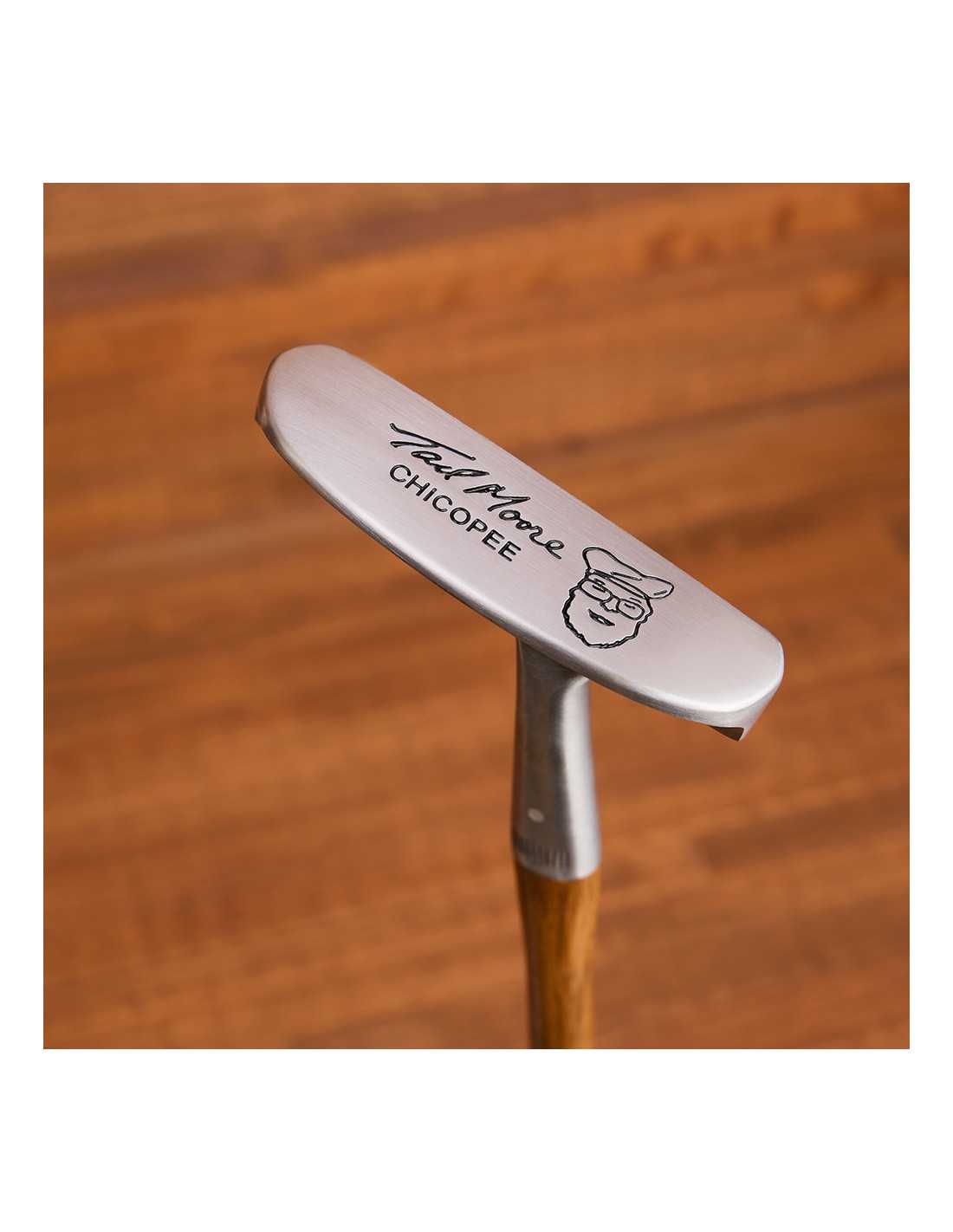
The Tad Moore Chicopee Hickory Golf Putter is a stainless-steel interpretation of the famous A.G. Spalding & Bros. Chicopee design.
Its compact metal head reflects the straightforward character of early blade putters. With relatively little unnecessary material, the shape allows the golfer to see the face clearly and feel the strike directly through the hickory shaft.
The stainless-steel construction gives the Chicopee a clean appearance and practical durability. It is an approachable choice for golfers who want a traditionally proportioned putter without moving immediately to one of the more unusual wooden or aluminium designs.
Its 71-degree lie angle and leather grip create a familiar address position while preserving the feel and appearance expected from a hickory-shafted club.
Tad Moore Brass Chicopee Putter
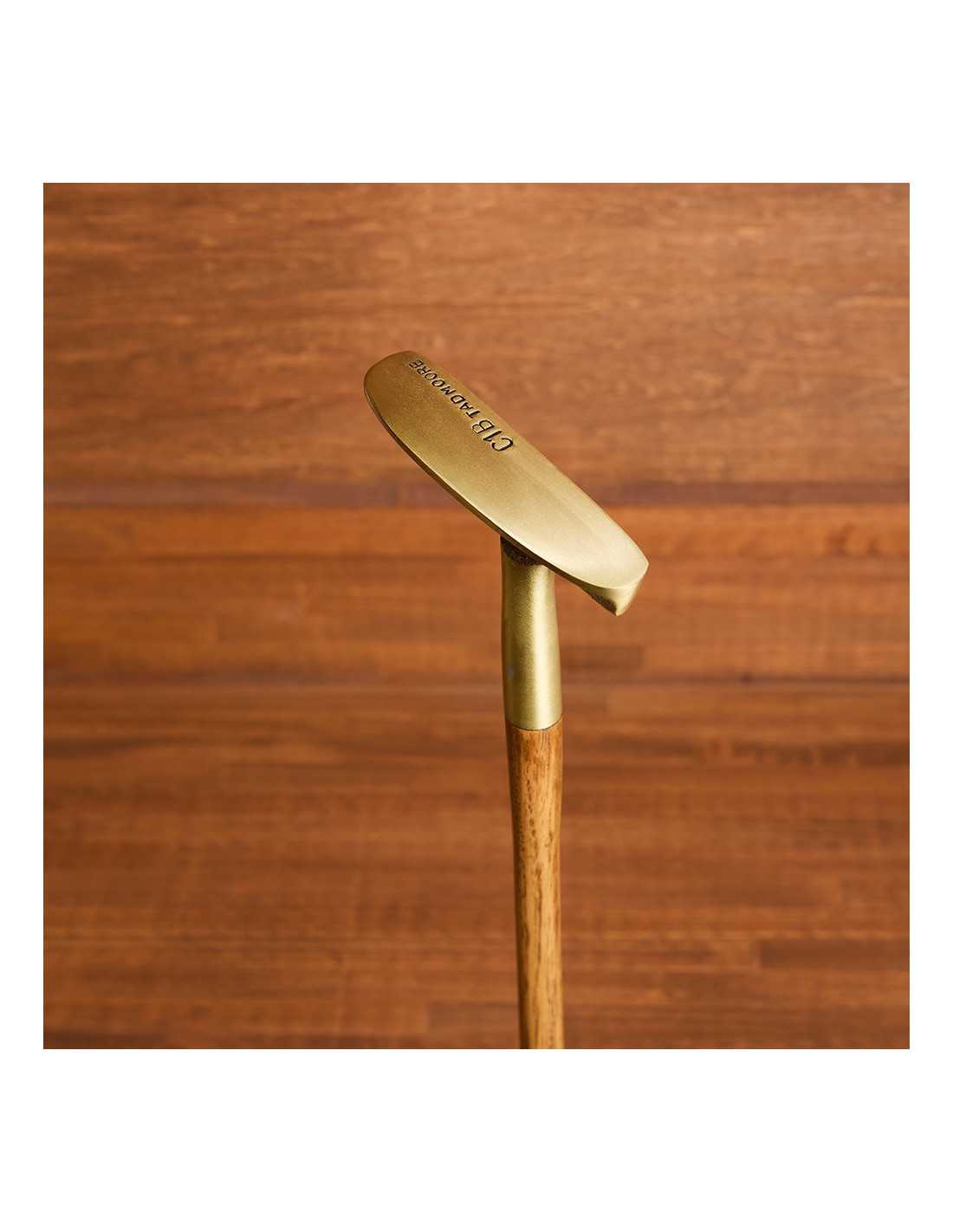
The Tad Moore Brass Chicopee uses the same historically inspired family of design but changes the head material from stainless steel to brass.
That material produces a warmer, more aged visual character. Brass has long been valued in golf equipment for its appearance and the way it develops patina over time. As the surface changes through handling and play, each putter gradually becomes more individual.
The Brass Chicopee is therefore particularly attractive to golfers who appreciate traditional materials and want a putter that will visibly record its use. Its compact blade still offers the clarity and simplicity of the Chicopee design, but with a noticeably different presence behind the ball.
The stainless and brass versions make an interesting pair. Their general inspiration is shared, but their contrasting metals give each model its own appearance and character.
Tad Moore Spalding HB Putter
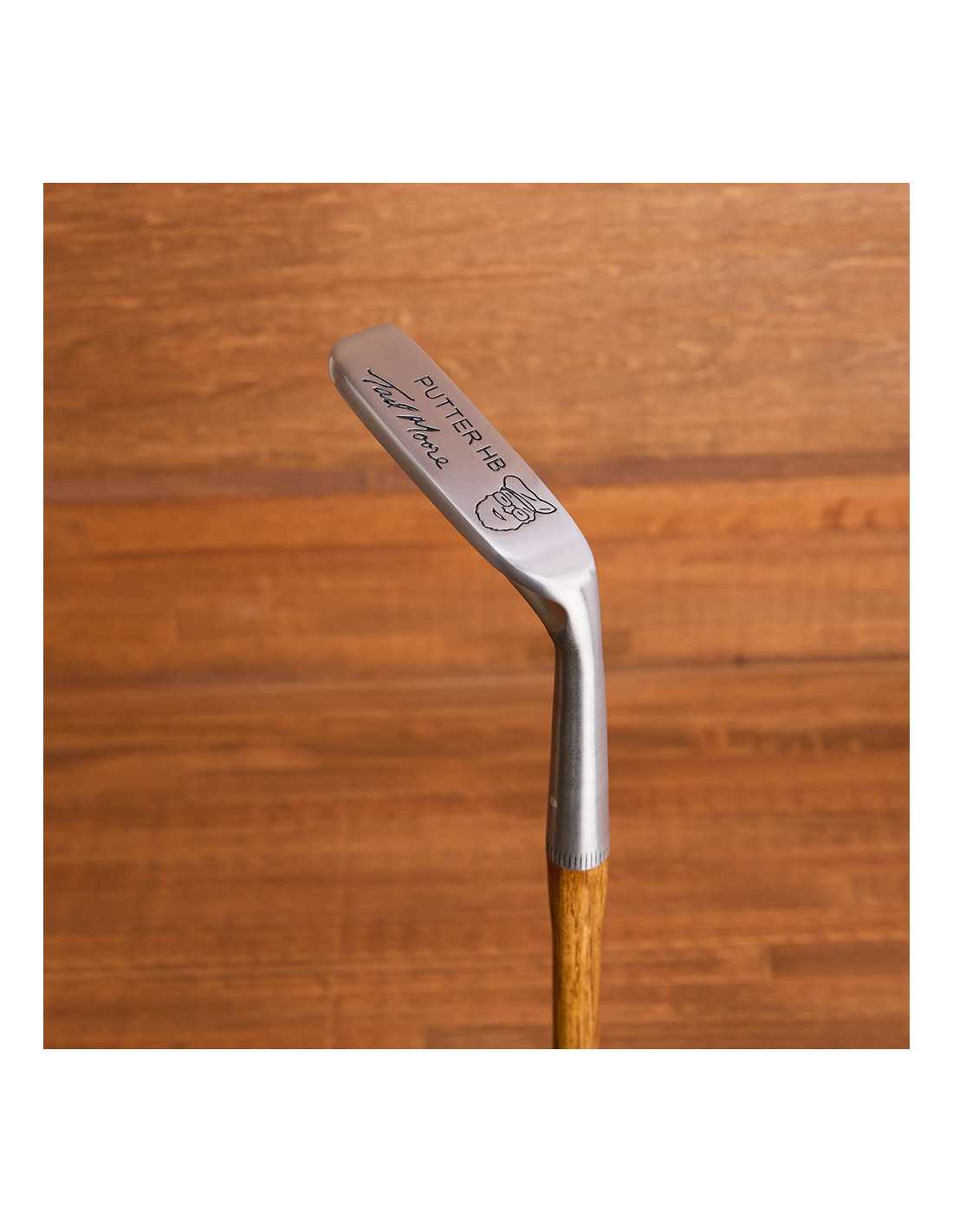
The Tad Moore Spalding HB Hickory Golf Putter revives a design regarded as an important predecessor of the modern blade putter.
Its influence can be seen in the way the head presents a clear striking face while organising weight into a compact, controlled shape. Although unmistakably traditional, its basic design principles remain familiar to golfers accustomed to later blade putters.
This makes the Spalding HB a bridge between hickory-era equipment and modern putting. It offers a historical appearance without feeling completely unfamiliar at address.
For a player entering hickory golf from the modern game, that balance may be particularly appealing. The putter allows the golfer to experience a hickory shaft and traditional head size while retaining a recognisable blade-style profile.
Tad Moore Muscle Back Blade Putter
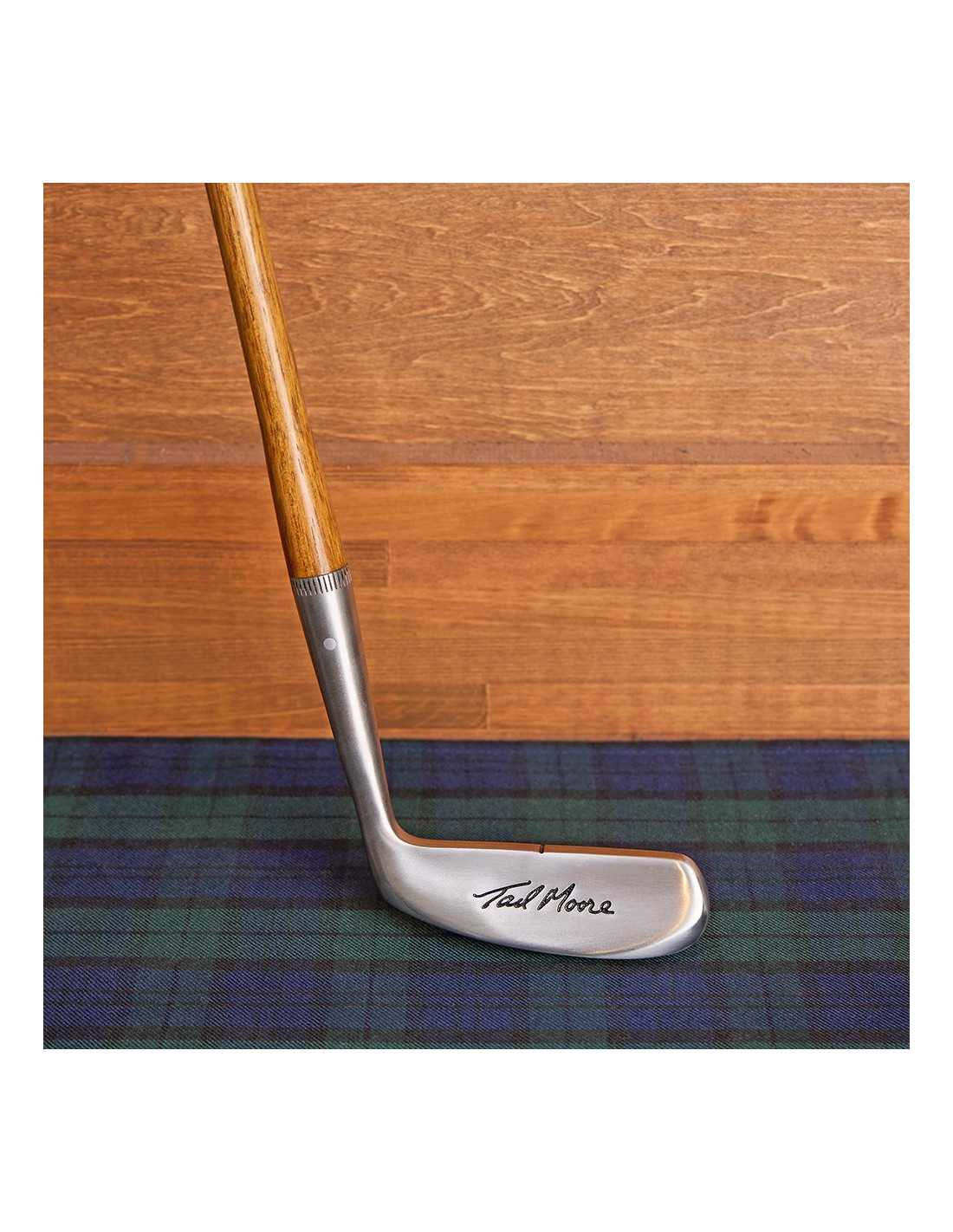
The Tad Moore Muscle Back Blade Hickory Golf Putter reintroduces the once-popular Old Tom Morris Elect-style putter through Moore’s own muscle-back interpretation.
The additional concentration of metal behind the face gives the head a stronger visual centre. This is one of the fundamental ideas behind a muscle-back design: place more material behind the principal impact area while retaining the elegance of a traditional blade. The result is a putter that looks substantial without becoming oversized. It suits golfers who appreciate the directness of a blade but prefer a head with a little more visual weight behind the ball.
Its stainless-steel construction also makes it a practical playing club rather than merely a display reproduction. The design demonstrates how an early putter shape can be revived while remaining suitable for present-day hickory rounds.
Tad Moore MM Aluminium Putter
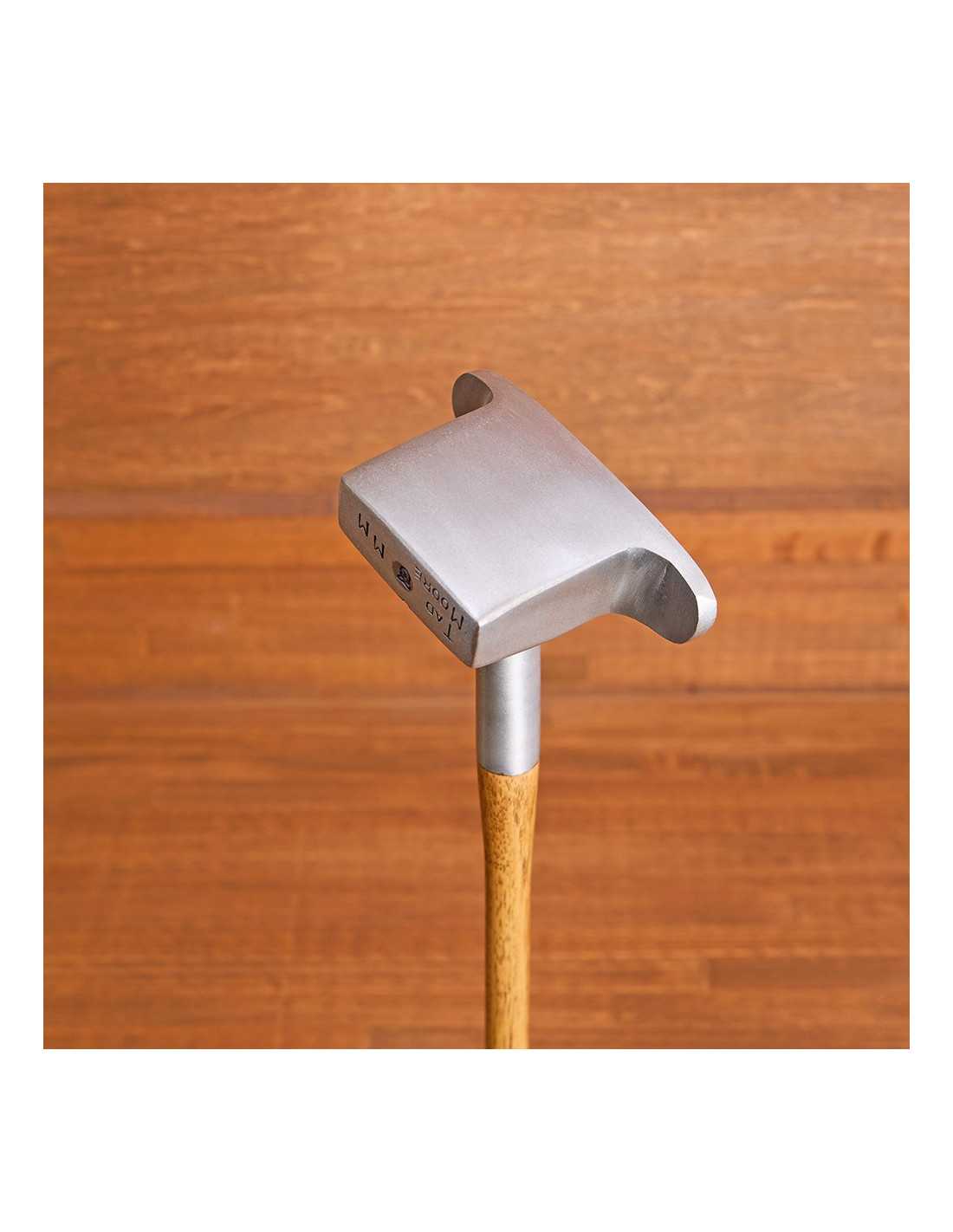
The Tad Moore MM Aluminium Hickory Golf Putter explores a very different part of putter history.
Inspired by a rare Spalding model, it uses an aluminium head with approximately four degrees of loft and a 71-degree lie angle. Aluminium was an unusual and innovative material in early golf equipment. Its lower density allowed clubmakers to create a larger head without making the putter excessively heavy. That difference changes the visual experience at address. Compared with a narrow steel blade, the MM Aluminium can provide a broader shape behind the ball while retaining manageable overall weight.
The putter is ideal for golfers interested in the experimental side of the hickory era. It challenges the assumption that all historic putters were small, heavy iron blades and shows that makers were already investigating alternative materials.
Tad Moore V-Bach Aluminium Mallet
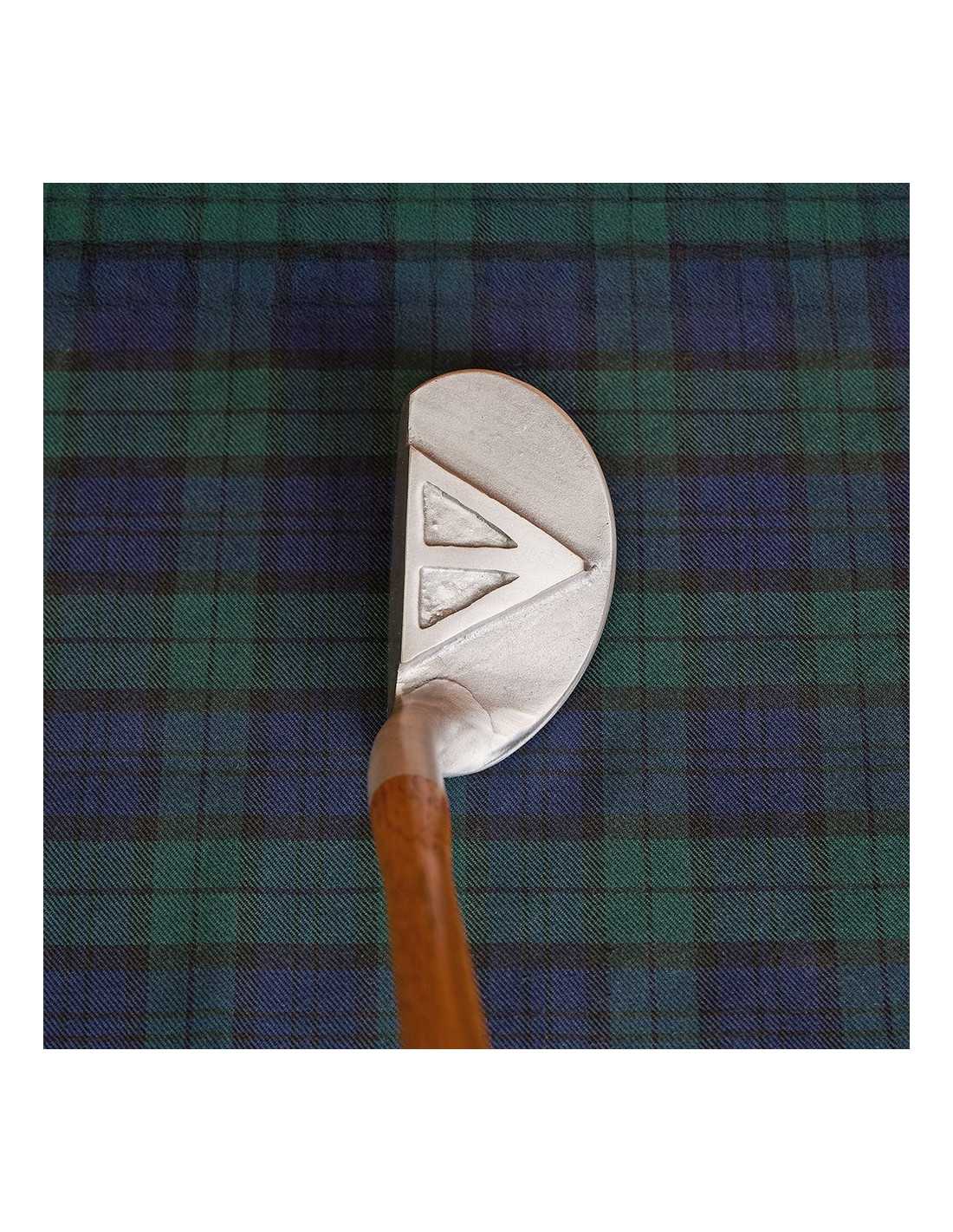
The Tad Moore V-Bach Hickory Golf Putter extends that experimentation into a true aluminium mallet.
It was developed from an extremely rare historic putter in the collection of Jeff Ellis. Its specially cast aluminium head is designed to reproduce the original model closely, including approximately four degrees of loft and a 70-degree lie angle. The mallet form places more material behind the face than a conventional blade. This creates a very different outline at address and can give the golfer a stronger sense of the intended path through the ball.
The V-Bach is one of the most distinctive putters in the collection. It is particularly suitable for someone who wants a genuine conversation piece but still intends to use it on the course. Its unusual shape makes visible the creativity that existed in early putter design—decades before large mallets became common in modern golf.
Tad Moore Cara Mia Putter
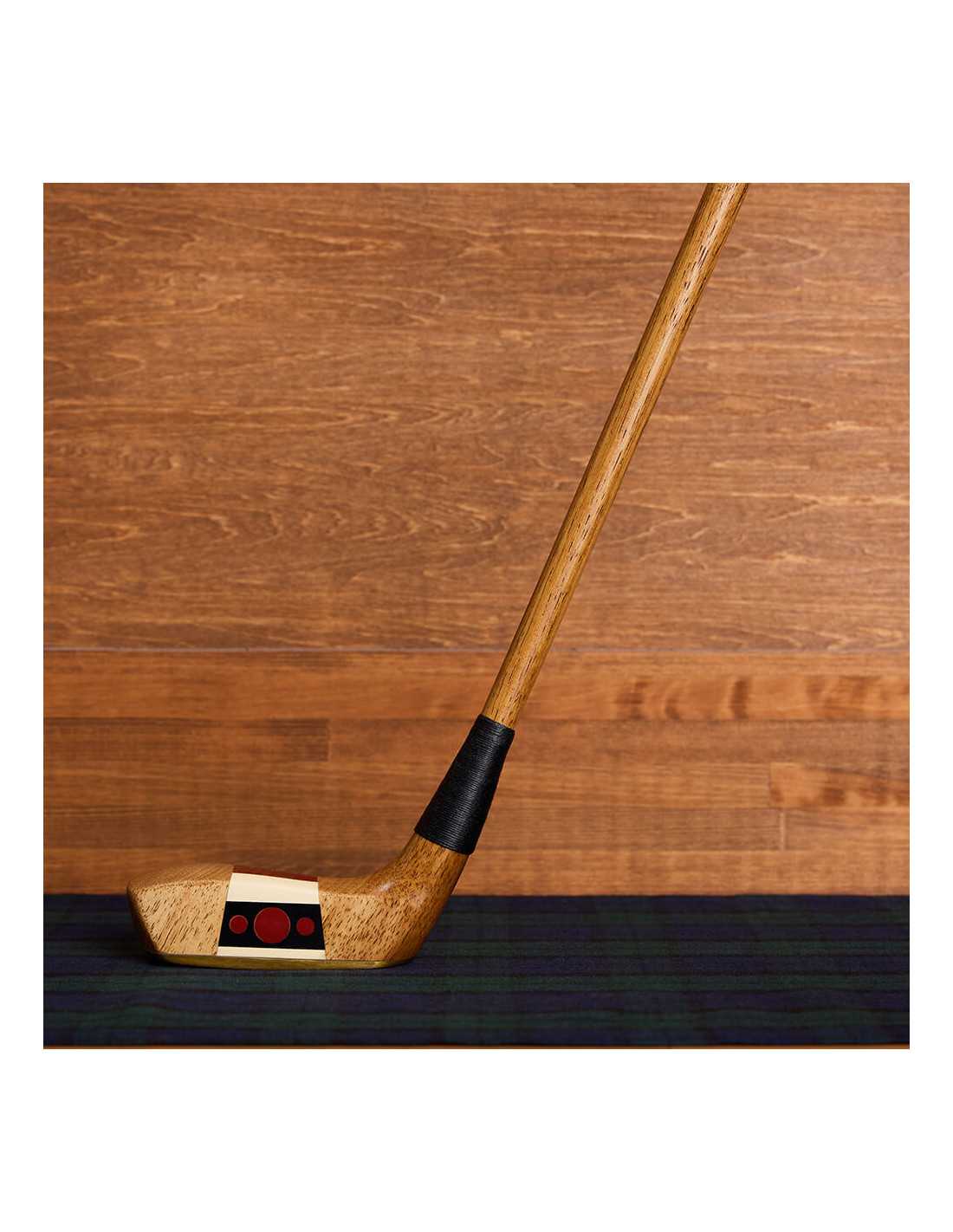
The Tad Moore Cara Mia Hickory Golf Putter reflects Moore’s broader philosophy of combining classic appearance with reliable playability.
Unlike models built primarily around the reproduction of one named historic putter, the Cara Mia expresses Moore’s own long experience as a putter designer. His work has always placed importance on the way a head sits behind the ball, how its weight is felt through the stroke and whether its shape inspires confidence. The hickory shaft adds the responsive, tactile character of traditional equipment. It asks the golfer to use a smooth tempo and feel the movement of the head rather than forcing the stroke.
For golfers who admire Tad Moore’s career as a designer and want a putter representing his personal approach, the Cara Mia provides a natural centrepiece.
Tom Stewart
Tom Stewart established his St Andrews cleekmaking business in 1893 and became one of the most respected iron-head makers of the hickory era. His clay-pipe cleek mark appeared on clubs sold and used throughout the golfing world.
Stewart’s reputation was founded on precision, careful inspection and his ability to turn a golfer’s ideas into a balanced, playable clubhead.
Tom Stewart OLD Hickory Golf Putter
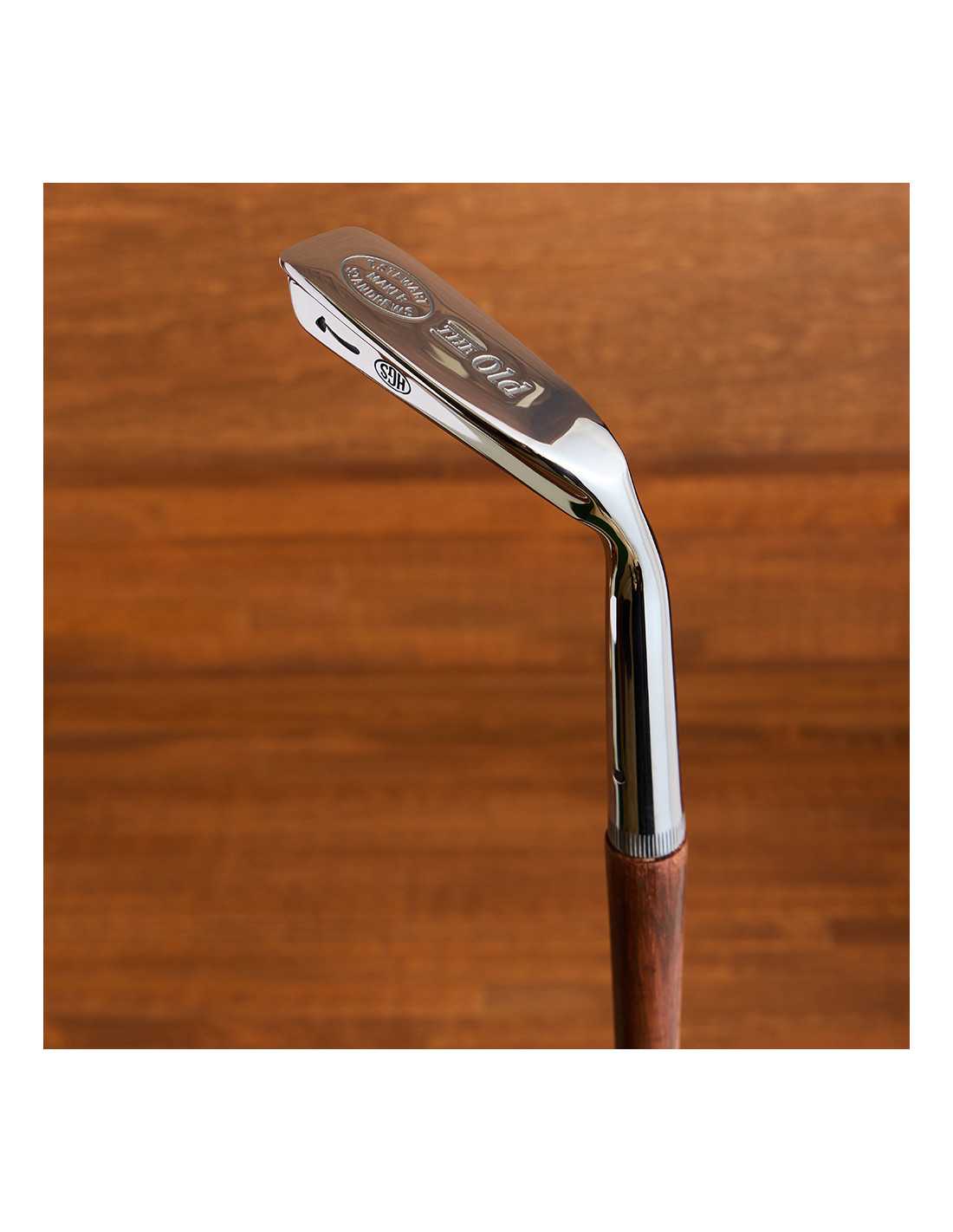
The Tom Stewart OLD Hickory Golf Putter is one of the most approachable traditional blades in our collection. Its stainless-steel head features a subtle flange and offset. The flange adds some visual substance behind the striking face, while the offset changes the relationship between the shaft and the face. These details make the putter easy to position and help provide a sense of control without disturbing its clean historical appearance.
A hickory shaft and soft suede-leather grip complete the club. The design has remained popular because it does not rely on unnecessary complexity. Its balance, compact proportions and clear face work equally well for an experienced hickory player or someone using a wooden-shafted putter for the first time. The OLD putter can also be used in a modern golf bag. It offers a direct, traditional feeling for golfers who prefer simplicity over the larger and more technical appearance of contemporary mallets.
George Nicoll
George Nicoll founded his clubmaking business in Leven, Fife, in 1881. His clubs carried the famous open-hand cleek mark, later known as the Helping Hand of Golf. Nicoll was an inventive manufacturer who looked for ways to make equipment more consistent and approachable. In 1920, he introduced a collection of distinctive blade putters, with the GEM becoming its best-known model.
George Nicoll GEM Putter
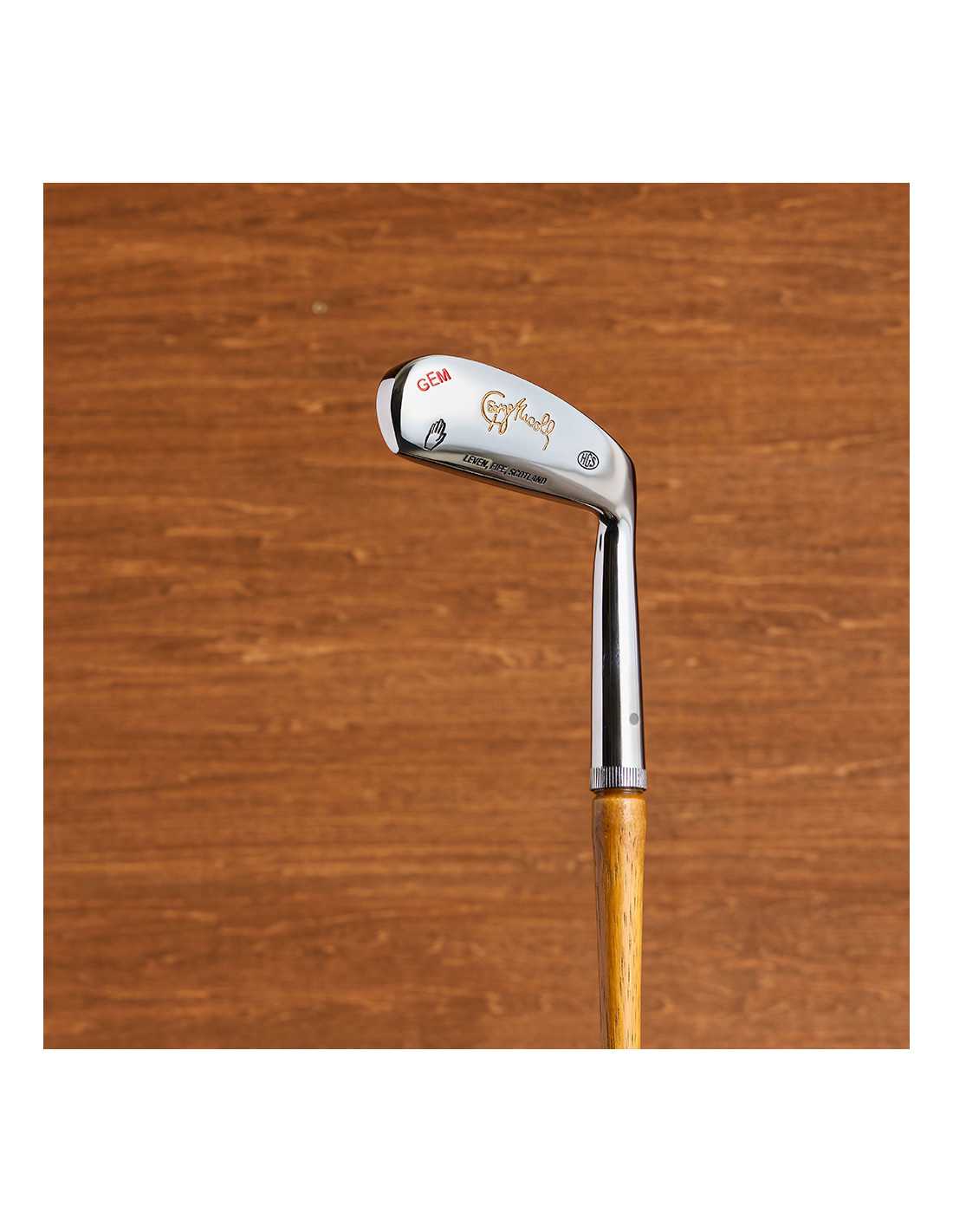
The George Nicoll GEM Hickory Golf Putter features an elegant blade with a subtle muscle-back form.
The additional shaping behind the face gives the head a gentle sense of depth while preserving the compact outline of an early twentieth-century blade. When introduced, the GEM attracted attention for combining a refined appearance with practical balance and control. More than a century later, the shape remains remarkably usable. It offers the visual precision of a blade while placing enough material behind the impact area to make the head feel composed through the stroke.
Made in St Andrews with a hickory shaft and suede-leather grip, our GEM recreates the character of Nicoll’s famous design for modern play. It is a natural choice for golfers drawn to Scottish clubmaking history and the story of the Helping Hand.
K. Leonard
K. Leonard preserves an earlier form of clubmaking. His work looks beyond the familiar 1920s blade and returns to the handcrafted wooden clubs of the feather-ball and early gutta-percha eras. The heads are individually shaped largely with hand tools and joined to hickory shafts using traditional construction. As a result, every club carries small differences that reveal the physical work behind it.
K. Leonard Long-Nose Putter
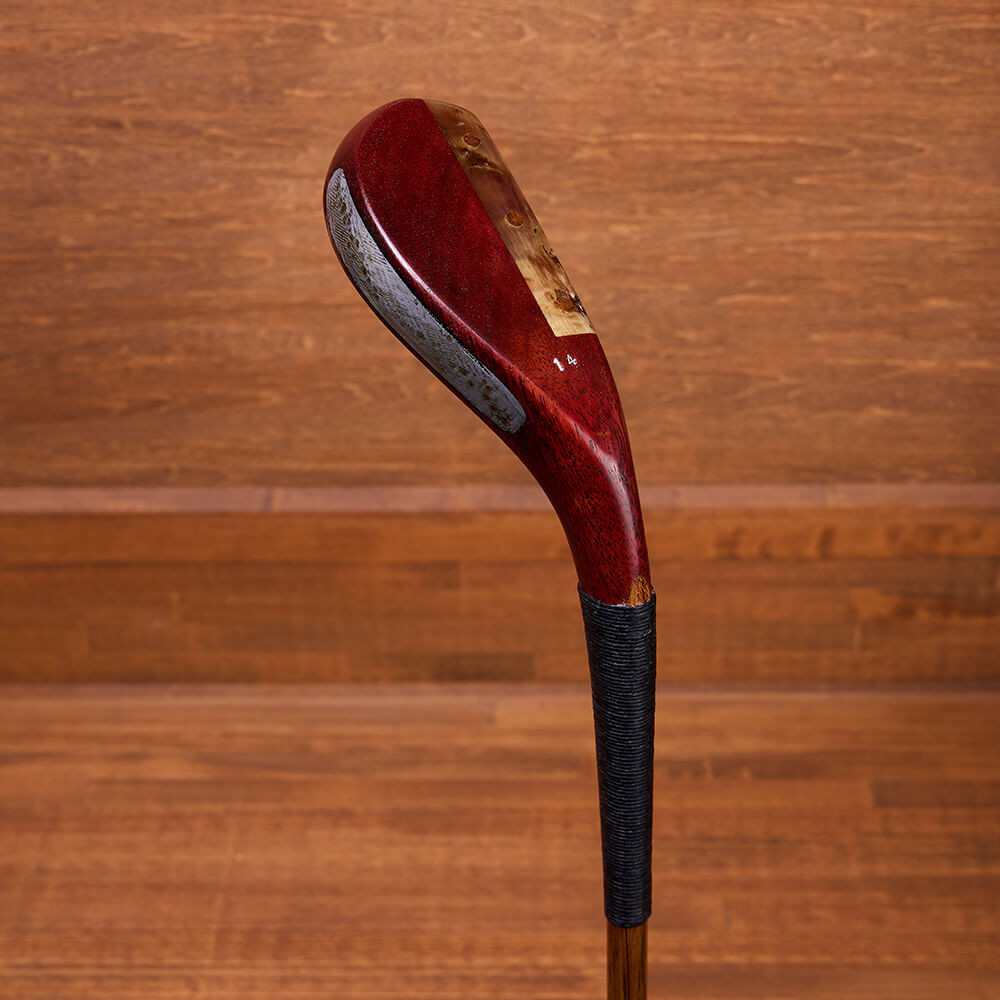
The K. Leonard Hickory Golf Long-Nose Putter has a hardwood head with the extended, slender profile associated with nineteenth-century golf.
Its shaft is attached using a traditional scare joint: a long, tapered splice that is glued, bound and carefully finished. A horn insert reinforces the wooden face, while a traditional grip contributes to its period character. Putting with a long-nose club feels quite different from using a metal blade. The elongated head creates a strong visual line, but its wooden construction produces a softer sensation at impact. Rather than encouraging a sharp or forceful strike, it rewards rhythm and a flowing stroke.
Made predominantly with hand tools and period-inspired methods, the K. Leonard putter is well suited to collectors and players seeking the closest connection to golf’s early equipment. It can be displayed as an individual piece of craftsmanship or played as part of a complete long-nose set.
Westward Ho!
The Westward Ho! putter connects early clubmaking with the history of links golf in North Devon. Golf was established at Westward Ho! in the 1860s on the natural terrain of Northam Burrows. The area developed a clubmaking tradition that continued through craftspeople including Eddie Davies and his grandson Shaun Davies.
Westward Ho! Long-Nose Putter
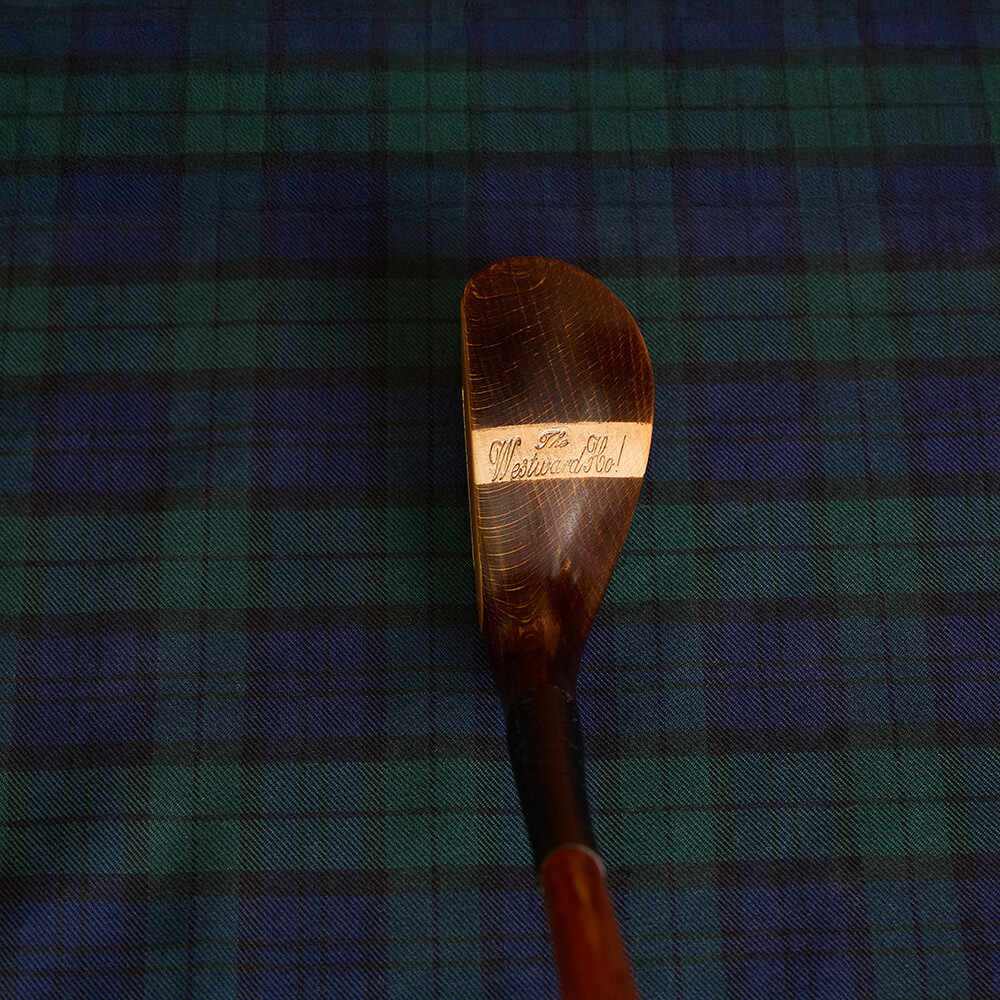
The Westward Ho! Hickory Golf Long-Nose Putter is handcrafted by Shaun Davies in Devon.
Its head is made from native beechwood and attached to a hickory shaft through a twine-bound scare joint. A lead-filled cavity in the sole is capped with brass, adding carefully positioned weight while creating a distinctive traditional detail.
The grip combines leather and wool cloth, while the shaft includes a characteristic bend intended to improve the club’s balance. Because the heads are shaped by hand from natural timber, each putter is an individual object rather than an exact copy of the next.
Like the K. Leonard model, the Westward Ho! offers the soft impact and graceful outline of a wooden long-nose design. However, its materials, weighting and connection to Devon give it a character of its own.
It is particularly meaningful for golfers interested in the history of English links golf and the survival of clubmaking knowledge through generations of one family.
Comparing the Putter Families
The collection can be divided into three broad design families.
Wooden Long-Nose Putters
The K. Leonard and Westward Ho! putters represent the earliest tradition. Their extended wooden heads, spliced hickory shafts and hand-worked construction make them the most historically distinctive options.
They suit golfers who value:
Nineteenth-century craftsmanship
Soft wooden impact
Individual handmade character
Long-nose or early-golf play
A putter that can also be displayed as a crafted object
Traditional Metal Blades
The Tad Moore Chicopee models, Spalding HB, Muscle Back Blade, Tom Stewart OLD and George Nicoll GEM belong broadly to the metal-blade tradition.
Although their shapes and materials differ, they share compact proportions and a clear relationship between the hands, face and ball. They are generally the most familiar choices for golfers moving from a modern blade into hickory golf.
They suit players who value:
A simple and direct appearance
Clear feedback at impact
Traditional early twentieth-century design
A putter suitable for regular hickory play
Familiarity without modern visual aids
Aluminium and Mallet Designs
The Tad Moore MM Aluminium and V-Bach reveal the experimental side of historic putting.
Their lighter head material permits larger or more unusual shapes without excessive weight. They offer a fascinating alternative to the assumption that hickory-era putters must always be narrow blades.
They suit golfers who value:
Rare and unconventional historic designs
A broader visual shape behind the ball
Early experimentation with materials
A distinctive putter that starts conversations
The feel of a hickory shaft combined with a mallet-style head
The Cara Mia sits slightly outside these historical groupings, representing Tad Moore’s own combination of classic putter design and modern playing knowledge.
Choosing the Right Hickory Putter
There is no single putter that will suit every golfer. The best choice depends on the type of experience you want.
For a familiar transition from modern golf, a metal blade such as the Tom Stewart OLD, George Nicoll GEM, Tad Moore Chicopee or Spalding HB provides a recognisable starting point. For a stronger sense of weight behind the face, the Tad Moore Muscle Back Blade or the GEM may feel particularly appealing. Golfers drawn to the colour and developing patina of traditional metals may prefer the Brass Chicopee.
For something more visually supportive and unconventional, the MM Aluminium or V-Bach provides a wider head shape and a connection to early mallet experimentation.
For the most historically immersive experience, the K. Leonard and Westward Ho! long-nose putters return the golfer to the age of individually shaped wooden heads.
Whatever the model, a hickory putter should be swung smoothly. The wooden shaft communicates the movement of the head clearly, rewarding tempo and touch. A forced stroke usually produces less consistent results than allowing the putter’s balance to guide the motion.
Eleven Putters, Several Centuries of Ideas
The eleven putters in our collection tell a much broader story than their shared hickory shafts might suggest.
The K. Leonard and Westward Ho! models preserve the wooden long-nose tradition. George Nicoll and Tom Stewart represent the precision of established Scottish makers. Tad Moore connects those histories with the modern revival, recreating important blades, experimenting with brass and aluminium, and contributing designs of his own. Seen together, the collection demonstrates that putter development has never followed one simple path. Clubmakers repeatedly changed materials, redistributed weight and reconsidered how a head should appear behind the ball.
These putters allow that history to be experienced through play. Whether the chosen club is a hand-shaped wooden long nose, a compact steel blade or an aluminium mallet, each one asks the same timeless question: which shape gives the golfer the greatest confidence when the ball must finally find the hole?
---------------------------------------------------------------------------------------------------------