
Your cart
There are no more items in your cart
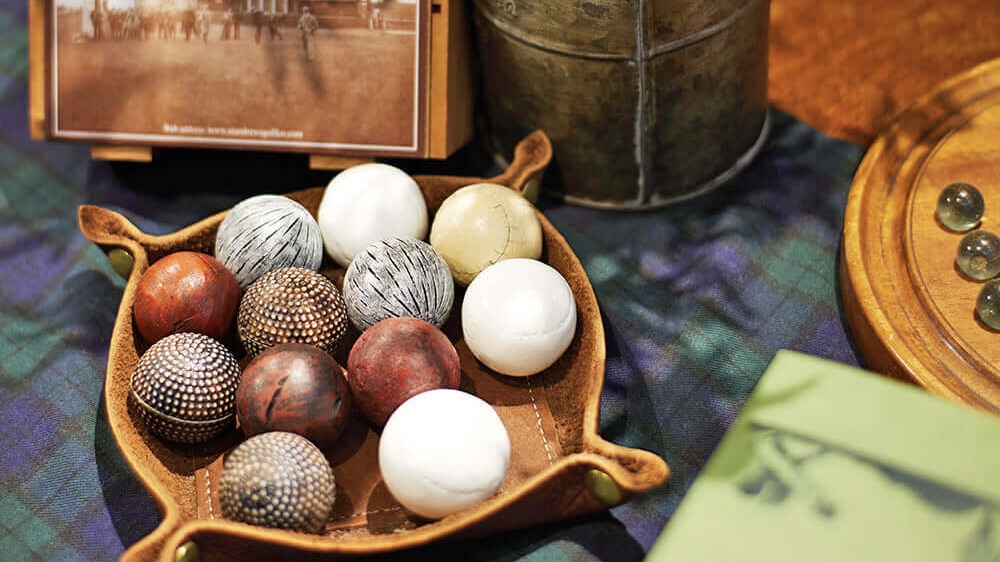
The history of golf can be traced through the object at the centre of every shot: the ball. Across several centuries, golf balls evolved from handmade wooden spheres into carefully engineered designs capable of travelling farther, flying more consistently and surviving repeated strikes from iron clubs.
At The Hickory Golf Shop, our collection of playable reproduction balls represents six important stages in this journey: the Wooden Ball, Smooth Gutta Percha Ball, Hammered Gutta Percha Ball, Dimpled Gutta Percha Ball, Vardon Flyer and Mesh Pattern Ball. Together, they offer a fascinating way to experience how changes to one small piece of equipment helped transform the entire game.
click on the image to go straight to the product
The Wooden Golf Ball
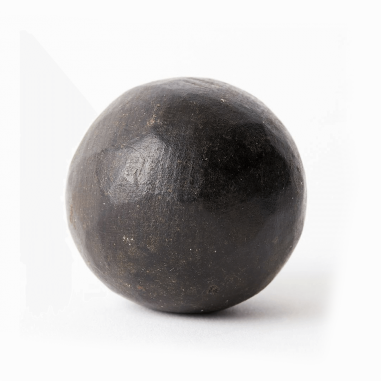
The wooden ball represents golf in its earliest and most rudimentary form. Balls of this kind are generally associated with the game’s early centuries, before specialist ball makers and standardised manufacturing began to emerge.
Made from hardwood, these balls would have been heavy, hard and inconsistent. Every example was shaped individually, meaning its size, weight and roundness could vary considerably. Its limited flight also suited the short, informal courses on which early forms of golf were played. The Wooden Golf Ball sold by The Hickory Golf Shop is a playable reproduction inspired by this earliest chapter of the game. It provides a striking contrast with every design that followed and shows just how much skill early players needed to control such simple equipment.
The Featherie Era
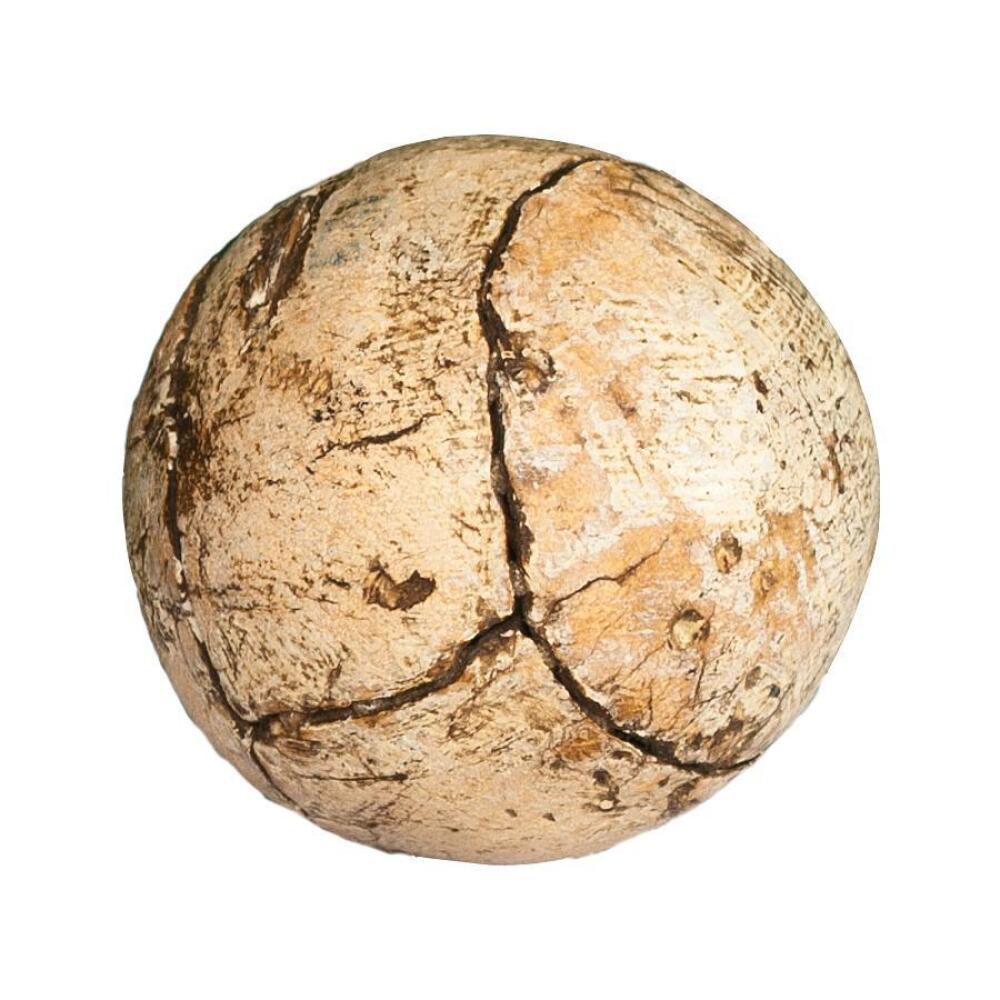
Although we do not currently include a featherie among our playable reproduction collection, no history of the golf ball would be complete without it.
Introduced during the seventeenth century, the featherie was made by tightly packing boiled feathers into a wet leather cover. As the leather dried and contracted, the feathers expanded, creating a compact ball that performed considerably better than wood. Producing one was slow and highly skilled work. Featheries were expensive, vulnerable to damage and could absorb water in wet conditions. Their cost made golf difficult to access for many people, but their improved flight helped establish the game more firmly during the eighteenth and early nineteenth centuries. The USGA’s history of golf-ball aerodynamics describes featheries as better-flying but fragile and costly alternatives to earlier wooden balls.
The Smooth Gutta Percha Ball
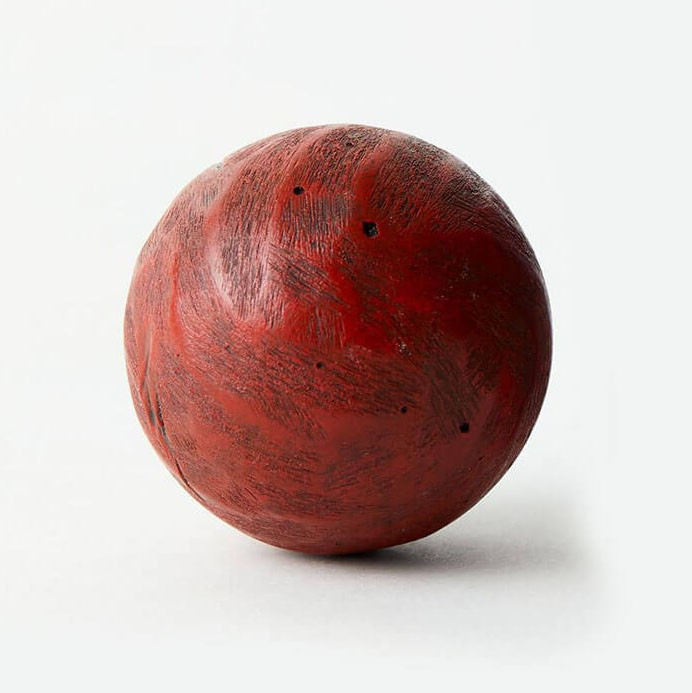
Golf changed dramatically with the arrival of gutta percha during the late 1840s. This natural material was obtained from the sap of trees found in Southeast Asia. When heated, it became soft enough to shape; once cooled, it hardened into a durable sphere.
Unlike featheries, gutta percha balls could be moulded more quickly and repaired or reshaped by reheating. They were considerably less expensive to manufacture, making golf more accessible to a wider group of players. The earliest versions had smooth surfaces, represented in our collection by the Smooth Gutta Percha Ball. Although strong and practical, a perfectly smooth ball did not travel particularly efficiently through the air. However, golfers soon noticed something unexpected: older balls with scratches and dents often flew better than new ones.
The Hammered Gutta Percha Ball
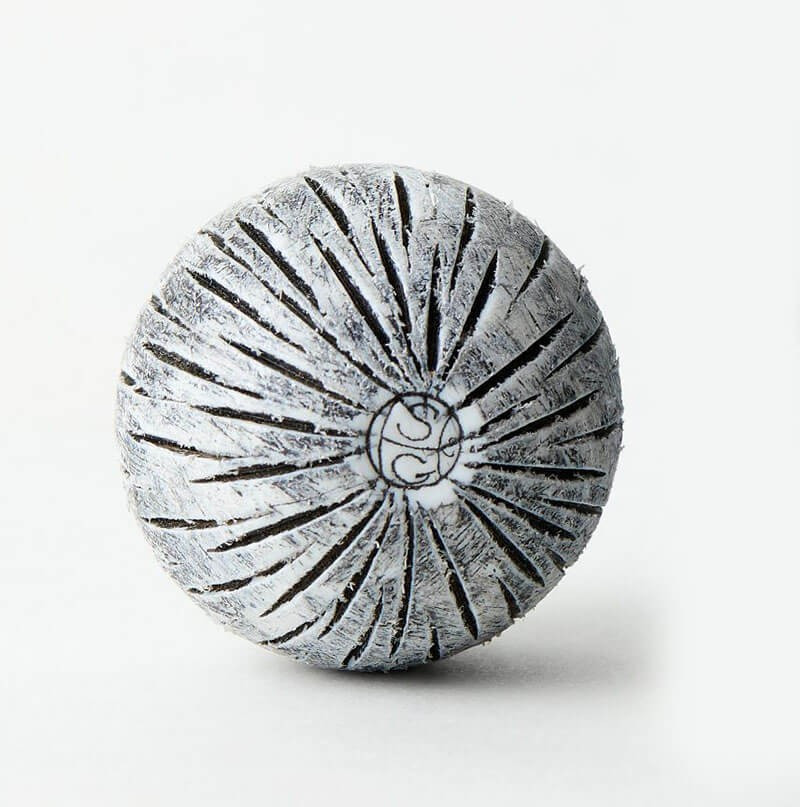
That observation led makers to add deliberate markings to the surface. Using small hammers and hand tools, they created repeated indentations that improved the ball’s flight.
These Hammered Gutta Percha Balls became common during the 1850s and 1860s. Because every surface was marked by hand, individual makers developed recognisable patterns, and no two balls were entirely identical. The reason these markings worked is now understood through aerodynamics. Surface irregularities create a thin turbulent layer of air around the ball, reducing the size of its wake and allowing it to travel more effectively. The USGA explains that nineteenth-century players discovered damaged gutties flew farther, encouraging manufacturers to reproduce those marks intentionally. Our Hammered Gutta Percha Ball recreates this important moment when practical observation began to shape golf-ball design.
The Dimpled Gutta Percha Ball
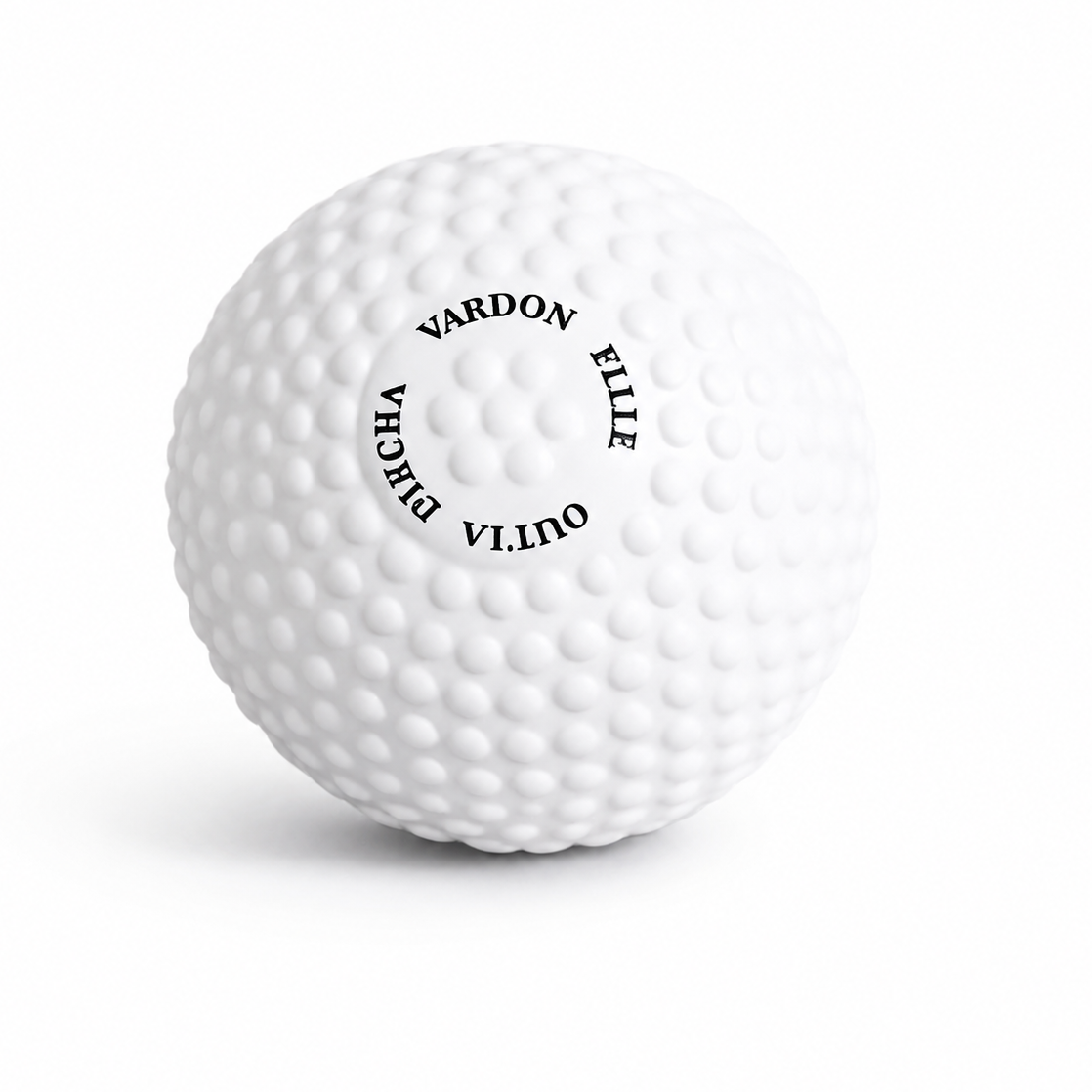
Hand hammering eventually gave way to moulded patterns. Manufacturers could now produce balls more consistently, with carefully repeated markings covering the entire surface. Our Dimpled Gutta Percha Ball represents the later gutty era, from approximately the 1880s into the beginning of the twentieth century. Its regular recessed markings anticipated the dimple patterns found on modern golf balls. This was not merely a decorative change. More consistent patterns produced more predictable flight, helping players judge distance and direction with greater confidence. Ball production was becoming a combination of craftsmanship, experimentation and early engineering.
The Rubber-Core Revolution
In 1898, Coburn Haskell and Bertram Work developed a ball constructed around wound rubber. It offered substantially more distance than the solid gutta percha ball and marked the beginning of the modern golf-ball era.
The effect reached every part of the game. Players could hit longer shots, courses needed to adapt, and clubmakers reconsidered the design of their equipment. Research published jointly by the USGA and The R&A estimates that the early wound rubber-core ball added approximately 10 to 25 yards for many players.
The new design did not become dominant immediately. Some golfers found its extra distance difficult to control, while established manufacturers remained invested in gutta percha. However, tournament success soon demonstrated its potential, accelerating the move towards rubber-core construction.
The Mesh Pattern Ball
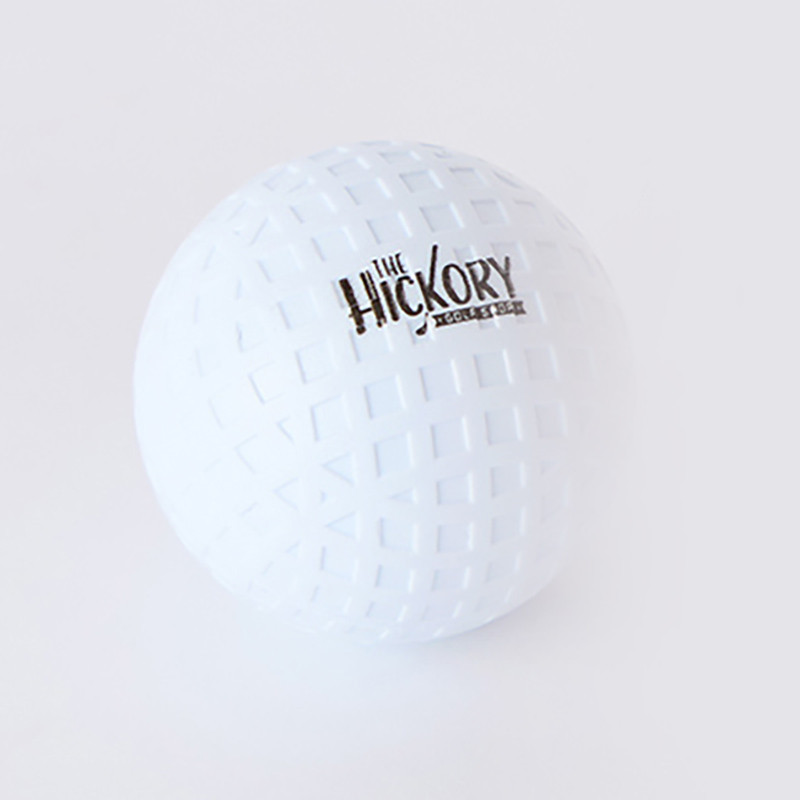
The Mesh Pattern Ball represents the mature hickory era of the 1910s and 1920s. Its tightly organised surface pattern reflects a period of intense experimentation, when manufacturers tested brambles, squares, lines and mesh arrangements in search of better flight.
The early Haskell prototypes included smooth and mesh-patterned versions, and mesh designs later became strongly associated with wound rubber-core balls. The USGA records that Walter Travis used an improved mesh-pattern Haskell ball when he won the 1904 British Amateur Championship.
Our Mesh Pattern Ball is the final stage in the six-ball historical collection and the design closest to the balls commonly used during the golden age of hickory golf. For players who want a practical ball for regular hickory rounds, we also offer the Soft Mesh Hickory Golf Ball in sleeves of three. It combines the historic mesh appearance with a softer, more forgiving playing feel. Its antique-white finish and satisfying impact make it a popular choice for hickory golfers and competitions today.
Experiencing the Evolution
The Hickory Golf Shop offers these designs individually in an engraved wooden presentation box or as a two-ball set pairing the Mesh Pattern Ball with an earlier historical design. Each reproduction is playable with either hickory or modern clubs, although the experience varies considerably from one ball to another.
Our collection includes:
- Wooden Golf Ball
- Smooth Gutta Percha Ball
- Hammered Gutta Percha Ball
- Dimpled Gutta Percha Ball
- Mesh Pattern Ball
- Soft Mesh Hickory Golf Balls in three-ball sleeves
The Smooth, Hammered and Bramble stages of gutta percha development also appear in our Scottish-oak Golf Ball Pen Holder, turning the story into a functional historical display. Seen together, these balls reveal that the evolution of golf was never driven by clubs alone. Each new ball changed the distance, feel and strategy of the game. It influenced how clubs were made, how golfers swung and how courses were designed. From a simple wooden sphere to the sophisticated mesh patterns of the hickory era, every ball represents an attempt to make golf more durable, consistent and enjoyable. Playing these reproductions offers something that a museum display cannot: the opportunity to feel that evolution through the club itself.
------------------------------------------------------------------------------------------------------------------------------------------------------------