Your cart
There are no more items in your cart
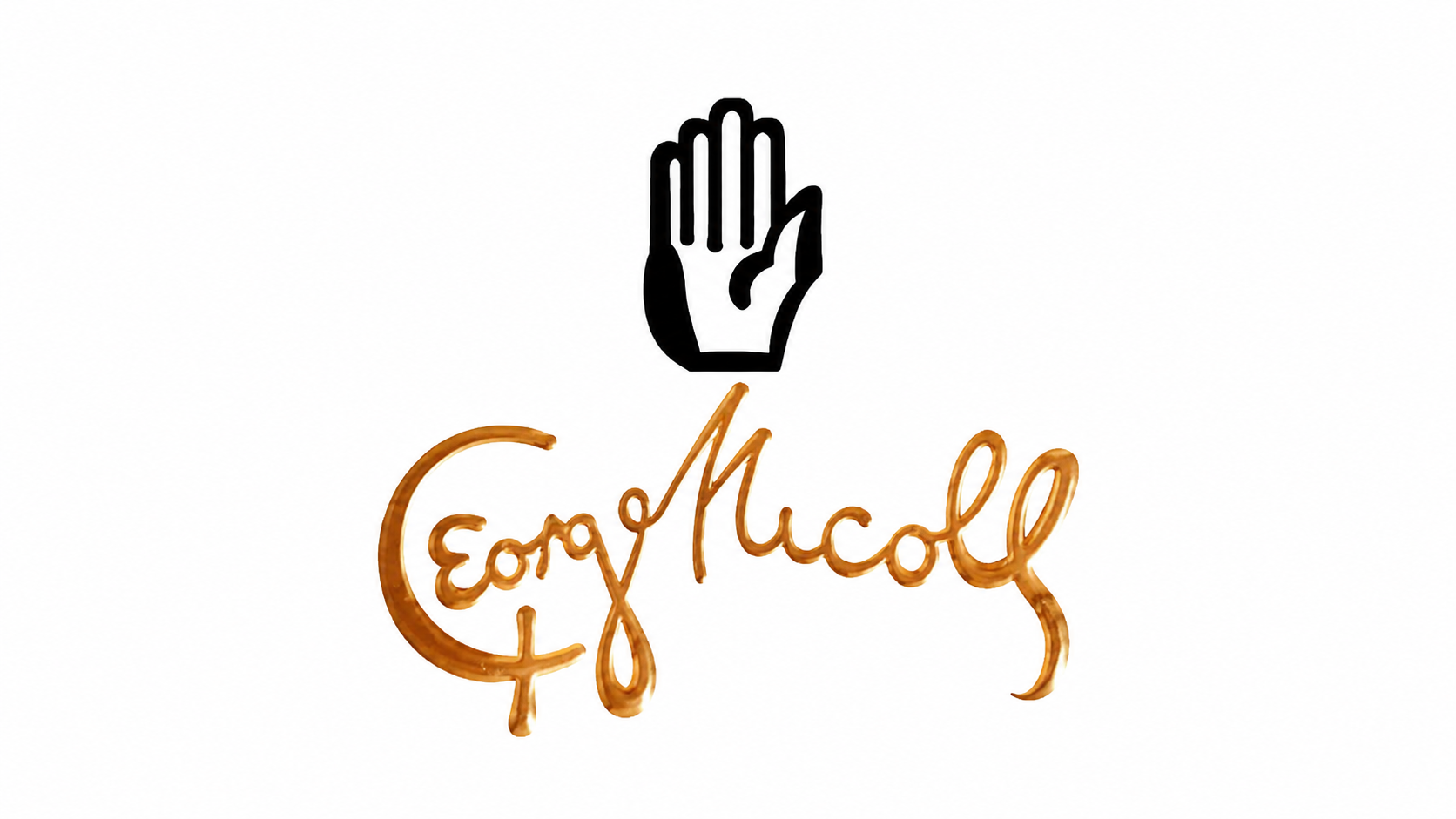
Among the many marks stamped onto historic golf clubs, few are as immediately recognisable as George Nicoll’s open hand. Known as the Helping Hand of Golf, it became a symbol of Scottish clubmaking, trusted by golfers throughout the hickory era and beyond.
The mark represented more than the name of a manufacturer. It identified the workshop behind the club, served as a guarantee of its origin and reflected Nicoll’s belief that thoughtfully designed equipment should help golfers enjoy and improve their game. More than a century later, the Helping Hand continues to appear on clubs and accessories, preserving the legacy of one of Scotland’s most important golf manufacturers.
From Blacksmith to Clubmaker
George Nicoll founded his clubmaking business in Leven, Fife, in 1881. Leven was already closely connected with golf, surrounded by links courses and within reach of several important centres of Scottish club production. Nicoll entered the trade with experience as a blacksmith. This was an ideal foundation for making iron golf-club heads, which were then widely known as cleeks. Each head had to be forged from metal, shaped, finished and fitted to a wooden shaft.
Before modern industrial production, clubmaking depended heavily on individual judgement. The maker had to understand the behaviour of the metal, the distribution of weight and the way the club would interact with the ground and ball. Minor differences in a head’s shape, loft or balance could noticeably affect its performance. Nicoll combined these traditional skills with a willingness to experiment. Instead of treating the golf club as a fixed design, he looked for ways to make equipment more practical, consistent and approachable.
What Is a Cleek Mark?
.jpg)
George Nicoll Golf Ball Markers
Historic clubmakers commonly stamped a small emblem onto the back of an iron head. This was called a cleek mark.
At a time when clubs were often sold through professionals, shops and overseas distributors, the cleek mark allowed a golfer to identify the original manufacturer. It performed much the same function as a modern brand logo, but it was physically stamped into the forged metal. Different workshops adopted distinctive symbols that could be recognised even when the lettering had become worn. These marks helped establish reputations: a golfer who had enjoyed one club could look for the same symbol when buying another.
George Nicoll’s emblem was an open hand. Historical accounts place its introduction around 1905, after which it became one of the best-known marks in the golf trade. It is sometimes described as the Hand of Friendship, but it became most closely associated with the name Helping Hand of Golf.
The Meaning of the Helping Hand
The open hand was a particularly fitting emblem for Nicoll’s approach to club design. It suggested assistance, confidence and accessibility—the idea that the equipment should work with the golfer.
This philosophy appeared in the practical nature of his clubs. Nicoll’s designs were not created simply to look impressive in a catalogue. They were intended to make club selection easier, produce more reliable results and help ordinary golfers play with greater confidence. Stamped onto the back of a club, the hand also acted as a quiet promise from its maker. It told the player that the head had come from an established Scottish workshop with a reputation to protect. As Nicoll clubs travelled beyond Scotland, the mark became recognisable internationally. Golfers did not necessarily need to read the full manufacturer’s stamp; the hand alone identified the club.
Innovation During the Hickory Era
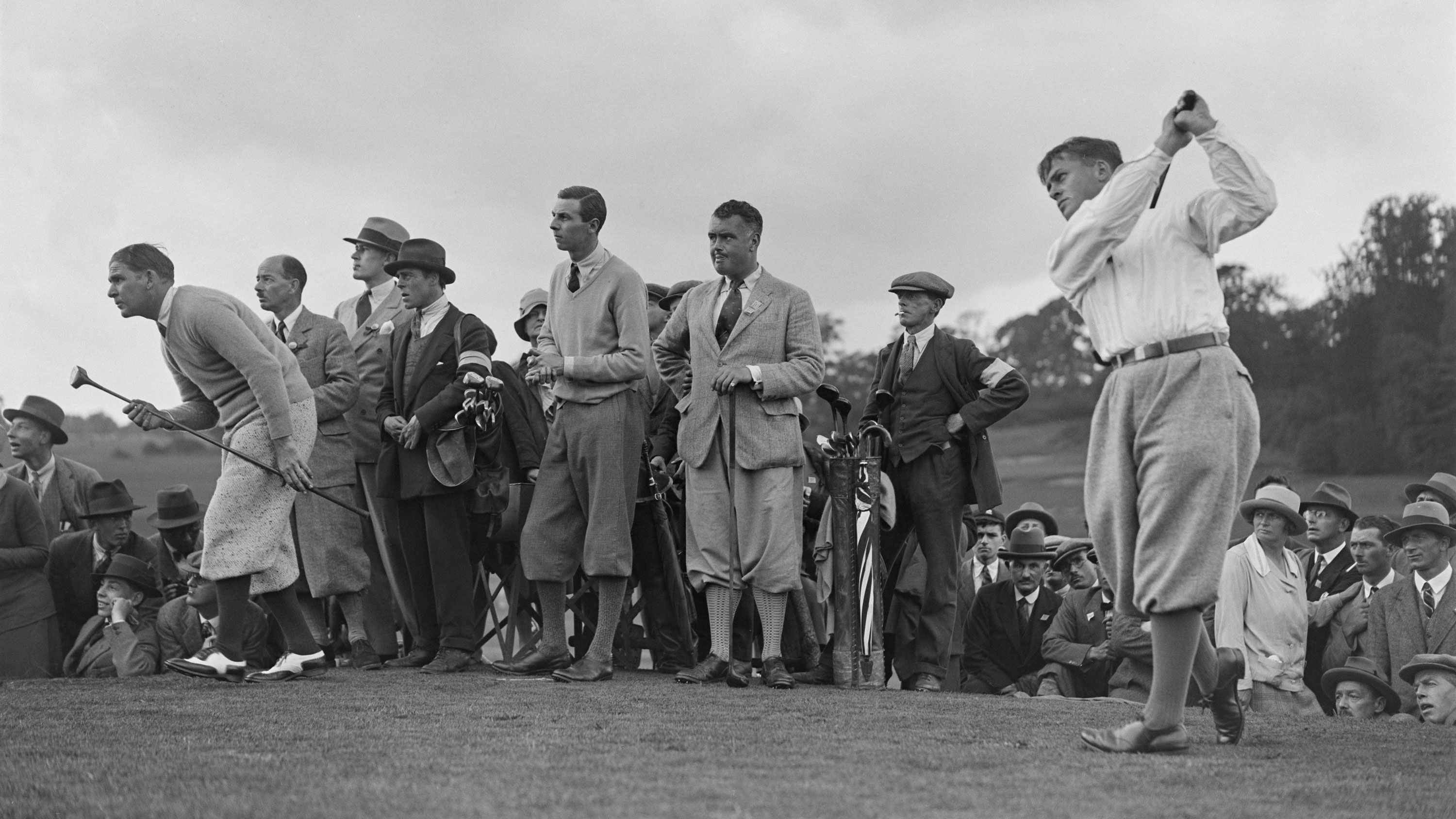
Nicoll established his business during a period of rapid change. Golf was expanding beyond its traditional Scottish centres, while developments in balls, courses and playing technique created demand for a greater variety of clubs.
One notable early design was a swan-neck putting cleek, introduced during the 1890s. Its curved neck changed the relationship between the shaft and the striking face, exploring ideas of alignment and balance that would continue to influence putter design. Nicoll also demonstrated an ability to manufacture at scale. An order recorded in 1898 reportedly called for 10,000 clubs—evidence of how quickly golf and the market for Scottish equipment were growing. Even as production increased, the forged iron head remained closely associated with craft. It still needed to be formed, inspected and finished before being fitted to a hickory shaft. The Helping Hand connected this expanding business with its origins in the blacksmith’s workshop.
Helping Golfers Choose the Right Club
During the early hickory period, golf clubs did not use the familiar numbering system seen today. Players selected between names such as cleek, mashie, mashie niblick and niblick. For an experienced golfer, these names described recognisable shapes and uses. For a beginner, however, building and understanding a set could be confusing.
Nicoll explored ways to make that choice easier. His later matched sets placed greater emphasis on consistency between the clubs, helping the golfer progress through different distances and trajectories more predictably.
The Indicator series, introduced during the 1920s, became a notable example of this thinking. The clubs were marked with guidance intended to help players understand the approximate distance for which each one was designed. Rather than forcing the golfer to rely entirely on traditional club names, the set provided practical assistance. This concept now seems familiar. Modern golfers expect a matched set to have organised lofts, related shaft characteristics and a predictable distance progression. During Nicoll’s time, however, carefully coordinated sets represented an important shift away from bags assembled from unrelated individual clubs. The Indicator idea gave the Helping Hand a literal purpose: the mark appeared on equipment designed to guide the golfer around the course.
Precision Irons
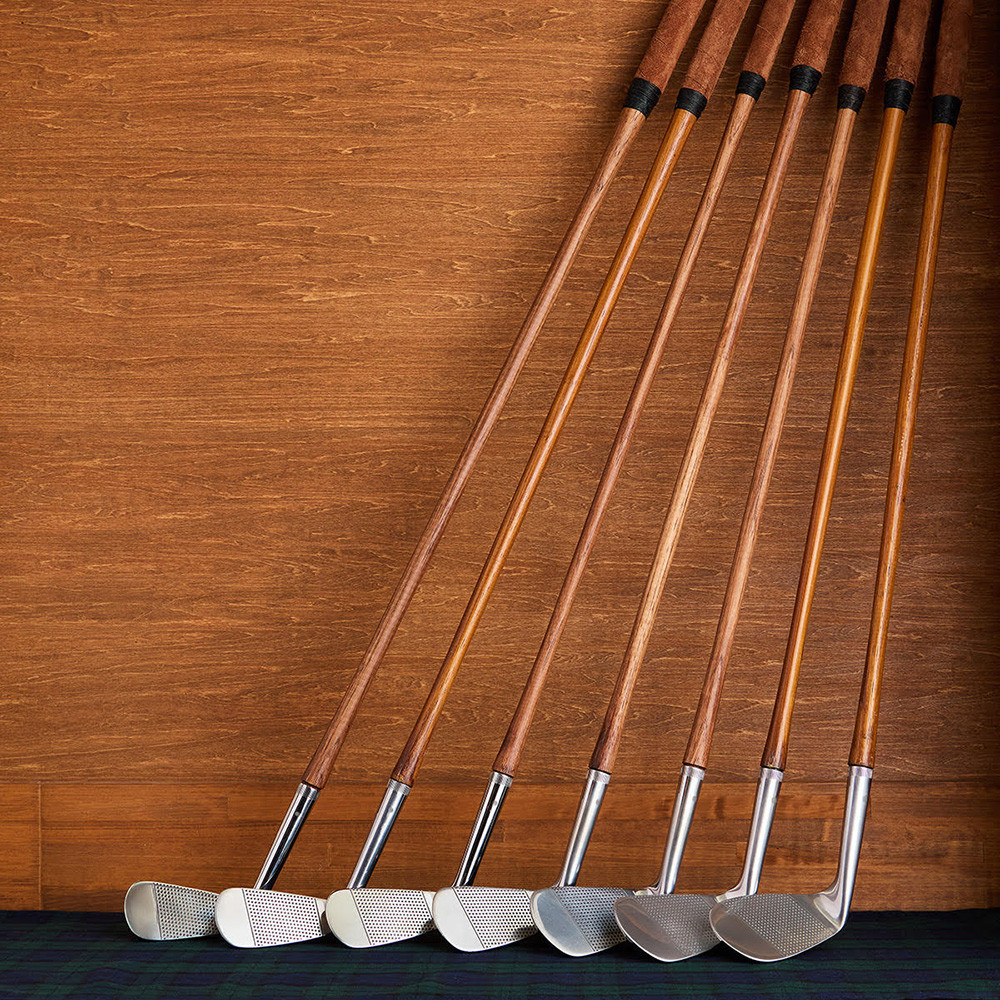
Hickory Golf George Nicoll Precision 7 Club Iron Set (Polished Finish)
The Precision irons continued Nicoll’s interest in coordinated, dependable equipment. They were designed as a matched family rather than as isolated clubheads, providing greater consistency across the set.
Their clean shapes and balanced proportions reflected the final years of the hickory era, when forged iron design had become increasingly refined. Golfers wanted clubs that provided control while remaining straightforward to use. The Hickory Golf Shop’s George Nicoll Precision seven-club set brings this approach back into play. The set recreates the character of traditional Nicoll irons while offering golfers an organised selection for modern hickory rounds. Each club carries the Helping Hand, linking the modern set directly to the identity established in Leven.
The GEM Putter
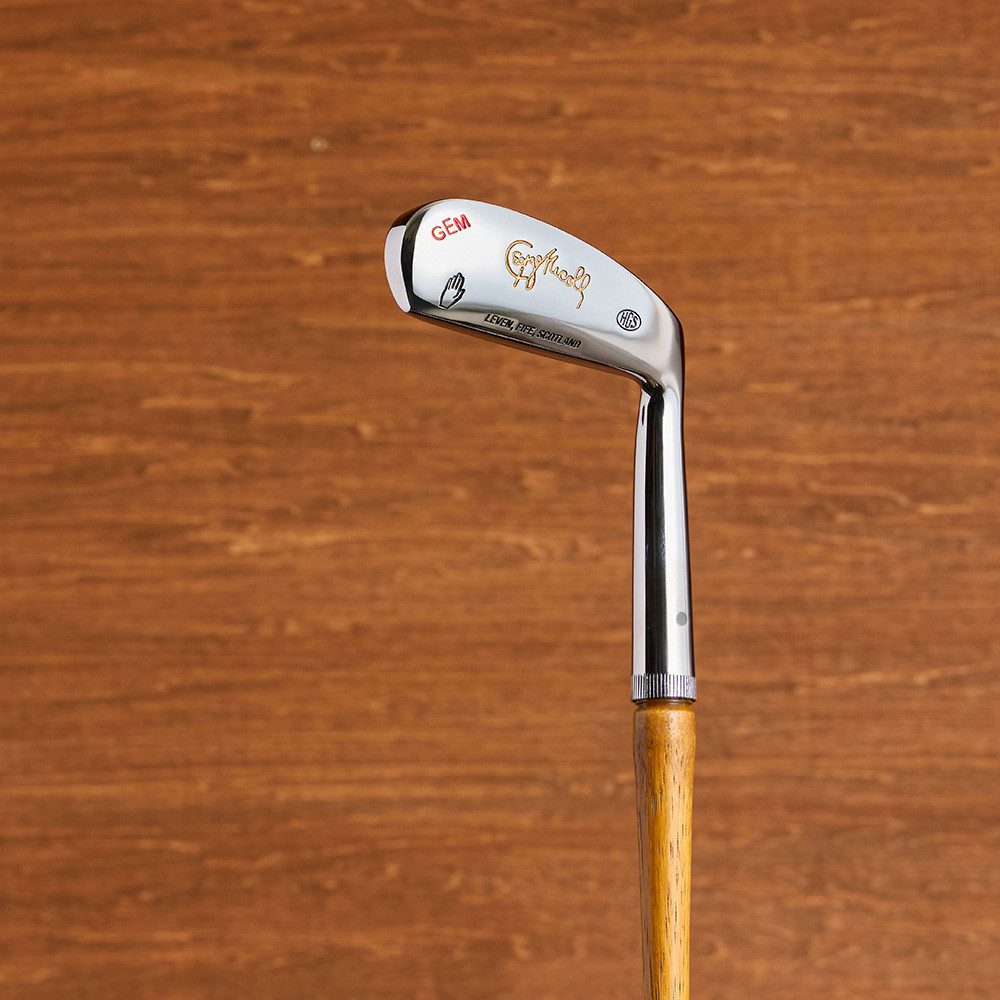
George Nicoll GEM Hickory Golf Putter
Nicoll’s history was not limited to irons. During the early twentieth century, the company produced a distinctive family of blade putters, including the GEM.
The GEM’s compact shape and subtle distribution of weight gave it an elegant appearance while maintaining the simplicity associated with traditional blade putting. Its design has endured because it provides a clear connection between the hands and the ball without unnecessary complexity. The George Nicoll GEM hickory putter available from The Hickory Golf Shop combines this historic head style with a hickory shaft and traditional grip. It can be used for hickory golf or added to a modern bag by players who appreciate the feel of a classic blade.
The Helping Hand on the clubhead remains a central part of its character.
The Helping Hand in Our Shop
Today, the George Nicoll collection at The Hickory Golf Shop allows the Helping Hand to be experienced both on the course and through smaller objects inspired by golf history.
The collection includes:
- George Nicoll four-club iron sets in polished and matt finishes
- George Nicoll Precision seven-club iron set
- George Nicoll GEM hickory putter
- Individual George Nicoll irons, including the mashie niblick
- George Nicoll cleek-mark ball markers
- Hickory 1881 Scottish-oak ball markers featuring the Helping Hand
- Wooden cleek-mark name tags
The playing clubs continue the practical purpose behind the emblem, while the markers and name tags allow the mark to be carried even by golfers who do not play a complete Nicoll set. On the wooden and brass accessories, the Helping Hand becomes more than a manufacturer’s stamp. It is a small piece of visual golf history and a reminder of the time when a simple symbol identified the hands responsible for forging a club.
A Mark That Outlived the Hickory Shaft
The transition from hickory to steel shafts changed the golf-equipment industry dramatically, but it did not end the Nicoll story. The company continued to produce clubs well beyond the traditional hickory era, and the business remained connected with the Nicoll family until 1982.
The Helping Hand survived these changes because it had developed an identity greater than any single club model. Golfers associated it with Scottish manufacture, practical innovation and equipment intended to make the game more enjoyable. Its survival also demonstrates the power of the cleek mark. What began as a small stamp on a forged iron became a recognisable brand capable of passing from one generation of equipment to another.
The Lasting Legacy of George Nicoll
George Nicoll’s importance lies not only in the number of clubs his company produced, but in the ideas behind them. He entered clubmaking as a blacksmith and built an internationally recognised name. His workshop combined traditional forging with new approaches to putter design, matched sets and club selection. Throughout that development, the Helping Hand provided a consistent identity.
For today’s hickory golfer, a club bearing the hand offers a tangible link with that history. It represents an era when equipment was shaped by skilled work, when the mark on a club carried the reputation of its workshop, and when thoughtful design began making golf more understandable to a growing audience. The Helping Hand remains one of golf’s most memorable maker’s marks because its message is still relevant: a well-made club should not stand between the golfer and the game—it should help bring them together.
------------------------------------------------------------------------------------------------------------------------