
Your cart
There are no more items in your cart
.png)
Among the symbols stamped onto historic golf clubs, Tom Stewart’s clay pipe is one of the most recognisable. Small enough to fit neatly onto the back of an iron head, the mark identified clubs forged in one of the most respected workshops of the hickory era.
To golfers, professionals and club sellers around the world, the pipe became a sign of quality. Behind it was a craftsman whose understanding of metal, attention to detail and willingness to experiment helped shape the development of the iron golf club. More than a century later, original Stewart clubs remain sought after by collectors and players, while the pipe mark continues to represent the traditions of Scottish clubmaking.
From Carnoustie to St Andrews
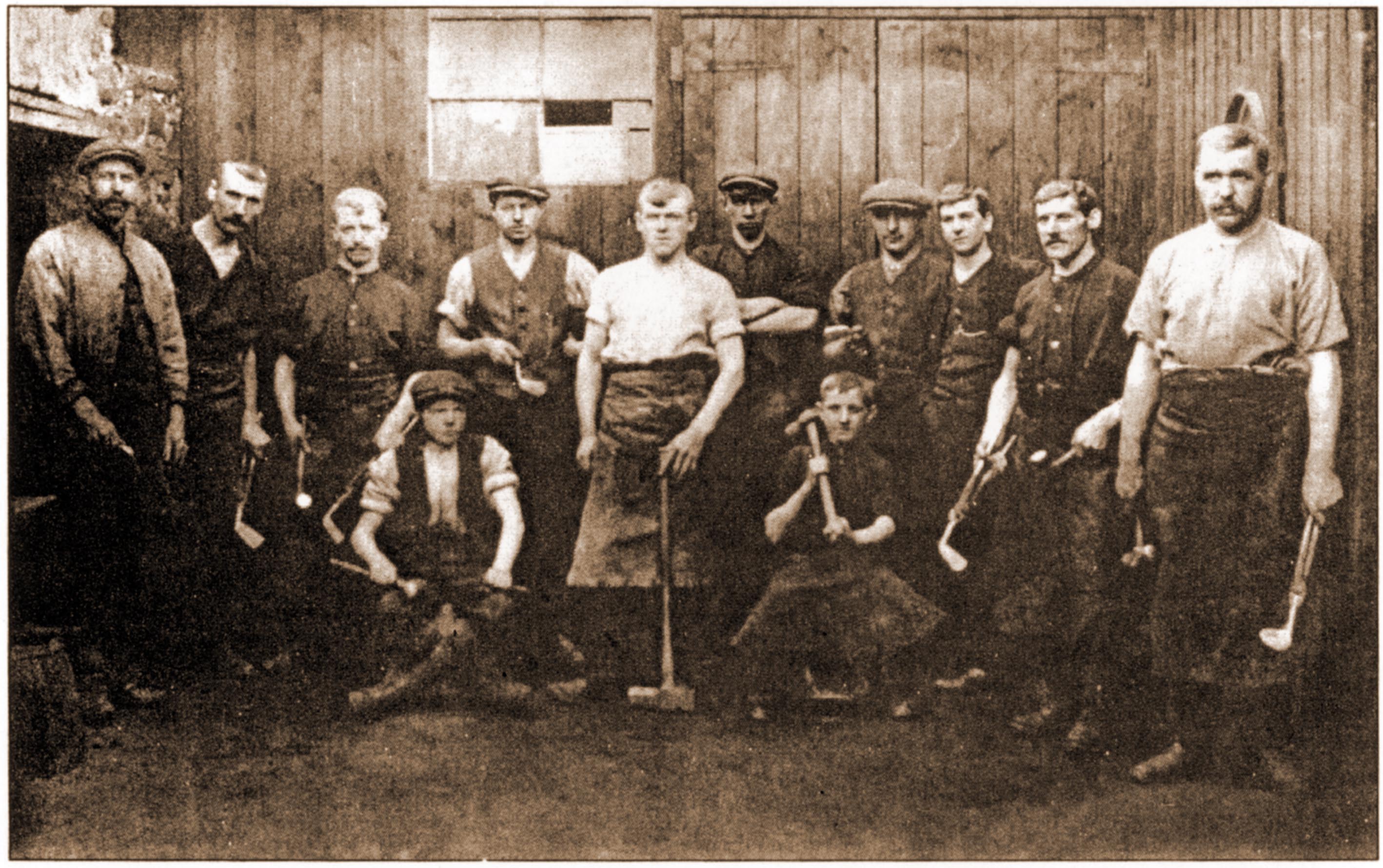
Tom Stewart began his working life in Carnoustie, a Scottish town already closely connected to golf. He learned blacksmithing alongside his father, gaining the skills required to heat, shape and finish metal by hand. This experience provided an ideal foundation for iron clubmaking. Early iron golf-club heads were not produced by automated machinery in standardised shapes. They were forged individually, requiring the maker to understand how metal behaved under heat and repeated hammering.
In 1890, Stewart moved to St Andrews and worked with the established clubmaker Robert White. St Andrews offered an exceptional environment in which to develop his craft. Its links attracted leading golfers, professionals and equipment makers, allowing ideas about club design to move quickly between the course and the workshop.
By 1893, Stewart had established his own business on Argyle Street. His workshop became known as the Cleekworks, reflecting the traditional name given to both early iron clubs and the craftsmen who made them.
What Was a Cleek Maker?
The word cleek originally described a narrow iron-headed golf club, generally used for long shots and sometimes for putting. As iron clubs became more varied, the term was also used more broadly in descriptions such as driving cleek and putting cleek. The craftsmen who forged these heads became known as cleek makers.
Their work demanded far more than simply hammering metal into a rough club shape. A cleek maker had to control:
The shape and thickness of the blade
The loft of the striking face
The angle of the hosel
The weight and balance of the head
The sole’s interaction with the turf
The transition between the head and hickory shaft
Much of this work was completed by eye and feel. Small alterations could change how a club rested behind the ball, travelled through the ground or responded at impact.
Stewart became particularly respected for his ability to reproduce a design consistently while preserving the qualities of a hand-forged club. This combination was increasingly important as golf expanded internationally and demand for Scottish-made equipment grew.
The Origin of the Pipe Mark

Stewart marked his clubheads with the image of a clay tobacco pipe, a symbol associated with his family’s earlier blacksmithing work in Carnoustie. When he opened his own St Andrews business in 1893, he adopted the pipe as his identifying cleek mark.
The emblem served a practical purpose. Golf clubs were frequently sold through professionals, retailers and distributors whose own names might also be stamped onto the head. The pipe allowed golfers to identify Stewart as the person responsible for forging the club, even when another business had assembled or sold it. In this sense, cleek marks were among golf’s earliest recognisable brand logos. A simple image could communicate the origin and reputation of a club without requiring the golfer to read every inscription on its head.
Stewart formally registered the pipe as a trademark in 1905. Clubs produced after this point often carried small trademark lettering beneath the symbol. As Stewart’s reputation grew, the pipe became recognised far beyond St Andrews. Golfers looking for another club of similar quality could search for the same familiar mark stamped into the metal.
Making Heads, Not Complete Clubs
An important part of Stewart’s business was that he primarily produced iron clubheads, rather than complete clubs ready for play.
The forged heads were supplied to professionals, clubmakers and retailers, who could fit them with hickory shafts and grips. These sellers often added their own name stamps alongside Stewart’s pipe mark. As a result, an original club may carry several layers of identity. The pipe identifies Stewart’s forge, while other lettering may identify the professional who ordered, assembled or sold the finished club.
This system explains why Stewart’s mark appears on clubs associated with numerous professionals and locations. The same St Andrews forge could supply heads to customers across Britain and overseas, spreading the pipe mark throughout the golfing world. For collectors today, these combinations can reveal part of a club’s journey: who forged it, who sold it and sometimes the golfer or club for whom it was made.
Working with the Leading Golfers
St Andrews placed Stewart in direct contact with some of the most knowledgeable players of his time. Instead of developing clubs separately from the game, he could listen to golfers, observe how they played and adjust his designs in response. Old Tom Morris was among the prominent figures associated with Stewart’s work. The shop operated by Morris was an important early customer, and Morris himself reportedly played with Stewart-forged irons.
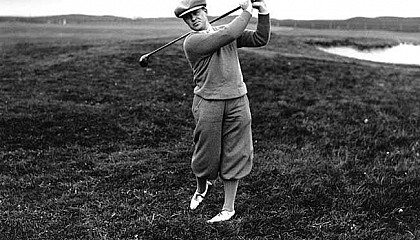
Later, Bobby Jones became one of the best-known admirers of Stewart’s craftsmanship. Jones visited St Andrews and used Stewart-made irons during his career. Historical accounts describe him discussing designs with Stewart and commissioning heads shaped to his preferences. This relationship illustrates the importance of the cleek maker during the hickory era. A skilled player could explain the flight, feel or appearance they wanted, while the maker translated those ideas into metal.
The process resembles modern work between professional golfers and equipment designers, but it was conducted directly at the forge. Adjustments were made through hammering, filing, grinding and careful inspection rather than computer modelling.
A Remarkable Variety of Irons
Golf bags of the hickory era contained clubs with names rather than numbers. Stewart forged a wide variety of head shapes for different shots and playing conditions.
A golfer might carry:
A mid iron for longer approaches
A mashie for controlled approach shots
A mashie niblick for greater loft and versatility
A niblick for bunkers, difficult lies and short shots
A jigger for low-running approaches
A putting cleek for use on the green
These categories were not completely standardised. Two mashies could differ noticeably in loft, weight, sole shape or offset depending on the golfer, professional or retailer who ordered them.
That variation created opportunities for experimentation. Stewart produced numerous shapes and worked with golfers seeking clubs suited to particular shots. His designs demonstrate that hickory-era equipment was not primitive or unchanging. Clubmakers were constantly exploring new ways to control trajectory, improve turf interaction and make difficult shots more manageable.
The Pipe Mark Around the World
Golf grew rapidly during Stewart’s career. Courses opened across Britain, Europe, North America and other parts of the world, creating international demand for equipment made in Scotland.
St Andrews carried exceptional prestige, and clubheads bearing the name of the town were attractive to professionals and retailers abroad. Stewart’s pipe mark became a particularly effective symbol of that origin. A golfer did not need to visit the Argyle Street workshop to encounter his work. Stewart-forged heads could be shafted, gripped and sold by another professional thousands of miles away while still carrying the pipe as evidence of their maker.
This international distribution helped transform a small stamped symbol into one of the best-known marks of the hickory period. Today, Stewart clubs can be found in collections across the golfing world, often carrying additional stamps that reveal the routes through which they travelled.
Tom Stewart Clubs Sold on Our Website
The Hickory Golf Shop offers a selection of Tom Stewart-inspired clubs and accessories for golfers who want to experience the character of traditional hickory equipment. The club collection includes a four-club iron set and a classic putter, each designed to reflect the shapes and playing qualities associated with Stewart’s historic work.
Tom Stewart Four-Club Iron Set
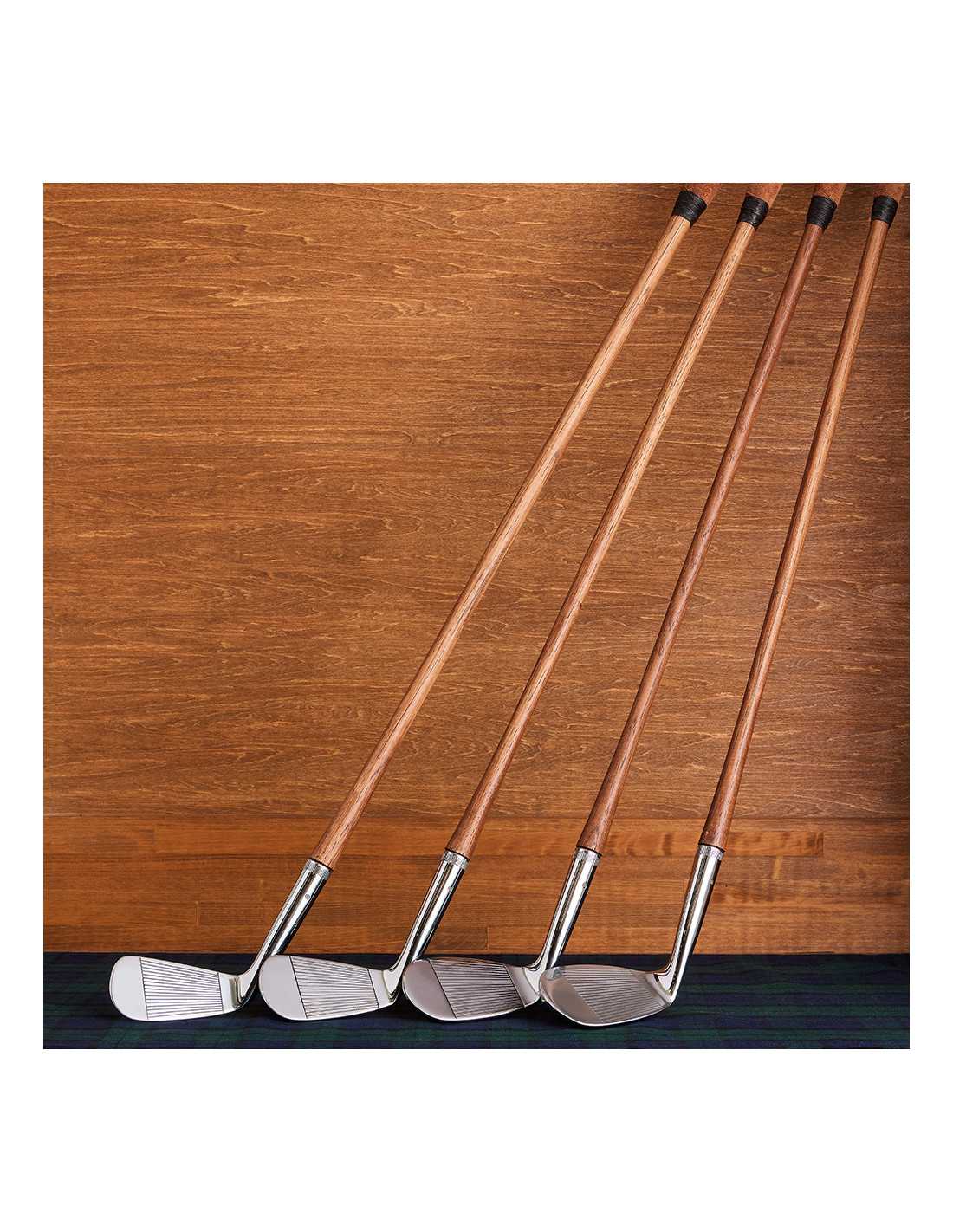
Our Tom Stewart four-club iron set is available in polished and matt finishes. It includes:
Mid Mashie
Mashie
Mashie Niblick
Niblick
Together, the four irons provide a practical progression from longer approaches to lofted shots around the green. The compact set also reflects one of hickory golf’s defining pleasures: learning to create several different shots with each club.
The set is suitable for golfers who want a versatile group of traditional irons without carrying a large collection of clubs. Each head follows the familiar hickory-era progression of loft and purpose, allowing players to explore the different roles once associated with named clubs rather than numbered irons.
Tom Stewart OLD Hickory Golf Putter
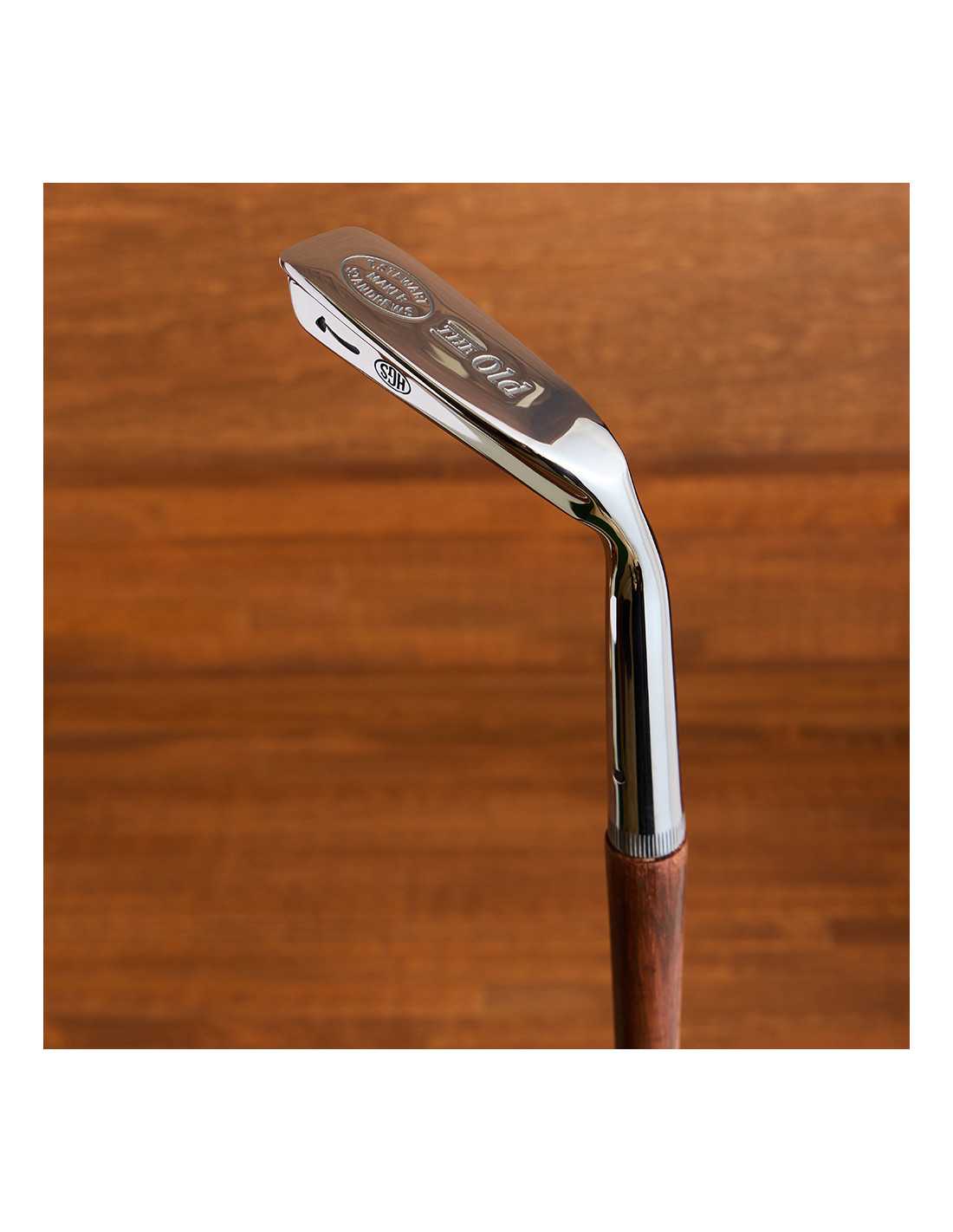
The Tom Stewart OLD Hickory Golf Putter features a traditional blade-style head with a subtle flange and offset. Its stainless-steel head, hickory shaft and soft suede grip combine the appearance and feel of a classic club with the durability required for regular play.
Its restrained shape demonstrates why so many historic putter designs have remained influential. Rather than depending on complex alignment aids or a large head, it gives the golfer a clear face, balanced feel and direct connection with the ball. The putter is suited to players who appreciate a simple, traditional design and want a club that complements a hickory set or vintage-inspired golf bag.
Tom Stewart Golf Accessories Sold on Our Website
The pipe mark also appears across several smaller pieces in our collection. These accessories allow golfers and collectors to carry the Stewart emblem beyond the clubhead.
Tom Stewart Cleek Mark Golf Ball Markers
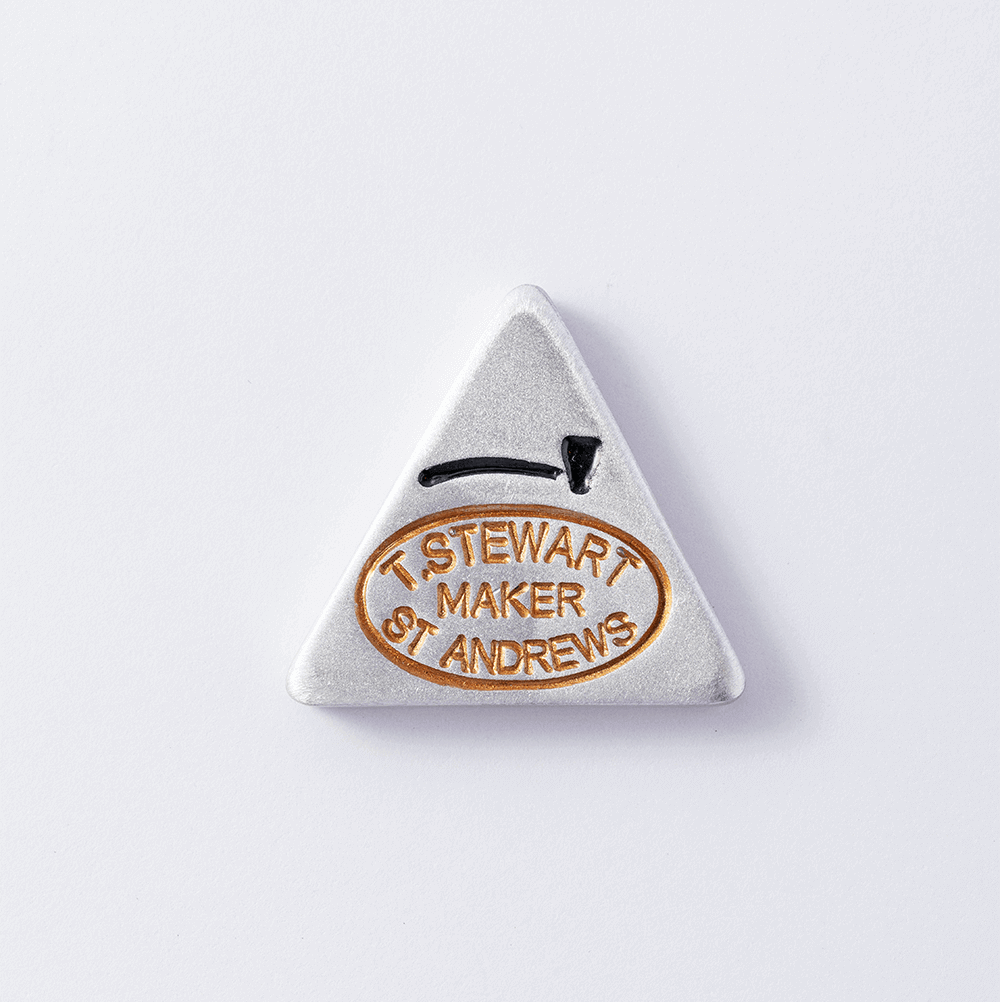
Our Tom Stewart Cleek Mark Golf Ball Markers are handmade in Scotland and available in round and triangular shapes. Each carries the famous pipe and can be personalised through hand stamping or laser engraving. They provide a practical way to bring one of golf’s historic maker’s marks onto the putting green while also offering a personal connection through custom lettering.
Hickory 1881 Tom Stewart Ball Marker
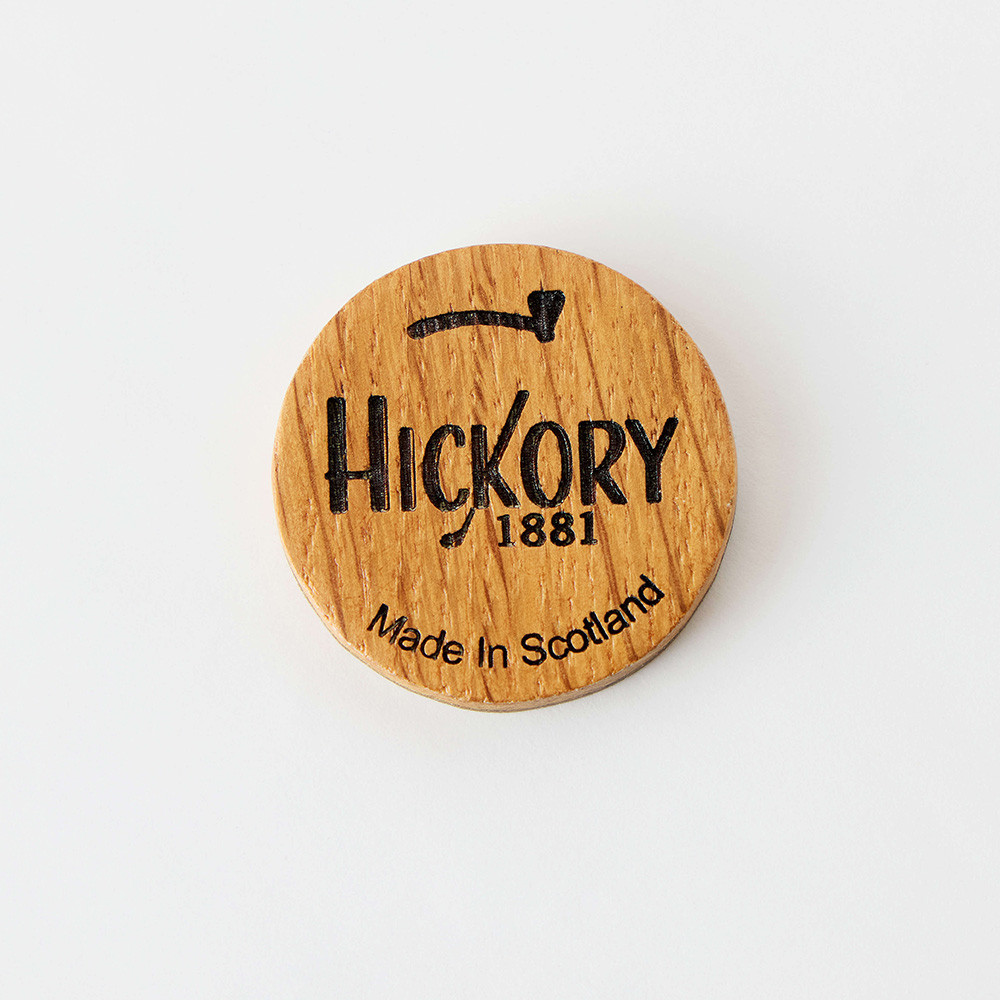
The Hickory 1881 Tom Stewart Ball Marker combines the emblem with Scottish oak and a brass back. As the oak develops naturally over time, the marker gains an individual character similar to a well-used hickory club. Its combination of wood, brass and the pipe mark makes it suitable for golfers who value traditional materials and Scottish golfing heritage.
Cleek Mark Name Tag
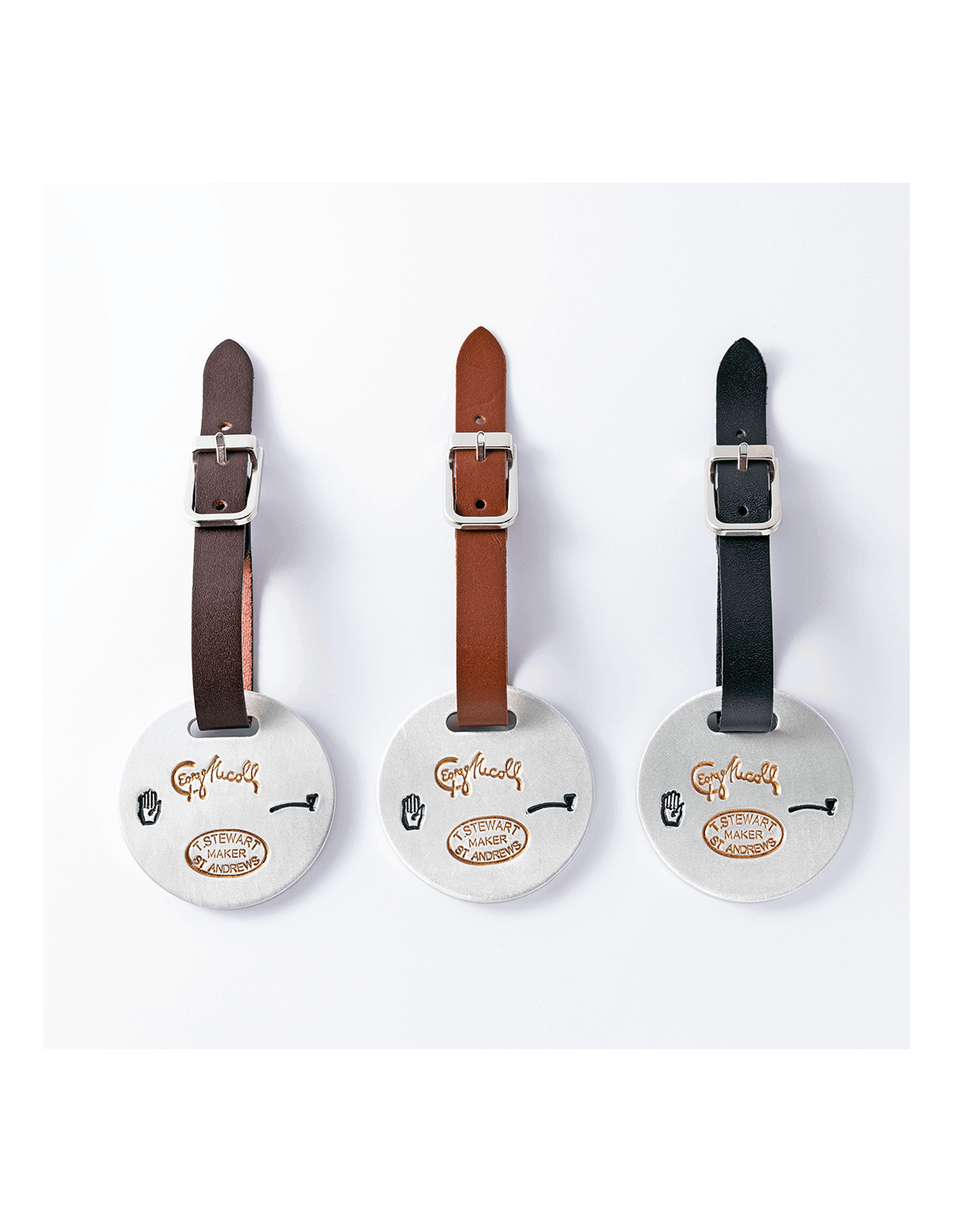
We also offer a wooden Cleek Mark Name Tag featuring the pipe. Attached to a pencil bag, it connects the mark with the equipment and visual traditions of the hickory era.
The name tag is both functional and decorative, helping identify a golf bag while adding a distinctive historical detail. On these pieces, the pipe is no longer functioning solely as a manufacturer’s stamp. It has become a symbol of the people who made early golf equipment by hand and built their reputations through the quality of their work.
Change at the End of the Hickory Era
Stewart’s career covered a transformative period in golf. When his own business began in 1893, the gutta-percha ball was still widely used. It was later replaced by the wound rubber-core ball, which travelled farther and placed new demands on club design.
Courses became longer, golfers developed different techniques and iron sets grew more carefully organised. Clubmakers responded with changing lofts, stronger head shapes and new approaches to weight distribution. Stewart continued experimenting throughout these developments. His work ranged from traditional cleeks and mashies to more unusual iron and putter forms, including early metal mallet designs. This willingness to adapt helped keep his workshop relevant as the game changed. The pipe mark did not identify one fixed club shape; it represented the judgement of a maker capable of responding to different golfers and different periods.
Stewart died in 1931, close to the end of the traditional hickory-shaft era. Steel shafts would soon become dominant, changing both the construction of clubs and the organisation of the industry. His career therefore spans one of the most important chapters in the development of golf equipment—from individually named, hand-forged hickory clubs towards the more standardised sets of the modern game.
The Legacy Behind the Mark
Tom Stewart’s importance cannot be explained by the pipe alone. The symbol became famous because golfers trusted the clubheads carrying it.
His career joined traditional blacksmithing with a detailed understanding of golf. He listened to leading players, experimented with new designs and supplied heads to professionals and retailers across an expanding international market. Most importantly, he maintained standards strong enough for a small workshop emblem to become recognised around the world.
For a modern golfer, the pipe mark offers a direct link to an era when the person forging a club could influence its shape as strongly as the player who used it. It represents the heat of the forge, the sound of hammer against metal and the careful final inspection of a head before it left St Andrews. Behind that modest clay pipe stood one of the hickory era’s greatest cleek makers—and a standard of craftsmanship that remains admired nearly a century after his death.
---------------------------------------------------------------------------------------------------------