
Your cart
There are no more items in your cart
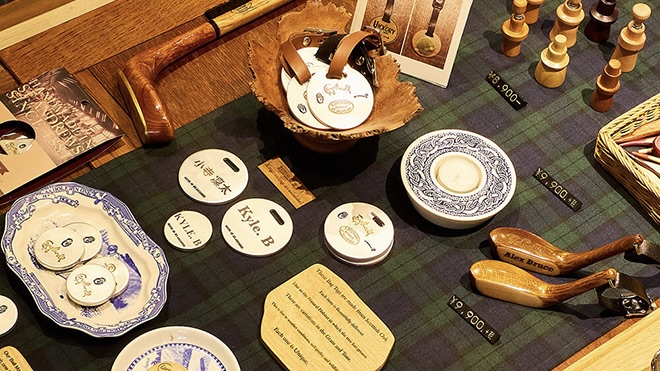
A round of golf is shaped by more than the clubs in the bag. The ball placed on the tee, the marker carried onto the green and even the name tag attached to a pencil bag all contribute to the experience.
In hickory golf, these smaller items have particular meaning. They recall an era when equipment was made from wood, leather and metal, and when even a practical object could carry the individual mark of its maker. The playing accessories offered by The Hickory Golf Shop combine this history with present-day usefulness. From reproduction golf balls and traditional sand-tee makers to cleek-mark ball markers and handcrafted bag tags, each item adds another detail to the hickory game.
The Traditional Sand Tee
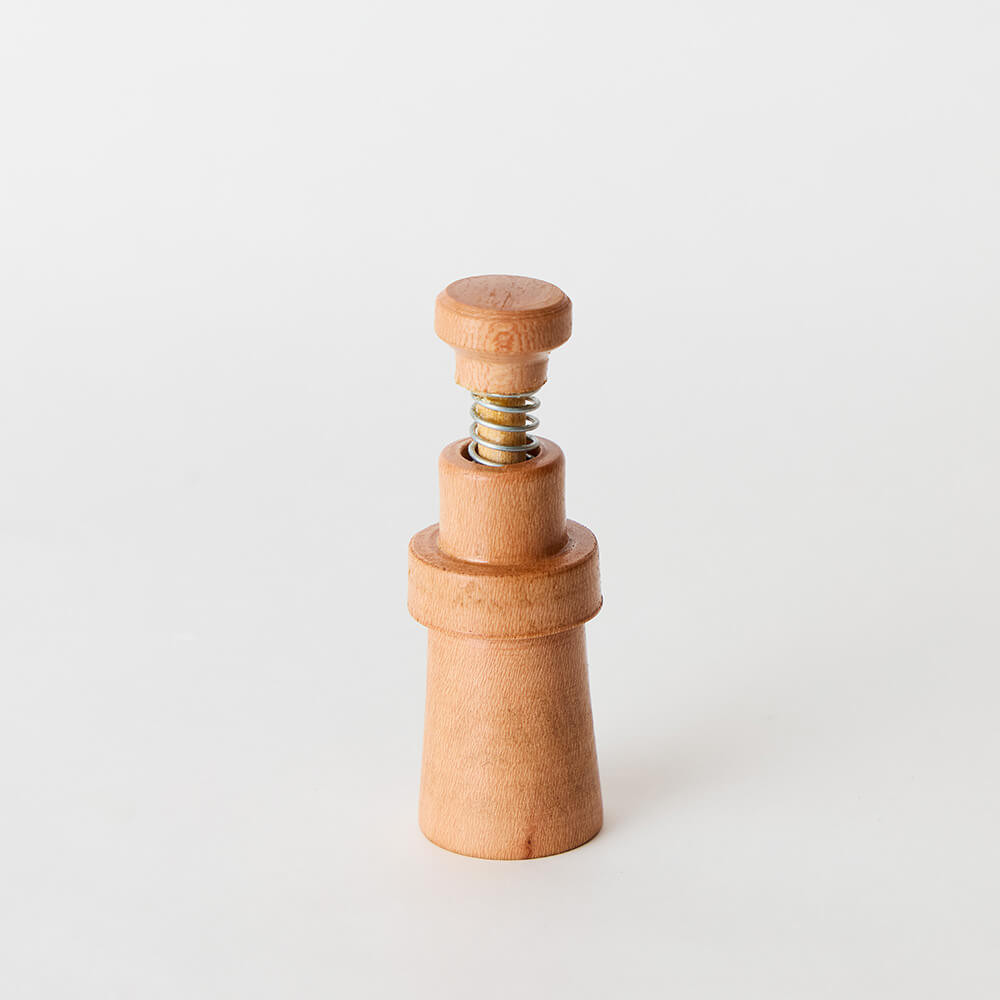
Before the arrival of the modern wooden peg, golfers commonly teed the ball on a small mound of damp sand.
Sand was placed near each teeing ground, often inside a box. The golfer took a small amount, shaped it by hand or with a mould, and balanced the ball on top. This is the origin of the term tee box.
Our Traditional Sand Tee Maker allows golfers to recreate this early ritual. The wooden tool is pressed into damp sand to form a small, consistent mound on which the ball can be placed.
The process takes only a few moments, but it changes the beginning of the hole. Instead of pushing a manufactured peg into the ground, the player creates the tee before making the shot.
Six designs are available, allowing golfers to select a shape that reflects their preferred style. The tool is compact enough to carry in a pencil bag and can be reused throughout a round. For a normal game, it offers an enjoyable historical detail. During a hickory tournament or exhibition, it can help create a more complete period experience.
Ball Markers and the Cleek-Mark Tradition
A ball marker performs a very simple task: it records the position of the ball while it is lifted from the green. Yet its small size makes it an ideal place for personalisation and historical symbolism.
Several of our markers feature cleek marks—the emblems stamped onto iron clubheads by early Scottish makers. These symbols helped golfers identify the workshop responsible for forging a club, functioning much like modern brand logos.
Tom Stewart Ball Markers
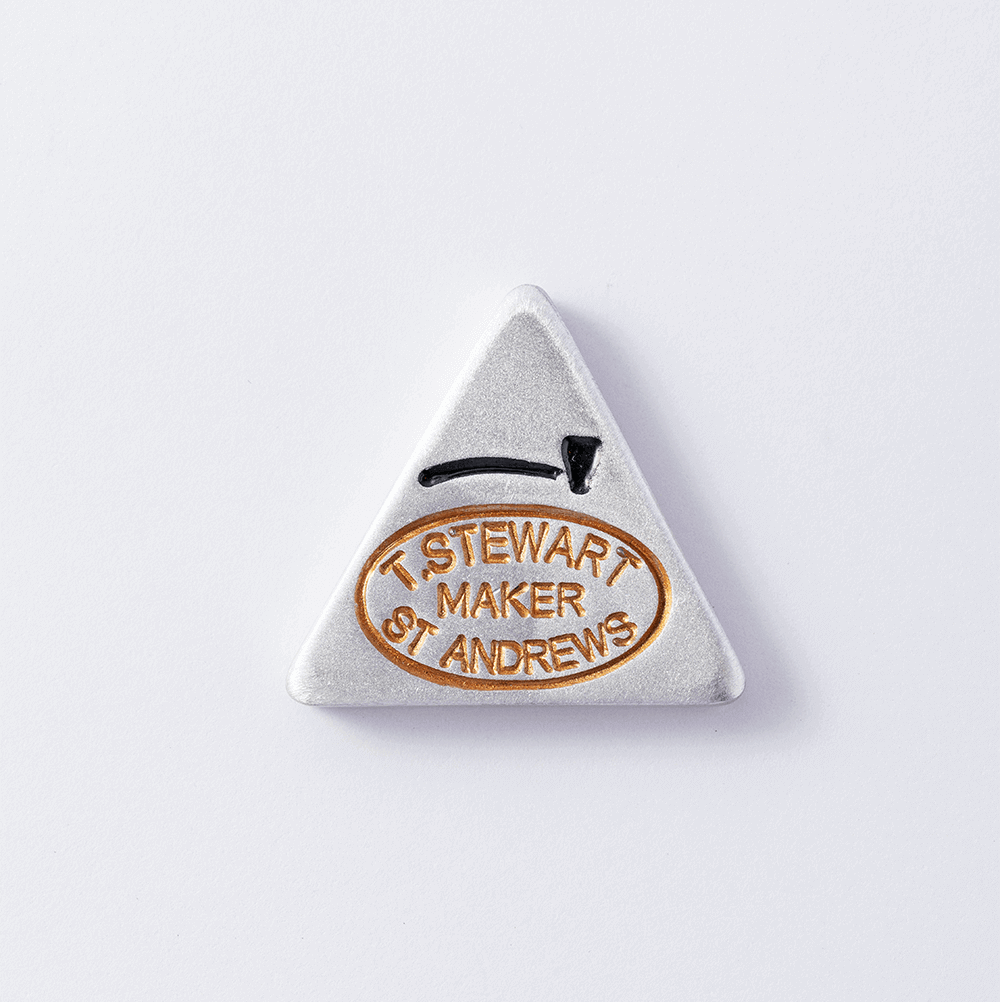
Tom Stewart of St Andrews used a clay tobacco pipe as his famous cleek mark. Stewart established his own business in 1893, and the pipe became one of the most recognisable symbols of the hickory era. Our aluminium Tom Stewart Golf Ball Markers are available in two shapes:
Round
Triangle
Both versions feature the pipe mark and are handmade in Scotland. Their differing outlines make it possible to choose between the simplicity of a conventional round marker and the more distinctive appearance of the triangle.
The markers can be personalised through hand stamping or laser engraving. Initials, a name, number or short message can be added, combining the historic maker’s emblem with the identity of the present-day golfer.
George Nicoll Ball Markers
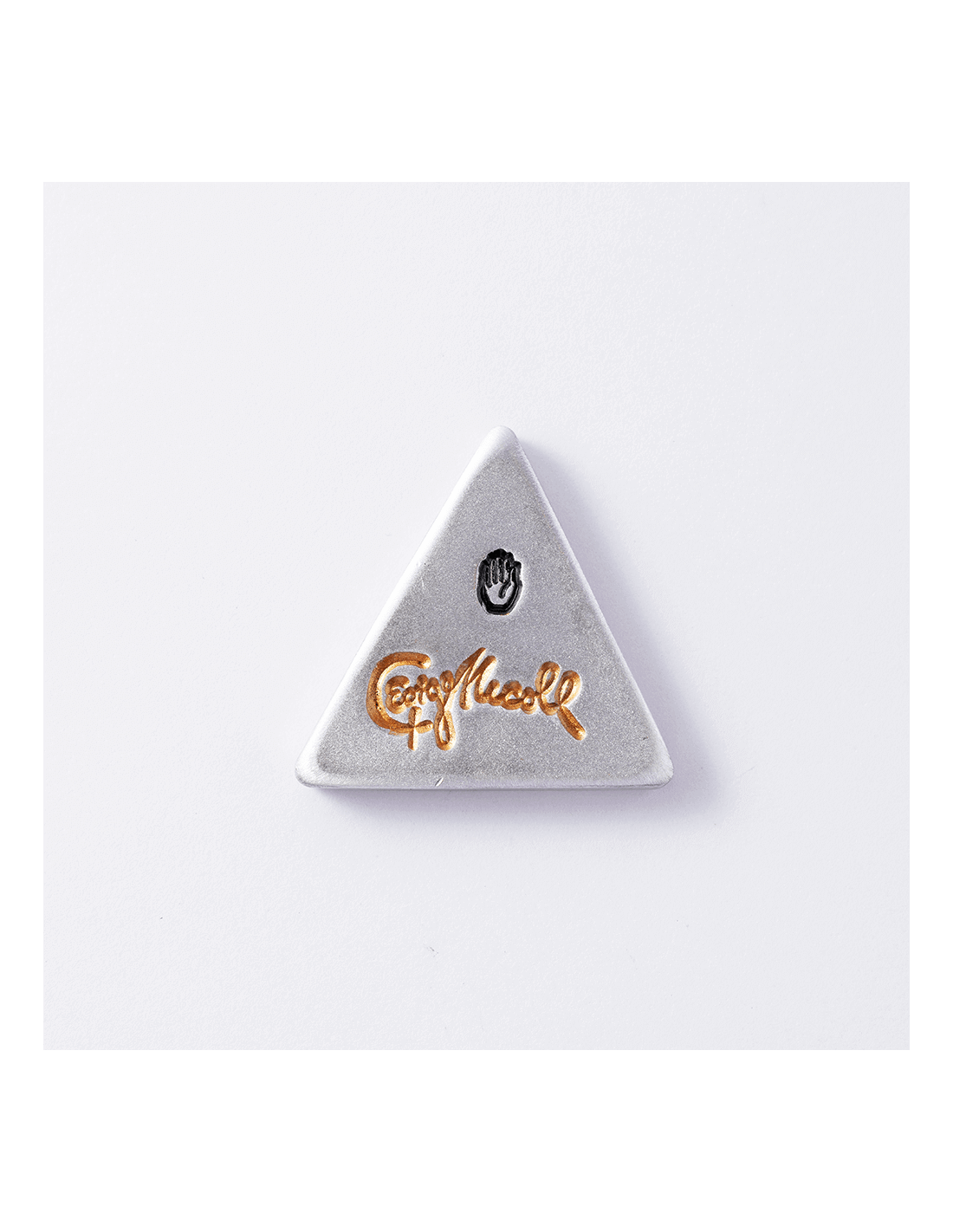
George Nicoll founded his clubmaking business in Leven in 1881. His open-hand cleek mark became known as the Helping Hand of Golf, reflecting an approach to equipment intended to make the game more approachable and enjoyable.
Our aluminium George Nicoll Golf Ball Markers are also available in:
Round
Triangle
Each displays the Helping Hand and can be personalised. Like the Tom Stewart markers, they bring an emblem once stamped onto forged clubheads into a new setting on the putting green.
For golfers who use George Nicoll-inspired clubs, the marker provides a natural companion. For others, it offers a small introduction to one of the most memorable trademarks in Scottish golf history.
Hickory 1881 Tom Stewart Ball Marker
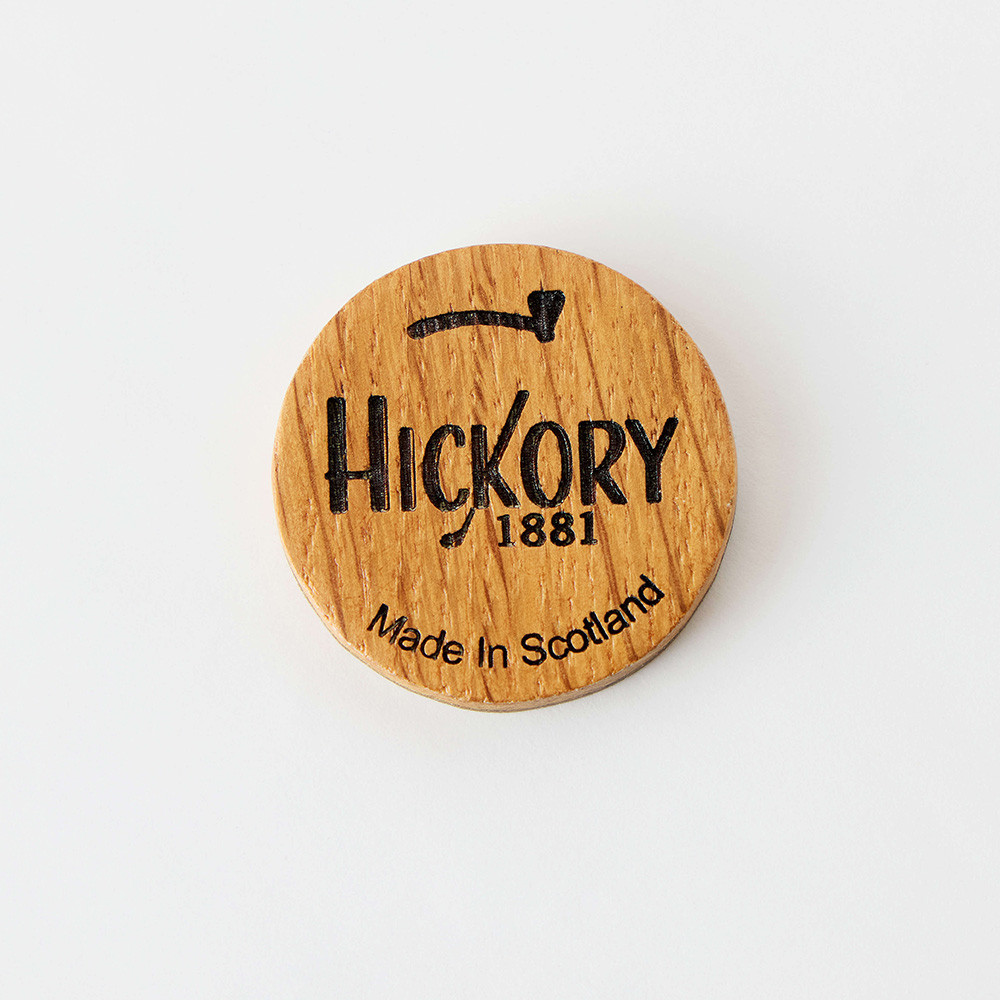
The Hickory 1881 Tom Stewart Ball Marker combines the pipe emblem with natural materials.
Its front is made from Scottish oak, while the back is brass. The contrast between wood and metal reflects the materials that defined much of the hickory era.
Oak changes subtly through handling and exposure, so the face will gradually develop its own character. Rather than remaining perfectly uniform, the marker becomes more individual as it is used.
The Tom Stewart pipe provides the historical connection, while the wooden surface gives the marker a warmer appearance than a conventional all-metal design.
Hickory 1881 George Nicoll Ball Marker
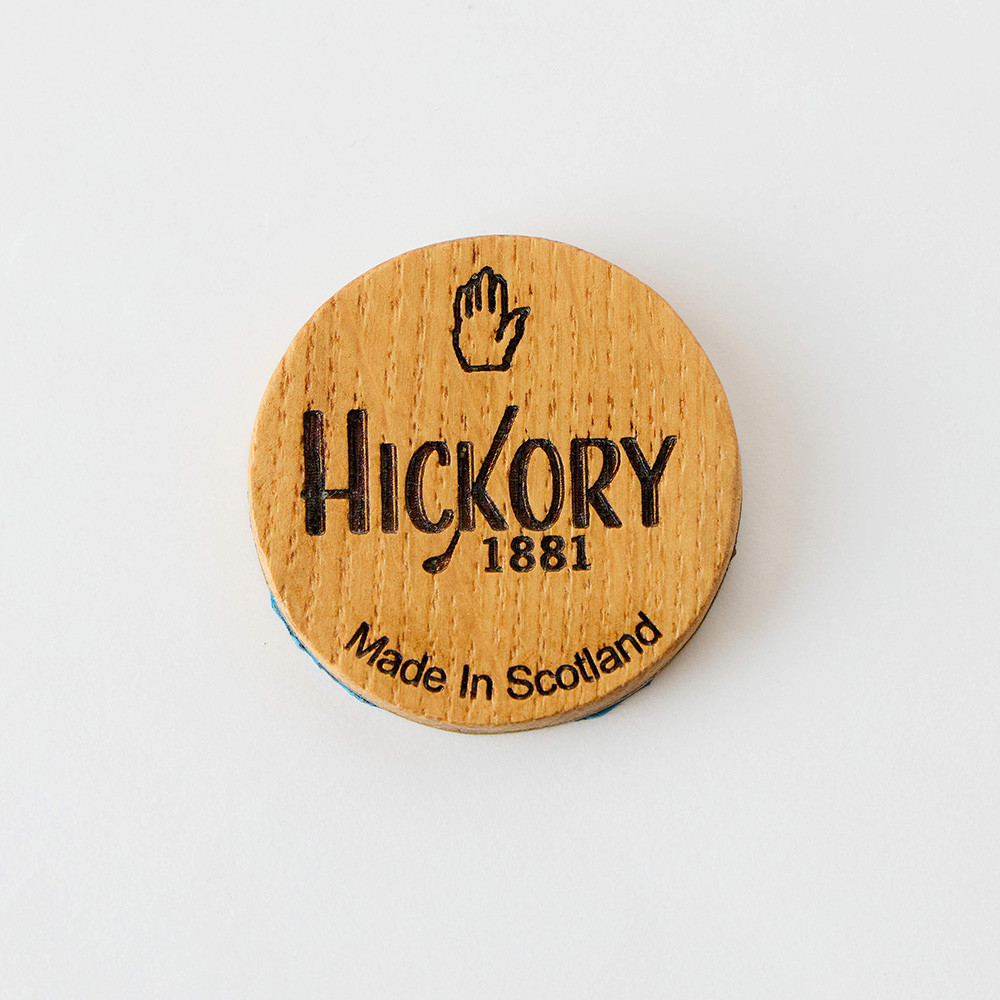
The Hickory 1881 George Nicoll Ball Marker uses the same combination of Scottish oak and brass but features Nicoll’s Helping Hand.
It connects three elements of golfing heritage: a traditional natural material, a historic maker’s emblem and an object used during every round.
Placed beside the ball, the open hand is easily recognisable. Over time, the ageing oak gives each marker its own finish, echoing the way hickory shafts and wooden accessories develop through play.
Hickory 1881 Scotland Ball Marker
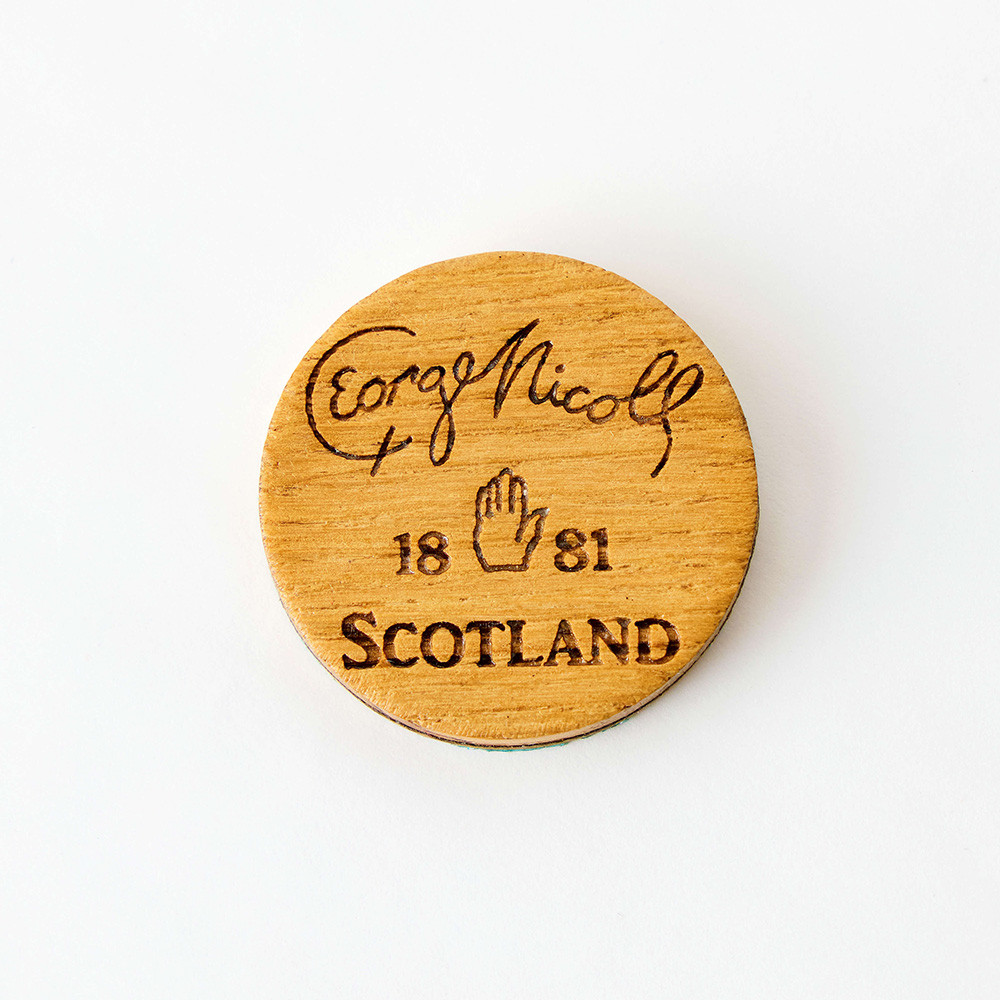
The Hickory 1881 Scotland Ball Marker celebrates the country most closely associated with the development of golf.
Like the other Hickory 1881 markers, it uses Scottish oak on the front and brass on the reverse. Its Scottish design connects the object to the landscapes, links and craftspeople from which much of hickory golf emerged.
It is a suitable choice for golfers who want a broader symbol of the game’s origins rather than the mark of one individual clubmaker.
The Putter Catcher
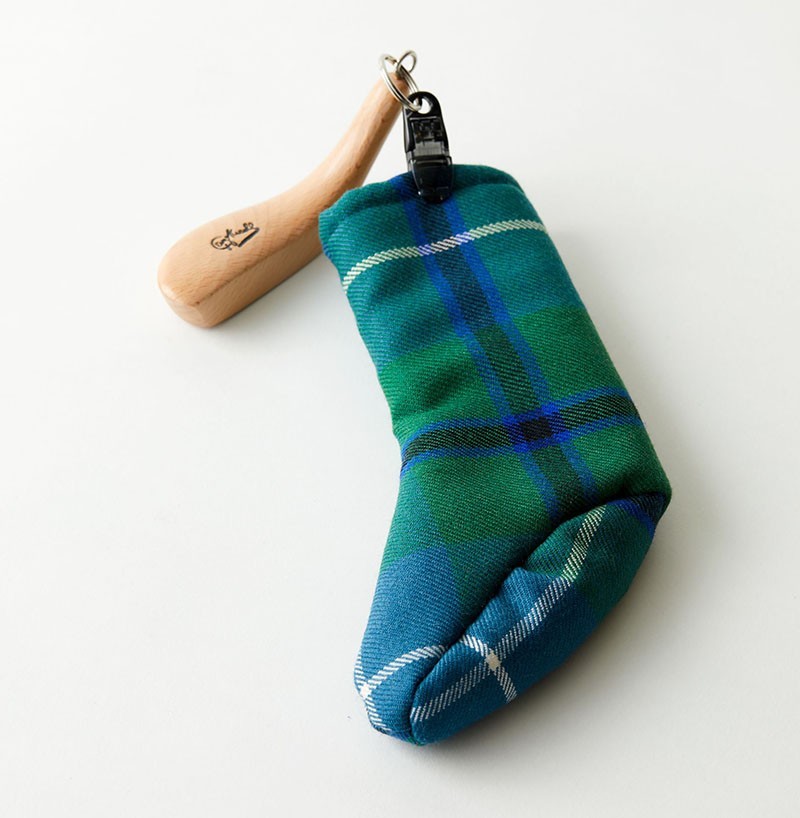
A putter headcover protects the club in the bag, but once the golfer reaches the green, that cover needs somewhere to go. Placing it on wet grass can leave it damp or make it easy to forget.
Our Putter Catcher with Mini Hickory Golf Club offers a simple solution.
The miniature club attaches to the putter cover and remains visible above the edge of the green. It helps keep the cover clean, dry and easy to retrieve after putting.
Inspired by an 1881 long-nose golf club, the miniature is handmade in St Andrews using hickory-club craftsmanship. Its elongated wooden head turns a practical accessory into a small representation of early club design.
After the final putt, the golfer can lift the cover using the miniature club without needing to bend down. The putter catcher therefore combines three functions:
Keeping the cover away from damp or dirty ground
Making it easier to see and retrieve
Adding a handcrafted hickory detail to the bag
It is one of the clearest examples of how a small modern convenience can be expressed through traditional materials and design.
Nametags: Identity on the Golf Bag
Golf bags often look similar, particularly when several players attend the same event with narrow canvas pencil bags. A name tag provides a practical means of identification, but it can also introduce craftsmanship and personality.
Our nametag collection uses leather, aluminium and wood, with several designs inspired by historic clubs and cleek marks.
Hickory Golf Cleekmark Nametag
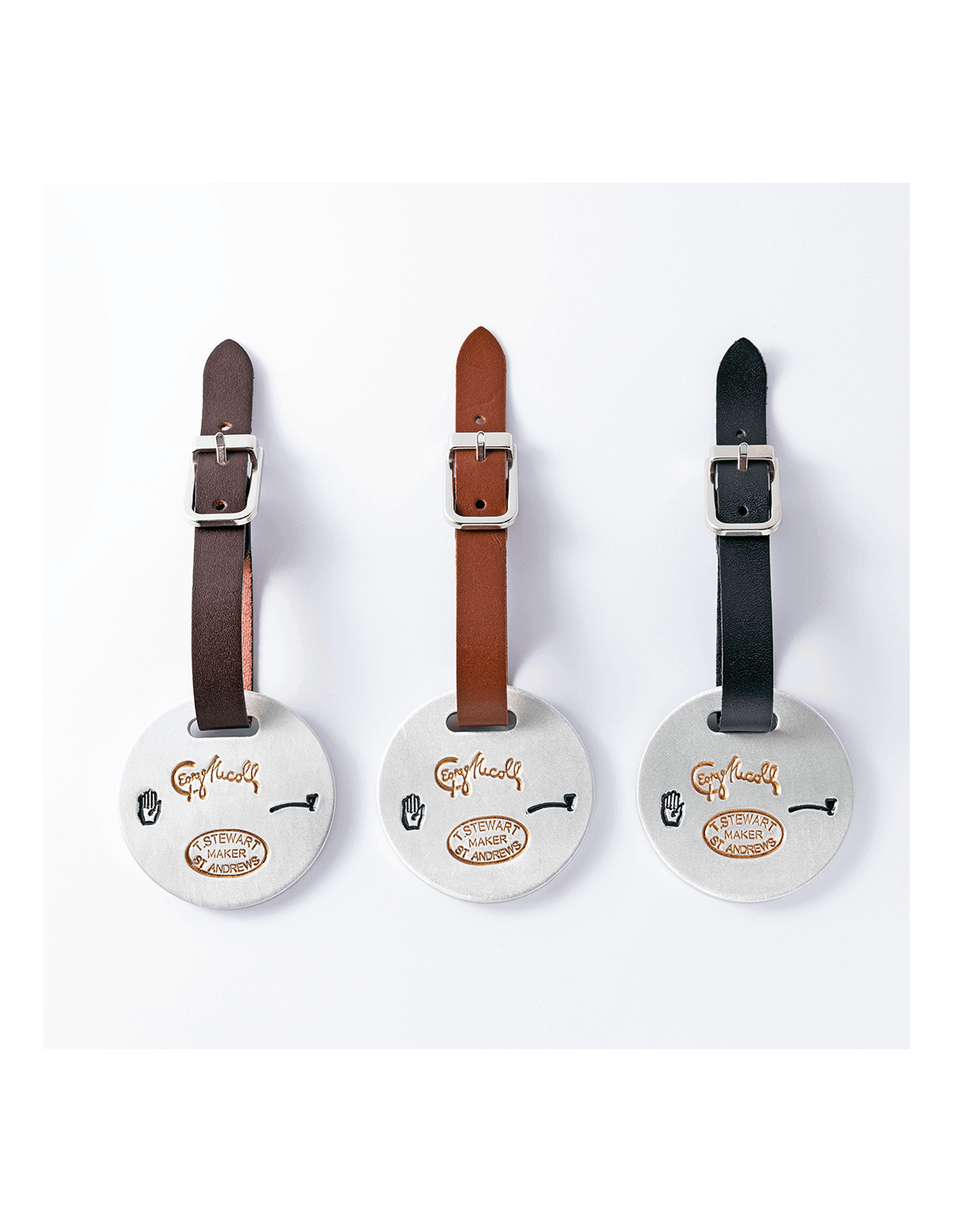
The Hickory Golf Cleekmark Nametag is handmade in St Andrews from aluminium and supplied with a leather strap.
It can feature the famous marks associated with Tom Stewart and George Nicoll, connecting the tag to the workshops responsible for some of the hickory era’s most respected iron heads.
A choice of leather strap colours allows the tag to be coordinated with the bag. Personalisation can be applied through traditional hand stamping or laser engraving, with space for a name, initials, number or message.
Attached to a pencil bag, the tag does more than identify its owner. It recalls the way clubmakers once marked their work before sending it into the golfing world.
Hickory 1881 Wood Cleekmark Nametag
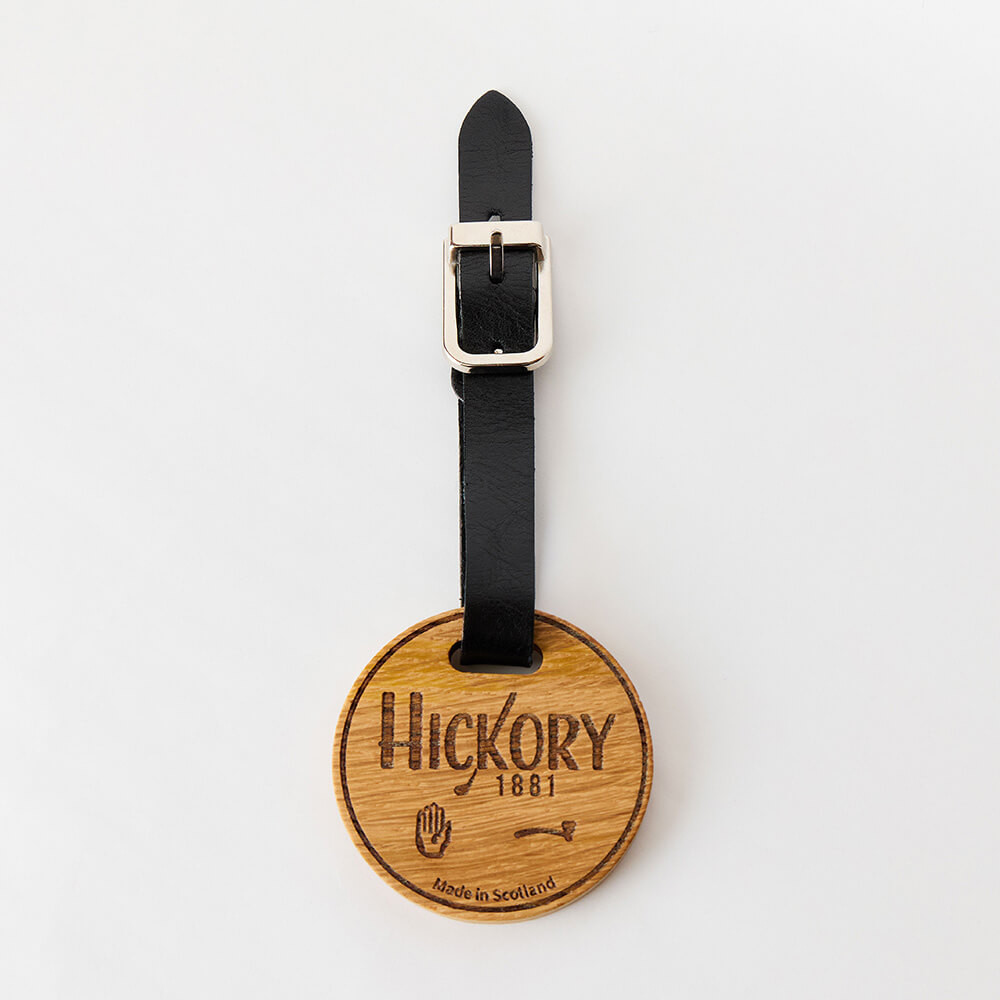
The Hickory 1881 Wood Cleekmark Nametag brings the same historical symbols onto a wooden surface.
The natural grain gives every tag a slightly different appearance, while the cleek mark connects it with the craftsmanship of traditional iron clubmaking.
Wood is particularly appropriate beside a hickory shaft or canvas-and-leather pencil bag. As it ages, small changes in its colour and surface become part of the object’s individual character.
The tag combines the Hickory 1881 identity with the emblems of the makers who helped establish golf’s earliest forms of branding.
Happy Hickory Golfers Wood Cleekmark Nametag
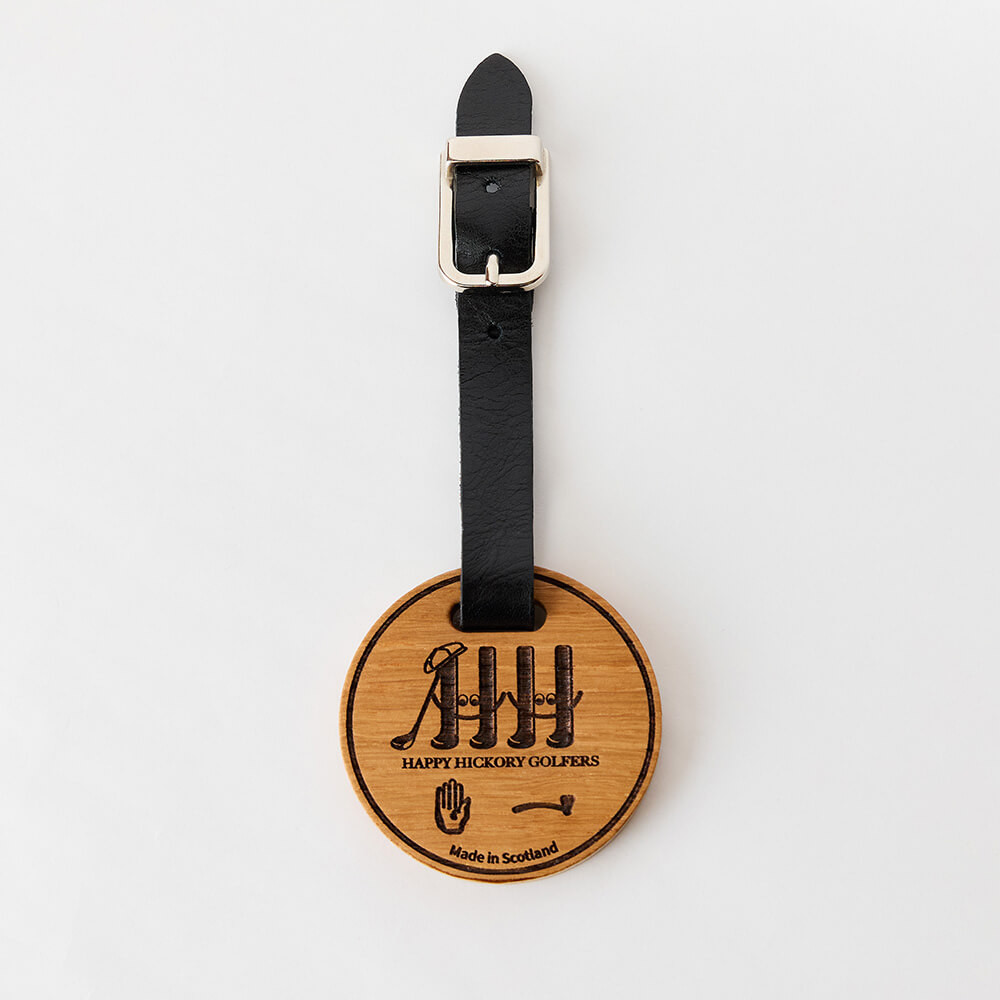
The Happy Hickory Golfers Wood Cleekmark Nametag is designed for players who connect hickory golf with companionship and enjoyment as strongly as history.
Like the Hickory 1881 version, it is made from wood and incorporates the cleek-mark tradition. Its identity links it with the social spirit of hickory events, where the experience of walking, playing and meeting other golfers is often more important than the final score.
It is a fitting addition to a bag used at friendly meetings, society events and international hickory gatherings.
Westward Ho! Mini Long-Nose Putter Nametag
.jpg)
The Westward Ho! Mini Long-Nose Putter Nametag is inspired by the wooden putters associated with early golf on the North Devon coast.
Its narrow, extended head reproduces the distinctive profile of a nineteenth-century long-nose putter. The shape connects the tag to Westward Ho!, where golf was established on the natural terrain of Northam Burrows during the 1860s. Initials, a name, number or message can be engraved onto the tag. It is especially suitable for a golfer who plays a Westward Ho! putter or has a particular interest in the history of English links golf.
Personalisation and Handcrafted Character
Many of our playing accessories can be personalised by hand stamping or laser engraving.
Hand stamping creates each character individually. Very slight differences in position and depth are part of the process, giving the finished object the character of something made by hand.
Laser engraving provides a cleaner and more detailed finish. It can accommodate names, dates, longer messages and, on suitable products, logos or images.
Personalisation is particularly meaningful on small playing items because they remain close to the golfer. A ball marker may be used on every green, while a name tag travels with the bag from course to course.
The engraving can record:
A player’s name or initials
A tournament or society
A meaningful golf course
A date or anniversary
A short personal message
A company or event logo
This turns a practical accessory into an object connected with a particular person, place or round.
Small Objects, Lasting Traditions
The major developments in golf history are often explained through famous players, championship courses and revolutionary clubs. Yet much of the game’s character is found in smaller objects.
A mound of sand beneath the ball recalls the teeing grounds of the nineteenth century. A pipe or open hand on a marker preserves the identity of a Scottish forge. A miniature long-nose club connects a modern practical accessory with the shape of golf’s earliest equipment.
None of these items dominates the round. That is precisely their appeal. They sit quietly in the pocket or bag, becoming part of the repeated rituals through which golf is played. The accessories available from The Hickory Golf Shop are designed to be used, personalised and allowed to develop character over time. Together, they show that preserving the traditions of hickory golf does not depend only on the clubs we swing. It also lies in the small details we carry with us around the course.
---------------------------------------------------------------------------------------------------------