
Your cart
There are no more items in your cart
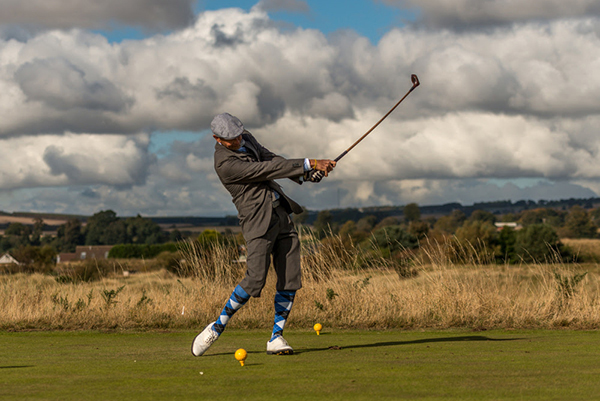
Hickory golf offers the opportunity to experience a more traditional and creative version of the game. The clubs travel shorter distances, the wooden shafts respond noticeably during the swing, and a small set encourages golfers to produce several different shots with the same club.
The unfamiliar names and narrow clubheads can initially make hickory golf appear difficult to enter. In reality, you only need a few suitable clubs, a softer golf ball and a willingness to adjust your expectations.
What Is Hickory Golf?
Hickory golf is played using clubs fitted with wooden shafts, usually made from hickory. The material became popular during the nineteenth century because it combined strength with natural flexibility. It remained standard until steel shafts became widely accepted during the late 1920s and early 1930s.
Every piece of hickory has its own grain, weight and flex, giving each club an individual character. The shaft responds more noticeably than modern steel or graphite, rewarding rhythm, balance and centred contact rather than power alone. Players can use restored original clubs or newly made clubs inspired by historic designs. Modern reproductions retain the appearance and playing characteristics of traditional equipment while offering more dependable condition.
The appeal is not simply historical. Shorter distances bring different areas of the course into play, while carrying fewer clubs encourages greater imagination. Poor shots are accepted as part of the experience, and a well-struck hickory shot feels particularly satisfying because the equipment demands more from the player.
Choosing Your First Hickory Set
You do not need fourteen clubs. Early golfers carried smaller sets and expected each club to perform several roles.
A practical beginner’s bag might contain:
- One wood for tee shots and longer strokes
- A mid iron for longer approaches
- A mashie for medium approaches and running shots
- A mashie niblick or niblick for shorter shots
- One putter
Starting with five or six clubs makes learning easier. You can understand the distance and character of each club before expanding the set.
Understanding the Traditional Names
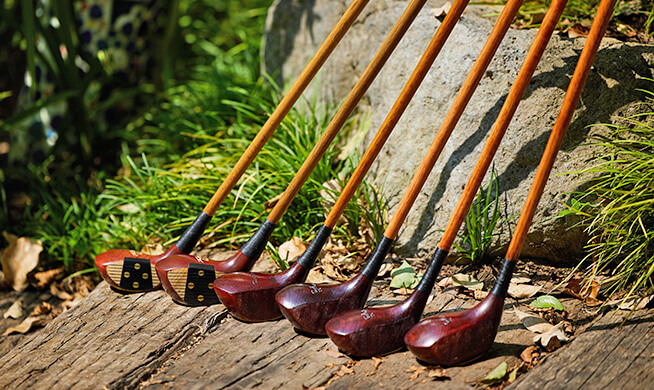
Hickory clubs usually have names rather than numbers. Their lofts were not fully standardised, so modern comparisons are only approximate.
A brassie is a wooden club used from the tee or a favourable fairway lie, broadly resembling a driver or strong fairway wood. A spoon has more loft and performs a role similar to a modern fairway wood.
The mid iron is intended for longer approaches, while the mashie is a versatile middle iron that can be used for full shots, punches and running approaches. A mashie niblick produces a higher, shorter shot, and the more lofted niblick is used around the green, from bunkers or from difficult lies.
A jigger is designed primarily for low-running approaches, much like an early version of a modern chipper. Putters may appear as compact metal blades, putting cleeks, wooden long-nose designs or even early mallets. Because original clubs vary considerably, it is better to examine the actual loft and shape than rely entirely on the name stamped onto the head.
Original or Newly Made Clubs?
Original clubs offer a direct physical connection to the hickory era, but age does not automatically make them safe to play. Shafts may contain cracks, loose fibres or weaknesses hidden beneath the grip. The head, whipping and grip may also require restoration.
An original club should be inspected by an experienced hickory specialist before it is played.
Newly made hickory clubs are usually the simplest choice for a beginner. They preserve traditional materials and shapes while offering more reliable condition and specifications.
The Hickory Golf Shop’s George Nicoll and Tom Stewart four-club iron sets provide compact groups of traditional irons. For players seeking a complete matched collection, the Tad Moore seven-club set combines a brassie, five irons and a Chicopee putter.
You can also build a set gradually. Beginning with a few clubs and adding new ones as you learn is entirely consistent with the way many golfers assembled their bags during the hickory era.
Choosing a Putter, Ball and Bag
A traditional metal-blade putter is often the easiest transition from modern golf. Models such as the Tom Stewart OLD Putter and George Nicoll GEM have compact, familiar-looking heads and provide clear feedback.
For a much earlier experience, the K. Leonard and Westward Ho! long-nose putters use elongated wooden heads inspired by nineteenth-century clubmaking. They produce a softer impact and require more time to understand, but offer a particularly distinctive connection with early golf.
A softer golf ball is generally preferable for hickory play. Very firm, high-compression balls can feel harsh and may place unnecessary stress on wooden shafts and heads.
Our Soft Mesh Hickory Golf Balls combine an early twentieth-century mesh appearance with a softer, more forgiving construction. They are a practical choice for a first round. Playable wooden and gutta-percha reproductions are better saved for historical experiments once you are comfortable with the clubs.
A narrow pencil bag is ideal for carrying a small set. Standard canvas bags provide a clean, lightweight option, while waxed canvas offers additional resistance to damp conditions and develops character through use.
How to Swing and Play Hickory Clubs
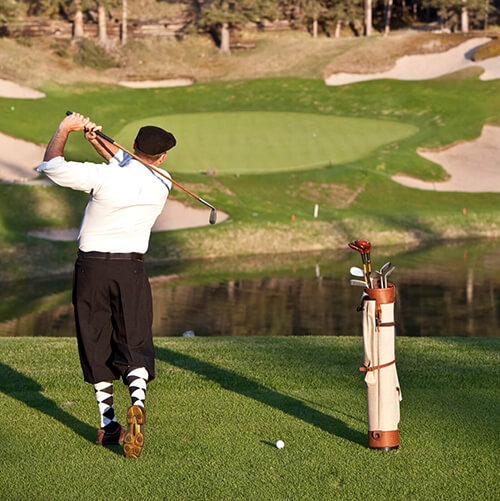
The most important advice is simple: do not try to overpower the club.
A sudden or aggressive transition can make the flexible shaft difficult to control. It also places unnecessary stress on the wood. Use a smooth tempo, light grip pressure and a slightly shorter backswing. A controlled three-quarter swing will often produce better contact than an attempted full-power shot. Allow the clubhead and shaft to move together instead of pulling sharply from the top.
Expect shorter distances than with modern equipment. The reduction will depend on the club, ball, golfer and conditions, so avoid applying one fixed calculation to every shot. Spend time learning your own distances. The traditional lofted clubs will lift the ball without assistance. Trying to scoop it into the air usually produces poor contact, so trust the loft and swing through the ball naturally.
Learning to Use the Ground
Hickory golf encourages golfers to consider what happens after the ball lands.
A low-running approach with a mashie or jigger may be easier than attempting to fly the ball directly to the hole. Firm slopes can guide the ball towards the green, while wind may make a controlled low shot more effective than a high one.
Before selecting a club, consider:
- Where should the ball land?
- How will it bounce and roll?
- Can the slope help the shot?
- Is a low route safer than a high one?
This creative use of the course is one of the most rewarding parts of hickory golf.
Preparing for Your First Round
Begin with a short practice session. Use a mashie or another middle iron and make small swings until you can feel the head and shaft moving together. Gradually lengthen the swing without greatly increasing the effort.
Next, practise a few short pitches, running approaches, controlled wood shots and putts. The aim is not to establish perfect distances immediately—it is to become comfortable with the movement of the shaft.
For your first round:
- Choose a shorter or more forgiving course if possible.
- Play from a shorter tee than usual.
- Carry only the clubs you understand.
- Use a soft golf ball.
- Avoid striking from paths, tree roots or buried lies.
- Do not compare the score directly with your normal golf.
If a lie could damage the club, move the ball to a safe patch of grass during a friendly round. Protecting historic or handcrafted equipment matters more than applying a strict penalty. Your first score will probably be higher than normal, but the number is not the best measure of the experience. Remember the well-struck wood, the creative recovery, the successful running approach or the long putt holed with a traditional blade.
Clothing and Club Care
Traditional clothing adds atmosphere but is not essential for a casual first round. Many hickory golfers wear plus fours or knickerbockers, long socks, a collared shirt, waistcoat and cap, particularly at organised events.
However, it is perfectly acceptable to begin in normal golf clothing. If you later join a tournament, check whether it has specific dress or equipment requirements. Hickory clubs also require slightly more care than modern equipment. Before playing, examine the shafts for cracks, raised fibres, unusual bends or movement where the shaft enters the head.
After the round, wipe moisture and soil from the heads and shafts. Let wet clubs dry naturally at room temperature and never place them beside a heater, stove or fire. Avoid leaving them for long periods in a hot car or damp storage area. Do not strike stones, roots or artificial surfaces. With sensible care, properly prepared hickory clubs can remain playable for many years.
Joining the Hickory Community
Hickory golf has an active international community built around competitions, friendly matches and a shared appreciation of historic equipment.
Beginners are normally welcomed, and some events provide loan sets. Before attending, ask the organiser:
- Whether clubs can be borrowed
- Which equipment rules apply
- Whether traditional clothing is expected
- Whether the event welcomes first-time players
In Japan, groups including the Japan Hickory Golfers Club and Happy Hickory Golfers organise opportunities to experience the game. Playing with experienced hickory golfers is one of the easiest ways to learn club selection, equipment care and the social traditions surrounding the sport.
Beginning with Less
Modern golf often encourages players to search for more clubs, more distance and more technology. Hickory golf begins with less.
A smaller bag makes every club more important. A flexible shaft makes timing more valuable than force. Shorter distances bring forgotten parts of the course back into play, while imperfect results make successful shots more memorable.
For your first round, bring a wood, three or four irons, a putter, several soft golf balls, a towel and realistic expectations. That is enough. Swing smoothly, use the ground and do not allow a poor shot to spoil the experience. Hickory golf does not require you to abandon the modern game—it simply offers another way to understand and enjoy it.
--------------------------------------------------------------------------------------------------------